

Kata Kunci
Cara Mengutip




Ringkasan Publikasi

Edisi Mendatang
J-HyTEL welcomes original and rigorous scholarship advancing education, media technology, and computer science applications.
Rolling submissions are accepted throughout the year.
Abstrak
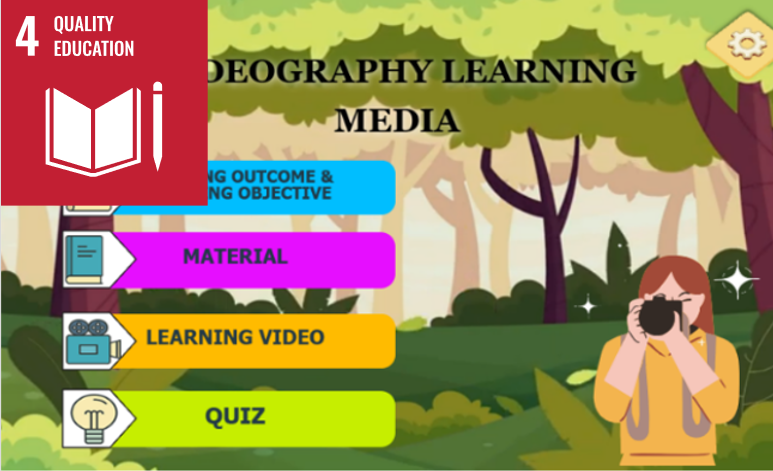
Penelitian ini bertujuan untuk mengembangkan dan memvalidasi media pembelajaran interaktif untuk mata pelajaran Videografi Kejuruan di SMK Negeri 2 Padang Panjang dengan menggunakan pendekatan Design-Based Research (DBR). Media yang dikembangkan dengan Adobe Captivate ini mengintegrasikan elemen multimedia seperti visual, audio, tutorial video, dan kuis interaktif untuk meningkatkan keterlibatan dan pemahaman siswa. Proses pengembangan mengikuti fase DBR yang berulang, termasuk analisis masalah, desain prototipe, validasi ahli, implementasi, dan refleksi. Validasi oleh enam ahli di bidang teknologi pendidikan dan materi pelajaran menghasilkan penilaian "valid" hingga "sangat valid" dalam hal kualitas konten dan desain instruksional. Uji kelayakan yang melibatkan 15 siswa menghasilkan skor 85,97%, yang menunjukkan kegunaan dan penerimaan yang tinggi. Temuan ini menunjukkan bahwa media interaktif secara signifikan meningkatkan motivasi siswa dan mendukung pembelajaran berbasis kompetensi dalam pendidikan videografi. Penelitian ini berkontribusi pada kemajuan inovasi instruksional dalam pendidikan kejuruan melalui integrasi multimedia yang efektif serta menawarkan implikasi praktis bagi pendidik yang bertujuan untuk meningkatkan lingkungan pembelajaran digital.
RIS is compatible with Zotero, Mendeley, and EndNote. Immediate opening depends on the visitor's browser and reference-manager settings.
Referensi
28 References[1] A. Y. K. Kahbi, A. Suhaimi, H. Hasmy, and M. F. Ab Jabal, “Innovation of digital multimedia: Recognizing the advantages,” e-Academia J., vol. 12, no. 2, pp. 224–239, 2023. Available: https://doi.org/10.24191/e-aj.v12i2.23996
[2] D. Wu, J. Wang, and Z. Che, “Digital education: Connotation, pathway, and trend,” Digit. Educ., vol. 1, no. 1, pp. 59–68, 2024. Available: https://doi.org/10.1007/s44366-024-0021-z
[3] A.-K. E. Onjewu, E. S. Godwin, F. Azizsafaei, and D. Appiah, “The influence of technology use on learning skills among Generation Z: A gender and cross-country analysis,” Ind. High. Educ., vol. 39, no. 2, pp. 1–17, 2025. Available: https://doi.org/10.1177/09504222241263227
[4] M. Limniou, I. Schermbrucker, and M. Lyons, “Traditional and flipped classroom approaches delivered by two different teachers: The student perspective,” Educ. Inf. Technol., vol. 23, pp. 797–817, 2018. Available: https://doi.org/10.1007/s10639-017-9636-8
[5] C. Blewett, “From traditional pedagogy to digital pedagogy,” in Disrupting Higher Education Curriculum. Constructing Knowledge: Curriculum Studies in Action, M. A. Samuel, R. Dhunpath, and N. Amin, Eds. Rotterdam, Netherlands: SensePublishers, 2016, pp. 267–281. Available: https://doi.org/10.1007/978-94-6300-896-9_16
[6] L. Tinoca, J. Piedade, S. Santos, A. Pedro, and S. Gomes, “Design-based research in the educational field: A systematic literature review,” Educ. Sci., vol. 12, no. 6, 2022. Available: https://doi.org/10.3390/educsci12060410
[7] G. Poizat, A. Drakos, É. Ambrosetti, S. Flandin, L. Ria, and S. Leblanc, “Enactive design-based research in vocational and continuing education and training,” Vocat. Learn., pp. 537–563, 2024. Available: https://doi.org/10.1007/s12186-024-09348-z
[8] S. M. H. Amiri, “Project-based learning pedagogy: Bridging theory and practice for real-world impact,” Int. J. Res. Innov. Soc. Sci., vol. 7, no. 2454, pp. 1175–1189, 2023. Available: https://doi.org/10.47772/IJRISS
[9] M. S. H. Munna and M. R. Hossain, “Digital education revolution: Evaluating LMS-based learning and traditional approaches,” J. Innov. Technol. Converg., vol. 6, no. 2, pp. 21–40, 2024. Available: https://doi.org/10.69478/jitc2024v6n002a03
[10] T. Mutanda, P. Gumede, T. Mayisela, and D. Ng’ambi, “Using a design-based research approach for a supplementary instruction programme: A pedagogical intervention during the COVID-19 pandemic,” S. Afr. J. High. Educ., vol. 37, no. 6, pp. 271–285, 2023. Available: https://doi.org/10.20853/37-6-5243
[11] O. Omelianenko and N. Artyukhova, “Project-based learning: Theoretical overview and practical implications for local innovation-based development,” Econ. Educ., vol. 9, no. 1, pp. 35–41, 2024. Available: https://doi.org/10.30525/2500-946x./2024-1-6
[12] M. Yue, M. S. Y. Jong, and Y. Dai, “Pedagogical design of K-12 artificial intelligence education: A systematic review,” Sustainability, vol. 14, no. 23, pp. 1–29, 2022. Available: https://doi.org/10.3390/su142315620
[13] K. Brümmer, T. Alkemeyer, and R. Mitchell, Building Blocks of a Historical Overview of Tacit Knowledge. Cham, Switzerland: Springer, 2022. Available: https://doi.org/10.1007/978-3-030-93001-1_5
[14] R. Afrianti, T. R. Soraya, and M. Linawati, “Utilizing Adobe Captivate to develop French literature learning materials,” in Proc. 6th Annu. Int. Semin. Transform. Educ. Educ. Leadersh. (AISTEEL 2021), vol. 591, pp. 762–768, 2022. Available: https://doi.org/10.2991/assehr.k.211110.177
[15] F. Galatsopoulou, C. Kenterelidou, R. Kotsakis, and M. Matsiola, “Examining students’ perceptions towards video-based and video-assisted active learning scenarios in journalism and communication courses,” Educ. Sci., vol. 12, no. 2, 2022. Available: https://doi.org/10.3390/educsci12020074
[16] A. T. Capinding, “Students’ AI dependency in 3R’s: Questionnaire construction and validation,” Int. J. Inf. Educ. Technol., vol. 14, no. 11, pp. 1532–1543, 2024. Available: https://doi.org/10.18178/ijiet.2024.14.11.2184
[17] K. V. Vlasenko, S. V. Volkov, I. V. Lovianova, I. V. Sitak, O. O. Chumak, and N. H. Bohdanova, “Exploring usability principles for educational online courses: A case study on an open platform for online education,” Educ. Technol. Q., no. 2, pp. 173–187, 2023. Available: https://doi.org/10.55056/etq.602
[18] M. Zamiri and A. Esmaeili, “Methods and technologies for supporting knowledge sharing within learning communities: A systematic literature review,” Adm. Sci., vol. 14, no. 1, 2024. Available: https://doi.org/10.3390/admsci14010017
[19] P. Sandra and P. Astariani, Developing Learning Evaluation Materials Assisted by the Quizizz Application to Support Self-Directed Learning. Paris, France: Atlantis Press, 2024. Available: https://doi.org/10.2991/978-94-6463-622-2
[20] A. P. Saubari and I. G. W. Sudatha, “Interactive learning multimedia based on problem-based learning models in fifth-grade science content,” J. Educ. Technol., vol. 7, no. 1, pp. 177–185, 2023. Available: https://doi.org/10.23887/jet.v7i1.57354
[21] A. A. Bustomi, N. Khosiah, and A. Fathurrohman, “Developing Pancasila learning strategies through culture-based interactive media in elementary schools,” Al-Jahiz J., vol. 3, no. 1, pp. 43–56, 2025. Available: https://doi.org/10.61650/alj.v3i1.622
[22] H. R. Wardani, R. A. Wulandary, and S. Riskika, “Evaluating the validity and reliability of competency instruments for tuberculosis nurses in primary health centers of Bondowoso District,” J. Health Sci. Pract., vol. 8, no. 2, 2024. Available: https://doi.org/10.29080/jhsp.v8i2.1275
[23] A. Theodorio, Z. Waghid, and A. Wambua, “Technology integration in teacher education: challenges and adaptations in the post-pandemic era,” Discov Educ., vol. 3, p. 242, 2024. Available: https://doi.org/10.1007/s44217-024-00341-1
[24] F. Mustafa, H. T. M. Nguyen, and X. Gao, “The challenges and solutions of technology integration in rural schools: A systematic literature review,” Int. J. Educ. Res., vol. 126, p. 102380, 2024. Available: https://doi.org/10.1016/j.ijer.2024.102380
[25] F.-K. Chiang, X. Shang, and L. Qiao, “Augmented reality in vocational training: A systematic review of research and applications,” Comput. Hum. Behav., vol. 129, p. 107125, Apr. 2022. Available: https://doi.org/10.1016/j.chb.2021.107125
[26] T. Anderson and J. Shattuck, “Design-based research: A decade of progress in education research?,” Educ. Res., vol. 41, no. 1, pp. 16–25, Jan. 2012. Available: https://doi.org/10.3102/0013189X11428813
[27] A. Tadesse, S. Lehesvuori, H. Posti-Ahokas, and J. Moate, “The learner-centred interactive pedagogy classroom: Its implications for dialogic interaction in Eritrean secondary schools,” Think. Skills Creat., vol. 50, p. 101379, Dec. 2023. Available: https://doi.org/10.1016/j.tsc.2023.101379
[28] H. Zuo, M. Zhang, and W. Huang, “Lifelong learning in vocational education: A game-theoretical exploration of innovation, entrepreneurial spirit, and strategic challenges,” J. Innov. Knowl., vol. 10, no. 3, p. 100694, May–Jun. 2025. Available: https://doi.org/10.1016/j.jik.2025.100694
Copyright and License

Artikel ini berlisensi Creative Commons Attribution 4.0 International License.
Hak Cipta (c) 2025 Dita Luthfillah, Asrul Huda, Ika Parma Dewi, Yevgeniya Daineko