

키워드
인용 방법




출판물 개요

차기호
J-HyTEL welcomes original and rigorous scholarship advancing education, media technology, and computer science applications.
Rolling submissions are accepted throughout the year.
초록
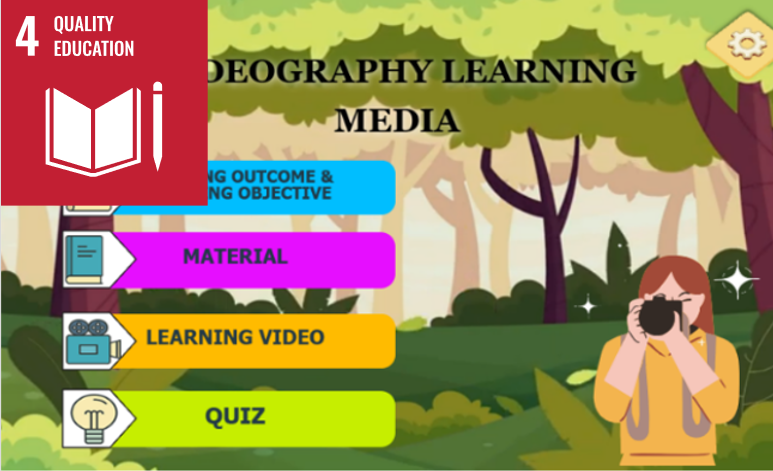
본 연구는 설계 기반 연구(DBR) 접근법을 활용하여 SMK Negeri 2 Padang Panjang의 직업 영상 촬영 과정을 위한 상호작용형 학습 매체를 개발하고 그 타당성을 검증하는 것을 목표로 한다. Adobe Captivate를 사용하여 개발된 이 매체는 시각 자료, 오디오, 동영상 튜토리얼, 상호작용형 퀴즈와 같은 멀티미디어 요소를 통합하여 학생들의 참여도와 이해도를 높인다. 개발 과정은 문제 분석, 프로토타입 설계, 전문가 검증, 구현 및 성찰을 포함한 반복적인 DBR 단계를 따랐다. 교육 기술 및 해당 분야 전문가 6명의 검증 결과, 콘텐츠 품질 및 교수 설계 측면에서 “타당”에서 “매우 타당”에 이르는 평가를 받았다. 15명의 학생을 대상으로 실시한 실용성 테스트 결과 85.97%의 점수가 나왔으며, 이는 높은 사용성과 수용도를 나타냅니다. 이러한 결과는 상호작용형 미디어가 학생들의 동기 부여를 크게 높이고 영상 제작 교육에서 역량 기반 학습을 지원한다는 것을 시사합니다. 본 연구는 멀티미디어를 효과적으로 통합함으로써 직업 교육 분야의 교육 혁신 발전에 기여하며, 디지털 학습 환경을 개선하고자 하는 교육자들에게 실질적인 시사점을 제공합니다.
RIS is compatible with Zotero, Mendeley, and EndNote. Immediate opening depends on the visitor's browser and reference-manager settings.
References
28 References[1] A. Y. K. Kahbi, A. Suhaimi, H. Hasmy, and M. F. Ab Jabal, “Innovation of digital multimedia: Recognizing the advantages,” e-Academia J., vol. 12, no. 2, pp. 224–239, 2023. Available: https://doi.org/10.24191/e-aj.v12i2.23996
[2] D. Wu, J. Wang, and Z. Che, “Digital education: Connotation, pathway, and trend,” Digit. Educ., vol. 1, no. 1, pp. 59–68, 2024. Available: https://doi.org/10.1007/s44366-024-0021-z
[3] A.-K. E. Onjewu, E. S. Godwin, F. Azizsafaei, and D. Appiah, “The influence of technology use on learning skills among Generation Z: A gender and cross-country analysis,” Ind. High. Educ., vol. 39, no. 2, pp. 1–17, 2025. Available: https://doi.org/10.1177/09504222241263227
[4] M. Limniou, I. Schermbrucker, and M. Lyons, “Traditional and flipped classroom approaches delivered by two different teachers: The student perspective,” Educ. Inf. Technol., vol. 23, pp. 797–817, 2018. Available: https://doi.org/10.1007/s10639-017-9636-8
[5] C. Blewett, “From traditional pedagogy to digital pedagogy,” in Disrupting Higher Education Curriculum. Constructing Knowledge: Curriculum Studies in Action, M. A. Samuel, R. Dhunpath, and N. Amin, Eds. Rotterdam, Netherlands: SensePublishers, 2016, pp. 267–281. Available: https://doi.org/10.1007/978-94-6300-896-9_16
[6] L. Tinoca, J. Piedade, S. Santos, A. Pedro, and S. Gomes, “Design-based research in the educational field: A systematic literature review,” Educ. Sci., vol. 12, no. 6, 2022. Available: https://doi.org/10.3390/educsci12060410
[7] G. Poizat, A. Drakos, É. Ambrosetti, S. Flandin, L. Ria, and S. Leblanc, “Enactive design-based research in vocational and continuing education and training,” Vocat. Learn., pp. 537–563, 2024. Available: https://doi.org/10.1007/s12186-024-09348-z
[8] S. M. H. Amiri, “Project-based learning pedagogy: Bridging theory and practice for real-world impact,” Int. J. Res. Innov. Soc. Sci., vol. 7, no. 2454, pp. 1175–1189, 2023. Available: https://doi.org/10.47772/IJRISS
[9] M. S. H. Munna and M. R. Hossain, “Digital education revolution: Evaluating LMS-based learning and traditional approaches,” J. Innov. Technol. Converg., vol. 6, no. 2, pp. 21–40, 2024. Available: https://doi.org/10.69478/jitc2024v6n002a03
[10] T. Mutanda, P. Gumede, T. Mayisela, and D. Ng’ambi, “Using a design-based research approach for a supplementary instruction programme: A pedagogical intervention during the COVID-19 pandemic,” S. Afr. J. High. Educ., vol. 37, no. 6, pp. 271–285, 2023. Available: https://doi.org/10.20853/37-6-5243
[11] O. Omelianenko and N. Artyukhova, “Project-based learning: Theoretical overview and practical implications for local innovation-based development,” Econ. Educ., vol. 9, no. 1, pp. 35–41, 2024. Available: https://doi.org/10.30525/2500-946x./2024-1-6
[12] M. Yue, M. S. Y. Jong, and Y. Dai, “Pedagogical design of K-12 artificial intelligence education: A systematic review,” Sustainability, vol. 14, no. 23, pp. 1–29, 2022. Available: https://doi.org/10.3390/su142315620
[13] K. Brümmer, T. Alkemeyer, and R. Mitchell, Building Blocks of a Historical Overview of Tacit Knowledge. Cham, Switzerland: Springer, 2022. Available: https://doi.org/10.1007/978-3-030-93001-1_5
[14] R. Afrianti, T. R. Soraya, and M. Linawati, “Utilizing Adobe Captivate to develop French literature learning materials,” in Proc. 6th Annu. Int. Semin. Transform. Educ. Educ. Leadersh. (AISTEEL 2021), vol. 591, pp. 762–768, 2022. Available: https://doi.org/10.2991/assehr.k.211110.177
[15] F. Galatsopoulou, C. Kenterelidou, R. Kotsakis, and M. Matsiola, “Examining students’ perceptions towards video-based and video-assisted active learning scenarios in journalism and communication courses,” Educ. Sci., vol. 12, no. 2, 2022. Available: https://doi.org/10.3390/educsci12020074
[16] A. T. Capinding, “Students’ AI dependency in 3R’s: Questionnaire construction and validation,” Int. J. Inf. Educ. Technol., vol. 14, no. 11, pp. 1532–1543, 2024. Available: https://doi.org/10.18178/ijiet.2024.14.11.2184
[17] K. V. Vlasenko, S. V. Volkov, I. V. Lovianova, I. V. Sitak, O. O. Chumak, and N. H. Bohdanova, “Exploring usability principles for educational online courses: A case study on an open platform for online education,” Educ. Technol. Q., no. 2, pp. 173–187, 2023. Available: https://doi.org/10.55056/etq.602
[18] M. Zamiri and A. Esmaeili, “Methods and technologies for supporting knowledge sharing within learning communities: A systematic literature review,” Adm. Sci., vol. 14, no. 1, 2024. Available: https://doi.org/10.3390/admsci14010017
[19] P. Sandra and P. Astariani, Developing Learning Evaluation Materials Assisted by the Quizizz Application to Support Self-Directed Learning. Paris, France: Atlantis Press, 2024. Available: https://doi.org/10.2991/978-94-6463-622-2
[20] A. P. Saubari and I. G. W. Sudatha, “Interactive learning multimedia based on problem-based learning models in fifth-grade science content,” J. Educ. Technol., vol. 7, no. 1, pp. 177–185, 2023. Available: https://doi.org/10.23887/jet.v7i1.57354
[21] A. A. Bustomi, N. Khosiah, and A. Fathurrohman, “Developing Pancasila learning strategies through culture-based interactive media in elementary schools,” Al-Jahiz J., vol. 3, no. 1, pp. 43–56, 2025. Available: https://doi.org/10.61650/alj.v3i1.622
[22] H. R. Wardani, R. A. Wulandary, and S. Riskika, “Evaluating the validity and reliability of competency instruments for tuberculosis nurses in primary health centers of Bondowoso District,” J. Health Sci. Pract., vol. 8, no. 2, 2024. Available: https://doi.org/10.29080/jhsp.v8i2.1275
[23] A. Theodorio, Z. Waghid, and A. Wambua, “Technology integration in teacher education: challenges and adaptations in the post-pandemic era,” Discov Educ., vol. 3, p. 242, 2024. Available: https://doi.org/10.1007/s44217-024-00341-1
[24] F. Mustafa, H. T. M. Nguyen, and X. Gao, “The challenges and solutions of technology integration in rural schools: A systematic literature review,” Int. J. Educ. Res., vol. 126, p. 102380, 2024. Available: https://doi.org/10.1016/j.ijer.2024.102380
[25] F.-K. Chiang, X. Shang, and L. Qiao, “Augmented reality in vocational training: A systematic review of research and applications,” Comput. Hum. Behav., vol. 129, p. 107125, Apr. 2022. Available: https://doi.org/10.1016/j.chb.2021.107125
[26] T. Anderson and J. Shattuck, “Design-based research: A decade of progress in education research?,” Educ. Res., vol. 41, no. 1, pp. 16–25, Jan. 2012. Available: https://doi.org/10.3102/0013189X11428813
[27] A. Tadesse, S. Lehesvuori, H. Posti-Ahokas, and J. Moate, “The learner-centred interactive pedagogy classroom: Its implications for dialogic interaction in Eritrean secondary schools,” Think. Skills Creat., vol. 50, p. 101379, Dec. 2023. Available: https://doi.org/10.1016/j.tsc.2023.101379
[28] H. Zuo, M. Zhang, and W. Huang, “Lifelong learning in vocational education: A game-theoretical exploration of innovation, entrepreneurial spirit, and strategic challenges,” J. Innov. Knowl., vol. 10, no. 3, p. 100694, May–Jun. 2025. Available: https://doi.org/10.1016/j.jik.2025.100694
Copyright and License

This work is licensed under a Creative Commons Attribution 4.0 International License.
Copyright (c) 2025 Dita Luthfillah, Asrul Huda, Ika Parma Dewi, Yevgeniya Daineko