

Keywords
Review
Education
Technology
Ethics
Evaluation
How to Cite


Abstract
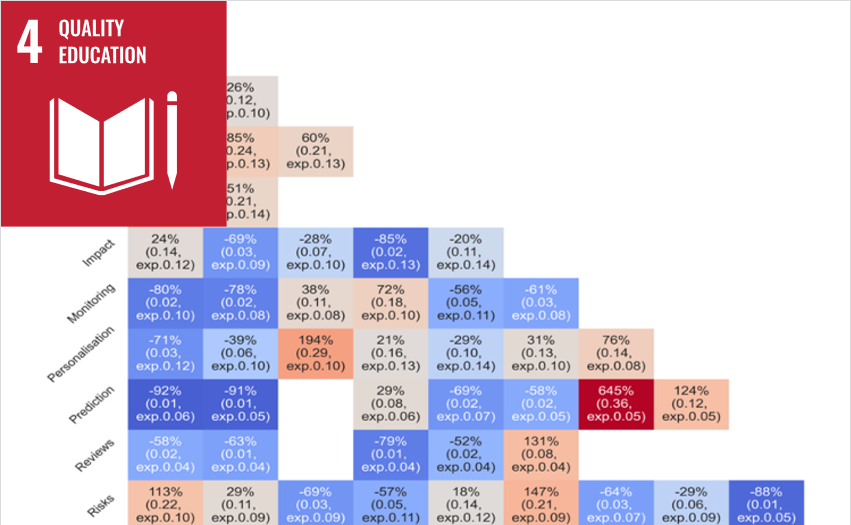
Research on artificial intelligence (AI) in education has expanded at unprecedented speed, yet its development remains fragmented, hype-driven, and unevenly distributed across disciplines and regions. This paper presents one of the most comprehensive mappings to date, analysing 16,564 publications (1990–2025) identified through Web of Science and refined to 4,626 core contributions using a hybrid method that combined computational topic modelling, AI-assisted filtering, and human validation. To complement this macro-level mapping, we conducted a qualitative overview of the most cited papers in each major research topic, providing interpretive depth on how influential works have shaped debates on adoption, engagement, personalisation, chatbots, evaluation, risks, monitoring, reviews, and teaching AI. The findings reveal exponential growth since 2020, with major surges during the COVID-19 pandemic and following the release of ChatGPT, but also enduring fragmentation, declining evaluation studies, and a saturation of attitudinal surveys. Promising areas such as personalisation, teaching AI, and engagement have lost visibility despite their long-term importance, while risks and ethical issues remain underexplored and poorly connected to technical research. Citation patterns further show systemic imbalances, with education papers disproportionately cited and engineering outputs under-recognised. We conclude with recommendations to strengthen interdisciplinarity, address neglected areas, include historical perspectives, and address systemic challenges in order to foster a more cumulative, integrative, and critical field.
 Abstract viewed: 1 times
 PDF downloaded: 0 times
References
[1] V. Caputi and A. Garrido, “Student-oriented planning of e-learning contents for Moodle,” Journal of Network and Computer Applications, vol. 53, pp. 115–127, 2015, doi: https://doi.org/10.1016/j.jnca.2015.04.001
[2] H. S. Nwana, “Intelligent tutoring systems: An overview,” Artificial Intelligence Review, vol. 4, no. 4, pp. 251–277, 1990, doi: https://doi.org/10.1007/BF00168958
[3] H. Yu, C. Miao, C. Leung, and T. J. White, “Towards AI-powered personalization in MOOC learning,” npj Science of Learning, vol. 2, no. 1, Art. no. 15, 2017, doi: https://doi.org/10.1038/s41539-017-0016-3
[4] B. Cope, M. Kalantzis, and D. Searsmith, “Artificial intelligence for education: Knowledge and its assessment in AI-enabled learning ecologies,” Educational Philosophy and Theory, vol. 53, no. 12, pp. 1229–1245, 2021, doi: https://doi.org/10.1080/00131857.2020.1728732
[5] T. K. Chiu, Q. Xia, X. Zhou, C. S. Chai, and M. Cheng, “Systematic literature review on opportunities, challenges, and future research recommendations of artificial intelligence in education,” Computers and Education: Artificial Intelligence, vol. 4, Art. no. 100118, 2023, doi: https://doi.org/10.1016/j.caeai.2022.100118
[6] S. J. Lee and K. Kwon, “A systematic review of AI education in K-12 classrooms from 2018 to 2023: Topics, strategies, and learning outcomes,” Computers and Education: Artificial Intelligence, vol. 6, Art. no. 100211, 2024, doi: https://doi.org/10.1016/j.caeai.2024.100211
[7] F. Martin, M. Zhuang, and D. Schaefer, “Systematic review of research on artificial intelligence in K-12 education (2017–2022),” Computers and Education: Artificial Intelligence, vol. 6, Art. no. 100195, 2024, doi: https://doi.org/10.1016/j.caeai.2023.100195
[8] A. Tlili et al., “What if the devil is my guardian angel: ChatGPT as a case study of using chatbots in education,” Smart Learning Environments, vol. 10, no. 1, Art. no. 15, 2023, doi: https://doi.org/10.1186/s40561-023-00237-x
[9] F. J. Hinojo-Lucena, I. Aznar-Díaz, M. P. Cáceres-Reche, and J. M. Romero-Rodríguez, “Artificial intelligence in higher education: A bibliometric study on its impact in the scientific literature,” Education Sciences, vol. 9, no. 1, Art. no. 51, 2019, doi: https://doi.org/10.3390/educsci9010051
[10] O. Zawacki-Richter, V. I. Marín, M. Bond, and F. Gouverneur, “Systematic review of research on artificial intelligence applications in higher education—where are the educators?” International Journal of Educational Technology in Higher Education, vol. 16, no. 1, Art. no. 39, 2019, doi: https://doi.org/10.1186/s41239-019-0171-0
[11] A. Bozkurt, A. Karadeniz, D. Baneres, A. E. Guerrero-Roldán, and M. E. Rodríguez, “Artificial intelligence and reflections from educational landscape: A review of AI studies in half a century,” Sustainability, vol. 13, no. 2, Art. no. 800, 2021, doi: https://doi.org/10.3390/su13020800
[12] S. Guo, Y. Zheng, and X. Zhai, “Artificial intelligence in education research during 2013–2023: A review based on bibliometric analysis,” Education and Information Technologies, vol. 29, no. 13, pp. 16387–16409, 2024, doi: https://doi.org/10.1007/s10639-024-12491-8
[13] A. Gillespie, V. P. Glăveanu, and C. de Saint Laurent, Pragmatism and Methodology: Doing Research That Matters with Mixed Methods. Cambridge, U.K.: Cambridge University Press, 2024, doi: https://doi.org/10.1017/9781009031066
[14] C. Perrotta and N. Selwyn, “Deep learning goes to school: Toward a relational understanding of AI in education,” Learning, Media and Technology, vol. 45, no. 3, pp. 251–269, 2020, doi: https://doi.org/10.1080/17439884.2020.1686017
[15] M. C. Wijanto, I. Widiastuti, and H. S. Yong, “Topic modeling for scientific articles: Exploring optimal hyperparameter tuning in BERT,” International Journal on Advanced Science, Engineering and Information Technology, vol. 14, no. 3, pp. 912–919, 2024, doi: https://doi.org/10.18517/ijaseit.14.3.19347
[16] G. Piao, “Scholarly text classification with sentence BERT and entity embeddings,” in Trends and Applications in Knowledge Discovery and Data Mining, Cham, Switzerland: Springer, 2021, pp. 79–87, doi: https://doi.org/10.1007/978-3-030-75015-2_8
[17] S. Selva Birunda and R. Kanniga Devi, “A review on word embedding techniques for text classification,” in Innovative Data Communication Technologies and Application, Singapore: Springer, 2021, pp. 267–281, doi: https://doi.org/10.1007/978-981-15-9651-3_23
[18] R. Chocarro, M. Cortiñas, and G. Marcos-Matás, “Teachers’ attitudes towards chatbots in education: A technology acceptance model approach considering the effect of social language, bot proactiveness, and users’ characteristics,” Educational Studies, vol. 49, no. 2, pp. 295–313, 2023, doi: https://doi.org/10.1080/03055698.2020.1850426
[19] J. E. Raffaghelli, M. E. Rodríguez, A. E. Guerrero-Roldán, and D. Bañeres, “Applying the UTAUT model to explain the students’ acceptance of an early warning system in higher education,” Computers & Education, vol. 182, Art. no. 104468, 2022, doi: https://doi.org/10.1016/j.compedu.2022.104468
[20] M. Farrokhnia, S. K. Banihashem, O. Noroozi, and A. Wals, “A SWOT analysis of ChatGPT: Implications for educational practice and research,” Innovations in Education and Teaching International, vol. 61, no. 3, pp. 460–474, 2024, doi: https://doi.org/10.1080/14703297.2023.2195846
[21] J. Garzón, E. Patiño, and C. Marulanda, “Systematic review of artificial intelligence in education: Trends, benefits, and challenges,” Multimodal Technologies and Interaction, vol. 9, no. 8, Art. no. 84, 2025, doi: https://doi.org/10.3390/mti9080084
[22] M. Lan and X. Zhou, “A qualitative systematic review on AI empowered self-regulated learning in higher education,” npj Science of Learning, vol. 10, no. 1, Art. no. 21, 2025, doi: https://doi.org/10.1038/s41539-025-00319-0
[23] M. Mohammadi, E. Tajik, R. Martinez-Maldonado, S. Sadiq, and W. Tomaszewski, “Artificial intelligence in multimodal learning analytics: A systematic literature review,” Computers and Education: Artificial Intelligence, vol. 8, Art. no. 100426, 2025, doi: https://doi.org/10.1016/j.caeai.2025.100426
[24] A. Gouseti, F. James, L. Fallin, and K. Burden, “The ethics of using AI in K-12 education: A systematic literature review,” Technology, Pedagogy and Education, vol. 34, no. 2, pp. 161–182, 2025, doi: https://doi.org/10.1080/1475939X.2024.2428601
[25] J. García-López and L. Trujillo-Liñán, “Ethical and regulatory challenges of generative AI in education: A systematic review,” Frontiers in Education, vol. 10, Art. no. 1565938, 2025, doi: https://doi.org/10.3389/feduc.2025.1565938
[26] C. Y. Chang, G. J. Hwang, and M. L. Gau, “Promoting students’ learning achievement and self-efficacy: A mobile chatbot approach for nursing training,” British Journal of Educational Technology, vol. 53, no. 1, pp. 171–188, 2022, doi: https://doi.org/10.1111/bjet.13158
[27] J. Jeon and S. Lee, “Large language models in education: A focus on the complementary relationship between human teachers and ChatGPT,” Education and Information Technologies, vol. 28, no. 12, pp. 15873–15892, 2023, doi: https://doi.org/10.1007/s10639-023-11834-1
[28] S. Fergus, M. Botha, and M. Ostovar, “Evaluating academic answers generated using ChatGPT,” Journal of Chemical Education, vol. 100, no. 4, pp. 1672–1675, 2023, doi: https://doi.org/10.1021/acs.jchemed.3c00087
[29] C. Kooli, “Chatbots in education and research: A critical examination of ethical implications and solutions,” Sustainability, vol. 15, no. 7, Art. no. 5614, 2023, doi: https://doi.org/10.3390/su15075614
[30] D. Yan, “Impact of ChatGPT on learners in a L2 writing practicum: An exploratory investigation,” Education and Information Technologies, vol. 28, no. 11, pp. 13943–13967, 2023, doi: https://doi.org/10.1007/s10639-023-11742-4
[31] J. Bernard, T. W. Chang, E. Popescu, and S. Graf, “Learning style identifier: Improving the precision of learning style identification through computational intelligence algorithms,” Expert Systems with Applications, vol. 75, pp. 94–108, 2017, doi: https://doi.org/10.1016/j.eswa.2017.01.021
[32] K. Sharma, Z. Papamitsiou, and M. Giannakos, “Building pipelines for educational data using AI and multimodal analytics: A ‘grey-box’ approach,” British Journal of Educational Technology, vol. 50, no. 6, pp. 3004–3031, 2019, doi: https://doi.org/10.1111/bjet.12854
[33] B. Berendt, A. Littlejohn, and M. Blakemore, “AI in education: Learner choice and fundamental rights,” Learning, Media and Technology, vol. 45, no. 3, pp. 312–324, 2020, doi: https://doi.org/10.1080/17439884.2020.1786399
[34] E. Dixon-Román, T. P. Nichols, and A. Nyame-Mensah, “The racializing forces of/in AI educational technologies,” Learning, Media and Technology, vol. 45, no. 3, pp. 236–250, 2020, doi: https://doi.org/10.1080/17439884.2020.1667825
[35] D. Schiff, “Out of the laboratory and into the classroom: The future of artificial intelligence in education,” AI & Society, vol. 36, no. 1, pp. 331–348, 2021, doi: https://doi.org/10.1007/s00146-020-01033-8
[36] D. Hooshyar et al., “Towards responsible AI for education: Hybrid human-AI to confront the elephant in the room,” Computers and Education: Artificial Intelligence, vol. 9, Art. no. 100524, 2025, doi: https://doi.org/10.1016/j.caeai.2025.100524
[37] C. S. Chai, X. Wang, and C. Xu, “An extended theory of planned behavior for the modelling of Chinese secondary school students’ intention to learn artificial intelligence,” Mathematics, vol. 8, no. 11, Art. no. 2089, 2020, doi: https://doi.org/10.3390/math8112089
[38] P. Song and X. Wang, “A bibliometric analysis of worldwide educational artificial intelligence research development in recent twenty years,” Asia Pacific Education Review, vol. 21, no. 3, pp. 473–486, 2020, doi: https://doi.org/10.1007/s12564-020-09640-2
[39] Q. Xia, T. K. Chiu, M. Lee, I. T. Sanusi, Y. Dai, and C. S. Chai, “A self-determination theory (SDT) design approach for inclusive and diverse artificial intelligence (AI) education,” Computers & Education, vol. 189, Art. no. 104582, 2022, doi: https://doi.org/10.1016/j.compedu.2022.104582
[40] V. Liu, E. Latif, and X. Zhai, “Advancing education through tutoring systems: A systematic literature review,” arXiv:2503.09748, 2025, doi: https://doi.org/10.48550/arXiv.2503.09748. [Online]. Available: https://arxiv.org/abs/2503.09748
[41] M. Georgieva and J. Stuart, “Ethics is the edge: The future of AI in higher education,” EDUCAUSE Review, Jun. 24, 2025. [Online]. Available: https://er.educause.edu/articles/2025/6/ethics-is-the-edge-the-future-of-ai-in-higher-education

This work is licensed under a Creative Commons Attribution 4.0 International License.
Copyright (c) 2025 Constance de Saint Laurent, Vlad Glaveanu, Ioana Literat, Ingunn Ness