

Sustainable Development Goals
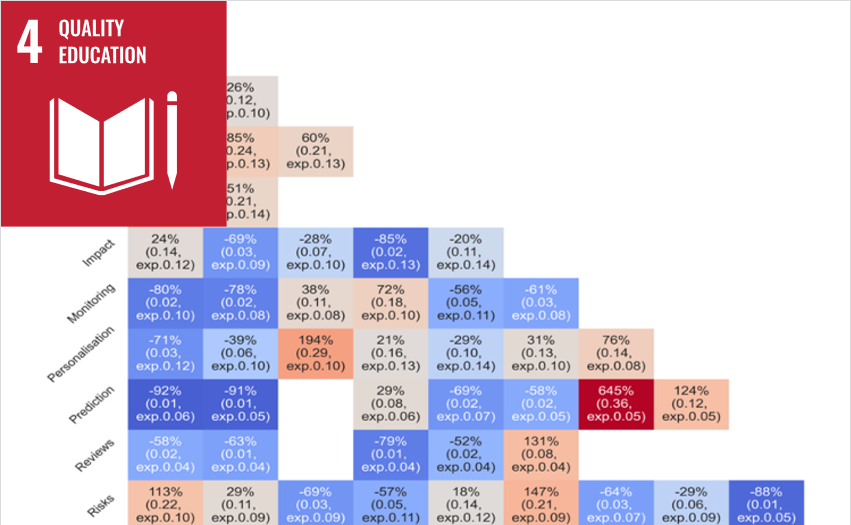
This article contributes to the following United Nations Sustainable Development Goals.

키워드
인용 방법




출판물 개요
차기호
J-HyTEL welcomes original and rigorous scholarship advancing education, media technology, and computer science applications.
Rolling submissions are accepted throughout the year.
초록
교육 분야에서의 인공지능(AI) 연구는 전례 없는 속도로 확대되었으나, 그 발전 양상은 여전히 파편화되어 있으며 과대광고에 치우쳐 있고, 학문 분야와 지역별로 고르지 않게 분포되어 있다. 본 논문은 현재까지 가장 포괄적인 매핑 중 하나를 제시하며, Web of Science를 통해 식별된 16,564편의 논문(1990–2025)을 분석하고, 계산적 주제 모델링, AI 지원 필터링 및 인간 검증 과정을 결합한 하이브리드 방법을 사용하여 4,626편의 핵심 연구 성과로 선별하였다. 이러한 거시적 수준의 매핑을 보완하기 위해, 각 주요 연구 주제에서 가장 많이 인용된 논문들에 대한 질적 개요를 수행함으로써, 영향력 있는 연구들이 도입, 참여, 개인화, 챗봇, 평가, 위험, 모니터링, 리뷰, 그리고 AI 교육에 대한 논의를 어떻게 형성해 왔는지에 대한 심층적인 해석을 제시한다. 연구 결과에 따르면 2020년 이후 기하급수적인 성장이 나타났으며, 특히 코로나19 팬데믹 기간과 ChatGPT 출시 이후 큰 폭의 증가세를 보였으나, 동시에 지속적인 분절화 현상, 평가 연구의 감소, 태도 조사 분야의 포화 현상도 확인되었다. 개인화, AI 교육, 참여도와 같은 유망한 분야는 장기적인 중요성에도 불구하고 주목도가 떨어졌으며, 반면 위험 및 윤리적 문제는 여전히 충분히 탐구되지 않았고 기술 연구와의 연계도 미흡한 상태입니다. 인용 패턴을 살펴보면 체계적인 불균형이 드러나는데, 교육 관련 논문은 불균형적으로 많이 인용되는 반면 공학 분야의 연구 성과는 제대로 인정받지 못하고 있습니다. 우리는 보다 축적적이고 통합적이며 비판적인 학문 분야를 육성하기 위해, 학제 간 협력을 강화하고 소홀히 여겨졌던 분야를 다루며, 역사적 관점을 포함시키고, 체계적인 과제를 해결할 것을 권고하며 본 논문을 마무리한다.
RIS is compatible with Zotero, Mendeley, and EndNote. Immediate opening depends on the visitor's browser and reference-manager settings.
게재된 논문에 보고된 선언 사항
Author Contributions
Constance de Saint Laurent: Conceptualization; Methodology; Investigation; Data Collection; Data Curation; Writing – Original Draft Preparation. Vlad Glaveanu: Theoretical Framework Development; Writing – Review & Editing. Ioana Literat: Theoretical Framework Development; Writing – Review & Editing. Ingunn Ness: Theoretical Framework Development; Writing – Review & Editing. All authors have read and approved the final version of the manuscript. All authors have read and approved the final version of the manuscript.
Acknowledgments
The authors would like to thank Natalie Robinson for her help formatting the final version of the paper.
View statement in PDF · PDF page 22Ethics Approval
This study was conducted in accordance with ethical standards.
View statement in PDF · PDF page 22Informed Consent
The study did not involve collecting empirical data from human participants.
View statement in PDF · PDF page 22연구비 지원
The authors declare that this research did not receive specific funding from any public, commercial, or not-for-profit agencies.
View statement in PDF · PDF page 22데이터 가용성
The data supporting this study’s findings are not publicly available. Summary data are included in the manuscript, and more detailed information can be requested from the corresponding author under strict confidentiality agreements.
View statement in PDF · PDF page 22이해 상충
The authors declare that they have no competing interests related to the content of this article.
View statement in PDF · PDF page 22Generative AI Disclosure
During the preparation of this manuscript, the authors used AI (ChatGPT 4.0) to assist as part of the methodology of summarizing data, as explained in the manuscript. Whenever AI was used, the authors carefully reviewed and edited the content to ensure accuracy and integrity, and they take full responsibility for the published work.
View statement in PDF · PDF page 22References
41 References[1] V. Caputi and A. Garrido, “Student-oriented planning of e-learning contents for Moodle,” Journal of Network and Computer Applications, vol. 53, pp. 115–127, 2015, doi: https://doi.org/10.1016/j.jnca.2015.04.001
[2] H. S. Nwana, “Intelligent tutoring systems: An overview,” Artificial Intelligence Review, vol. 4, no. 4, pp. 251–277, 1990, doi: https://doi.org/10.1007/BF00168958
[3] H. Yu, C. Miao, C. Leung, and T. J. White, “Towards AI-powered personalization in MOOC learning,” npj Science of Learning, vol. 2, no. 1, Art. no. 15, 2017, doi: https://doi.org/10.1038/s41539-017-0016-3
[4] B. Cope, M. Kalantzis, and D. Searsmith, “Artificial intelligence for education: Knowledge and its assessment in AI-enabled learning ecologies,” Educational Philosophy and Theory, vol. 53, no. 12, pp. 1229–1245, 2021, doi: https://doi.org/10.1080/00131857.2020.1728732
[5] T. K. Chiu, Q. Xia, X. Zhou, C. S. Chai, and M. Cheng, “Systematic literature review on opportunities, challenges, and future research recommendations of artificial intelligence in education,” Computers and Education: Artificial Intelligence, vol. 4, Art. no. 100118, 2023, doi: https://doi.org/10.1016/j.caeai.2022.100118
[6] S. J. Lee and K. Kwon, “A systematic review of AI education in K-12 classrooms from 2018 to 2023: Topics, strategies, and learning outcomes,” Computers and Education: Artificial Intelligence, vol. 6, Art. no. 100211, 2024, doi: https://doi.org/10.1016/j.caeai.2024.100211
[7] F. Martin, M. Zhuang, and D. Schaefer, “Systematic review of research on artificial intelligence in K-12 education (2017–2022),” Computers and Education: Artificial Intelligence, vol. 6, Art. no. 100195, 2024, doi: https://doi.org/10.1016/j.caeai.2023.100195
[8] A. Tlili et al., “What if the devil is my guardian angel: ChatGPT as a case study of using chatbots in education,” Smart Learning Environments, vol. 10, no. 1, Art. no. 15, 2023, doi: https://doi.org/10.1186/s40561-023-00237-x
[9] F. J. Hinojo-Lucena, I. Aznar-Díaz, M. P. Cáceres-Reche, and J. M. Romero-Rodríguez, “Artificial intelligence in higher education: A bibliometric study on its impact in the scientific literature,” Education Sciences, vol. 9, no. 1, Art. no. 51, 2019, doi: https://doi.org/10.3390/educsci9010051
[10] O. Zawacki-Richter, V. I. Marín, M. Bond, and F. Gouverneur, “Systematic review of research on artificial intelligence applications in higher education—where are the educators?” International Journal of Educational Technology in Higher Education, vol. 16, no. 1, Art. no. 39, 2019, doi: https://doi.org/10.1186/s41239-019-0171-0
[11] A. Bozkurt, A. Karadeniz, D. Baneres, A. E. Guerrero-Roldán, and M. E. Rodríguez, “Artificial intelligence and reflections from educational landscape: A review of AI studies in half a century,” Sustainability, vol. 13, no. 2, Art. no. 800, 2021, doi: https://doi.org/10.3390/su13020800
[12] S. Guo, Y. Zheng, and X. Zhai, “Artificial intelligence in education research during 2013–2023: A review based on bibliometric analysis,” Education and Information Technologies, vol. 29, no. 13, pp. 16387–16409, 2024, doi: https://doi.org/10.1007/s10639-024-12491-8
[13] A. Gillespie, V. P. Glăveanu, and C. de Saint Laurent, Pragmatism and Methodology: Doing Research That Matters with Mixed Methods. Cambridge, U.K.: Cambridge University Press, 2024, doi: https://doi.org/10.1017/9781009031066
[14] C. Perrotta and N. Selwyn, “Deep learning goes to school: Toward a relational understanding of AI in education,” Learning, Media and Technology, vol. 45, no. 3, pp. 251–269, 2020, doi: https://doi.org/10.1080/17439884.2020.1686017
[15] M. C. Wijanto, I. Widiastuti, and H. S. Yong, “Topic modeling for scientific articles: Exploring optimal hyperparameter tuning in BERT,” International Journal on Advanced Science, Engineering and Information Technology, vol. 14, no. 3, pp. 912–919, 2024, doi: https://doi.org/10.18517/ijaseit.14.3.19347
[16] G. Piao, “Scholarly text classification with sentence BERT and entity embeddings,” in Trends and Applications in Knowledge Discovery and Data Mining, Cham, Switzerland: Springer, 2021, pp. 79–87, doi: https://doi.org/10.1007/978-3-030-75015-2_8
[17] S. Selva Birunda and R. Kanniga Devi, “A review on word embedding techniques for text classification,” in Innovative Data Communication Technologies and Application, Singapore: Springer, 2021, pp. 267–281, doi: https://doi.org/10.1007/978-981-15-9651-3_23
[18] R. Chocarro, M. Cortiñas, and G. Marcos-Matás, “Teachers’ attitudes towards chatbots in education: A technology acceptance model approach considering the effect of social language, bot proactiveness, and users’ characteristics,” Educational Studies, vol. 49, no. 2, pp. 295–313, 2023, doi: https://doi.org/10.1080/03055698.2020.1850426
[19] J. E. Raffaghelli, M. E. Rodríguez, A. E. Guerrero-Roldán, and D. Bañeres, “Applying the UTAUT model to explain the students’ acceptance of an early warning system in higher education,” Computers & Education, vol. 182, Art. no. 104468, 2022, doi: https://doi.org/10.1016/j.compedu.2022.104468
[20] M. Farrokhnia, S. K. Banihashem, O. Noroozi, and A. Wals, “A SWOT analysis of ChatGPT: Implications for educational practice and research,” Innovations in Education and Teaching International, vol. 61, no. 3, pp. 460–474, 2024, doi: https://doi.org/10.1080/14703297.2023.2195846
[21] J. Garzón, E. Patiño, and C. Marulanda, “Systematic review of artificial intelligence in education: Trends, benefits, and challenges,” Multimodal Technologies and Interaction, vol. 9, no. 8, Art. no. 84, 2025, doi: https://doi.org/10.3390/mti9080084
[22] M. Lan and X. Zhou, “A qualitative systematic review on AI empowered self-regulated learning in higher education,” npj Science of Learning, vol. 10, no. 1, Art. no. 21, 2025, doi: https://doi.org/10.1038/s41539-025-00319-0
[23] M. Mohammadi, E. Tajik, R. Martinez-Maldonado, S. Sadiq, and W. Tomaszewski, “Artificial intelligence in multimodal learning analytics: A systematic literature review,” Computers and Education: Artificial Intelligence, vol. 8, Art. no. 100426, 2025, doi: https://doi.org/10.1016/j.caeai.2025.100426
[24] A. Gouseti, F. James, L. Fallin, and K. Burden, “The ethics of using AI in K-12 education: A systematic literature review,” Technology, Pedagogy and Education, vol. 34, no. 2, pp. 161–182, 2025, doi: https://doi.org/10.1080/1475939X.2024.2428601
[25] J. García-López and L. Trujillo-Liñán, “Ethical and regulatory challenges of generative AI in education: A systematic review,” Frontiers in Education, vol. 10, Art. no. 1565938, 2025, doi: https://doi.org/10.3389/feduc.2025.1565938
[26] C. Y. Chang, G. J. Hwang, and M. L. Gau, “Promoting students’ learning achievement and self-efficacy: A mobile chatbot approach for nursing training,” British Journal of Educational Technology, vol. 53, no. 1, pp. 171–188, 2022, doi: https://doi.org/10.1111/bjet.13158
[27] J. Jeon and S. Lee, “Large language models in education: A focus on the complementary relationship between human teachers and ChatGPT,” Education and Information Technologies, vol. 28, no. 12, pp. 15873–15892, 2023, doi: https://doi.org/10.1007/s10639-023-11834-1
[28] S. Fergus, M. Botha, and M. Ostovar, “Evaluating academic answers generated using ChatGPT,” Journal of Chemical Education, vol. 100, no. 4, pp. 1672–1675, 2023, doi: https://doi.org/10.1021/acs.jchemed.3c00087
[29] C. Kooli, “Chatbots in education and research: A critical examination of ethical implications and solutions,” Sustainability, vol. 15, no. 7, Art. no. 5614, 2023, doi: https://doi.org/10.3390/su15075614
[30] D. Yan, “Impact of ChatGPT on learners in a L2 writing practicum: An exploratory investigation,” Education and Information Technologies, vol. 28, no. 11, pp. 13943–13967, 2023, doi: https://doi.org/10.1007/s10639-023-11742-4
[31] J. Bernard, T. W. Chang, E. Popescu, and S. Graf, “Learning style identifier: Improving the precision of learning style identification through computational intelligence algorithms,” Expert Systems with Applications, vol. 75, pp. 94–108, 2017, doi: https://doi.org/10.1016/j.eswa.2017.01.021
[32] K. Sharma, Z. Papamitsiou, and M. Giannakos, “Building pipelines for educational data using AI and multimodal analytics: A ‘grey-box’ approach,” British Journal of Educational Technology, vol. 50, no. 6, pp. 3004–3031, 2019, doi: https://doi.org/10.1111/bjet.12854
[33] B. Berendt, A. Littlejohn, and M. Blakemore, “AI in education: Learner choice and fundamental rights,” Learning, Media and Technology, vol. 45, no. 3, pp. 312–324, 2020, doi: https://doi.org/10.1080/17439884.2020.1786399
[34] E. Dixon-Román, T. P. Nichols, and A. Nyame-Mensah, “The racializing forces of/in AI educational technologies,” Learning, Media and Technology, vol. 45, no. 3, pp. 236–250, 2020, doi: https://doi.org/10.1080/17439884.2020.1667825
[35] D. Schiff, “Out of the laboratory and into the classroom: The future of artificial intelligence in education,” AI & Society, vol. 36, no. 1, pp. 331–348, 2021, doi: https://doi.org/10.1007/s00146-020-01033-8
[36] D. Hooshyar et al., “Towards responsible AI for education: Hybrid human-AI to confront the elephant in the room,” Computers and Education: Artificial Intelligence, vol. 9, Art. no. 100524, 2025, doi: https://doi.org/10.1016/j.caeai.2025.100524
[37] C. S. Chai, X. Wang, and C. Xu, “An extended theory of planned behavior for the modelling of Chinese secondary school students’ intention to learn artificial intelligence,” Mathematics, vol. 8, no. 11, Art. no. 2089, 2020, doi: https://doi.org/10.3390/math8112089
[38] P. Song and X. Wang, “A bibliometric analysis of worldwide educational artificial intelligence research development in recent twenty years,” Asia Pacific Education Review, vol. 21, no. 3, pp. 473–486, 2020, doi: https://doi.org/10.1007/s12564-020-09640-2
[39] Q. Xia, T. K. Chiu, M. Lee, I. T. Sanusi, Y. Dai, and C. S. Chai, “A self-determination theory (SDT) design approach for inclusive and diverse artificial intelligence (AI) education,” Computers & Education, vol. 189, Art. no. 104582, 2022, doi: https://doi.org/10.1016/j.compedu.2022.104582
[40] V. Liu, E. Latif, and X. Zhai, “Advancing education through tutoring systems: A systematic literature review,” arXiv:2503.09748, 2025, doi: https://doi.org/10.48550/arXiv.2503.09748. [Online]. Available: https://arxiv.org/abs/2503.09748
[41] M. Georgieva and J. Stuart, “Ethics is the edge: The future of AI in higher education,” EDUCAUSE Review, Jun. 24, 2025. [Online]. Available: https://er.educause.edu/articles/2025/6/ethics-is-the-edge-the-future-of-ai-in-higher-education
Copyright and License

This work is licensed under a Creative Commons Attribution 4.0 International License.
Copyright (c) 2026 Constance de Saint Laurent, Vlad Glaveanu, Ioana Literat, Ingunn Ness