

Sustainable Development Goals
This article contributes to the following United Nations Sustainable Development Goals.

키워드
인용 방법




출판물 개요
차기호
J-HyTEL welcomes original and rigorous scholarship advancing education, media technology, and computer science applications.
Rolling submissions are accepted throughout the year.
초록
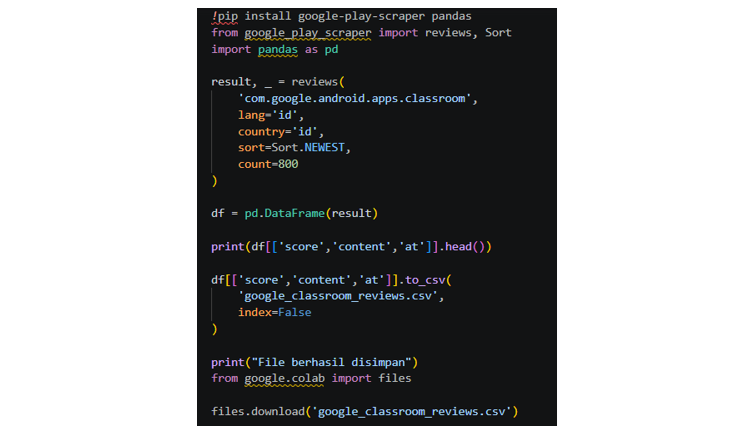
Google Classroom은 학습 활동을 조직하는 데 사용되지만, 체계적인 평가에서는 일상적인 사용 중에 보고된 문제점들이 간과될 수 있다. 본 연구는 800건의 Google Play 리뷰를 분석하여 사용성 관련 우려 사항을 파악하고, 닐슨(Nielsen)의 5가지 사용성 차원을 사용하여 이를 분류하며, 해당 프레임워크에 부합하지 않는 피드백의 비율을 측정하였다. 리뷰는 파이썬(Python)의 google-play-scraper 패키지를 사용하여 인도네시아어 및 인도네시아 국가 설정을 적용해 수집하였으며, 최신 순서대로 정렬했다. 프레임워크에 기반한 질적 내용 분석을 통해 각 리뷰에 ‘학습 용이성’, ‘효율성’, ‘기억 용이성’, ‘오류’, ‘만족도’ 또는 ‘기타’ 중 하나의 주요 범주를 할당했다. 범주별 빈도는 기술적으로 요약되었다. 평점은 양극단에 집중되어 있었으며, 1성급 리뷰 347건(43.38%)과 5성급 리뷰 288건(36.00%)이 기록되었다. 800건의 리뷰 중 427건(53.38%)은 닐슨의 차원에 분류되었으며, 373건(46.63%)은 ‘기타’ 범주에 속했습니다. 프레임워크에 매핑된 리뷰 중 오류 관련 리뷰가 56.44%, 만족도 관련 리뷰가 37.00%를 차지한 반면, 학습 용이성, 효율성, 기억 용이성은 합쳐서 6.56%를 차지했습니다. 오류와 관련된 일반적인 보고 사항으로는 버그, 과제 업로드 실패, 로그인 문제, 앱 강제 종료, 알림 문제 등이 있었습니다. ‘기타’ 범주의 비중이 큰 것은 리뷰의 거의 절반이 본 연구의 코딩 규칙에 따라 5가지 차원으로 분류될 수 없었음을 시사합니다. 이러한 결과는 앱 스토어 리뷰가 필수 학습 과제와 관련된 사용자 보고 문제를 부각시킴으로써 구조화된 사용성 평가를 보완한다는 점을 시사한다. 리뷰는 사용자가 자발적으로 작성한 것이며 특정 시점에 수집된 것이므로, 범주별 빈도를 전체 Google Classroom 사용자에게 일반화해서는 안 된다.
RIS is compatible with Zotero, Mendeley, and EndNote. Immediate opening depends on the visitor's browser and reference-manager settings.
게재된 논문에 보고된 선언 사항
Author Contributions
Rafiqa Rizalita: Conceptualization; Methodology; Investigation; Data Curation; Writing – Original Draft. Putut Aji Nalendro: Formal Analysis; Validation; Visualization; Writing – Review & Editing. Novi Febrianti: Writing – Review & Editing. All authors approved the manuscript and agreed to the author order.
Acknowledgments
Not applicable.
View statement in PDF · PDF page 12연구비 지원
This research received no specific grant from any funding agency in the public, commercial, or not-forprofit sectors.
View statement in PDF · PDF page 12이해 상충
The authors declare no competing interests.
View statement in PDF · PDF page 12Ethics Approval
Formal ethical approval was not obtained. The study analyzed publicly available Google Play reviews without participant recruitment, direct interaction, or intervention. Reviewer usernames and other directly identifying information are not reported.
View statement in PDF · PDF page 12Informed Consent
Not applicable. The study used publicly available Google Play reviews without recruiting or interacting with participants or conducting an intervention. No private or confidential personal information was intentionally collected or used.
View statement in PDF · PDF page 12Consent for Publication
Not applicable. The study reports no identifiable individual participants or private personal information. Study or Protocol Registration Not applicable. The study did not involve a clinical trial or intervention requiring prospective registration.
View statement in PDF · PDF page 12데이터 가용성
The analysis used publicly available Google Classroom reviews retrieved from Google Play. Individual reviews may no longer be accessible in their original form because app-store content changes over time. The processed dataset and supporting analytical materials are available from the corresponding author upon reasonable request, subject to applicable terms of service and data-use requirements.
View statement in PDF · PDF page 12Generative AI Disclosure
During manuscript preparation, ChatGPT (OpenAI, GPT-5.6, accessed in 2026) and Claude (Anthropic, accessed in 2026) were used as language and research assistants, primarily for translation and text refinement. Grammarly (accessed in 2026) was used for grammar, spelling, clarity, and English-language proofreading. All AI-assisted material was reviewed and verified by the authors, who remain responsible for the content, accuracy, interpretation, and final manuscript. No AI system or AI-assisted technology is listed as an author. Preprint and Prior Dissemination The authors report that this manuscript has not previously been disseminated. It has not been published as a preprint, conference paper or abstract, thesis or dissertation, working paper, repository version, protocol, report, or translated publication. No substantially related manuscript using the same dataset or analysis has been published or submitted elsewhere.
View statement in PDF · PDF page 13References
31 References[1] S. Dhawan, “Online learning: A panacea in the time of COVID-19 crisis,” Journal of Educational Technology Systems, vol. 49, no. 1, pp. 5–22, 2020, doi: https://doi.org/10.1177/0047239520934018.
[2] UNESCO, “Education: From disruption to recovery,” UNESCO, 2020. [Online]. Available: https://en.unesco.org/covid19/educationresponse
[3] S. H. Alshammari, “The influence of technical support, perceived self-efficacy, and instructional design on students’ use of learning management systems,” Turkish Online Journal of Distance Education, vol. 21, no. 3, pp. 112–141, 2020, doi: https://doi.org/10.17718/tojde.762034.
[4] F. Martin and D. U. Bolliger, “Engagement matters: Student perceptions on the importance of engagement strategies in the online learning environment,” Online Learning, vol. 22, no. 1, pp. 205–222, 2018, doi: https://doi.org/10.24059/olj.v22i1.1092.
[5] J. A. Kumar and B. Bervell, “Google Classroom for mobile learning in higher education: Modelling the initial perceptions of students,” Education and Information Technologies, vol. 24, no. 2, pp. 1793–1817, 2019, doi: https://doi.org/10.1007/s10639-018-09858-z.
[6] K. A. Azhar and N. Iqbal, “Effectiveness of Google Classroom: Teachers’ perceptions,” Prizren Social Science Journal, vol. 2, no. 2, pp. 52–66, 2018.
[7] K. R. Heggart and J. Yoo, “Getting the most from Google Classroom: A pedagogical framework for tertiary educators,” Australian Journal of Teacher Education, vol. 43, no. 3, pp. 140–153, 2018, doi: https://doi.org/10.14221/ajte.2018v43n3.9.
[8] R. A. S. Al-Maroof and M. Al-Emran, “Students acceptance of Google Classroom: An exploratory study using PLS-SEM approach,” International Journal of Emerging Technologies in Learning (iJET), vol. 13, no. 6, pp. 112–123, 2018, doi: https://doi.org/10.3991/ijet.v13i06.8275.
[9] M. Alotumi, “Factors influencing graduate students’ behavioral intention to use Google Classroom: Case study-mixed methods research,” Education and Information Technologies, vol. 27, no. 7, pp. 10035–10063, 2022, doi: https://doi.org/10.1007/s10639-022-11051-2.
[10] A. Priyadi, E. Sediyono, and H. D. Purnomo, “Evaluasi Kebergunaan (Usability) dan Rekomendasi Penggunaan Google Classroom untuk Blended Learning di Perguruan Tinggi,” Jurnal Sistem Informasi Bisnis, vol. 11, no. 2, pp. 105–116, 2021, doi: https://doi.org/10.21456/vol11iss2pp105-116.
[11] A. Y. Pawestri and A. U. Khasanah, “The implementation of text mining to improve Google Classroom performance based on user review,” TEKNOSAINS: Jurnal Sains, Teknologi dan Informatika, vol. 13, no. 1, pp. 1–8, 2026, doi: https://doi.org/10.37373/tekno.v13i1.1479.
[12] O. Pramudia, R. Pratama, S. N. Azizah, and R. Novita, “Analisis Tematik Keluhan Pengguna terhadap UI/UX Google Meet Berdasarkan Kajian Literatur tentang Ulasan Google Play Store,” Journal Purnama Teknologi Kejuruan, vol. 1, no. 1, pp. 49–61, 2026. [Online]. Available: https://journal-purnama.com/index.php/purnatek/article/view/40
[13] K. Asafa, E. D. Sari, R. P. Adijaya, and R. P. Rahayu, “Analisis Antarmuka VClass Universitas Lampung: Evaluasi Prinsip Heuristik dan Eksplorasi Kebutuhan Sistem Pengingat Batas Waktu Tugas,” Journal Purnama Teknologi Kejuruan, vol. 1, no. 1, pp. 40–48, 2026. [Online]. Available: https://journal-purnama.com/index.php/purnatek/article/view/28
[14] International Organization for Standardization, “Ergonomics of human-system interaction—Part 11: Usability: Definitions and concepts,” ISO 9241-11:2018, 2018. [Online]. Available: https://www.iso.org/standard/63500.html
[15] J. Nielsen, Usability Engineering. San Diego, CA, USA: Academic Press, 1993.
[16] Z. Huang and M. Benyoucef, “A systematic literature review of mobile application usability: Addressing the design perspective,” Universal Access in the Information Society, vol. 22, no. 3, pp. 715–735, 2023, doi: https://doi.org/10.1007/s10209-022-00903-w.
[17] B. A. Kumar, S. S. Chand, and M. S. Goundar, “Usability testing of mobile learning applications: A systematic mapping study,” International Journal of Information and Learning Technology, vol. 41, no. 2, pp. 113–129, 2024, doi: https://doi.org/10.1108/IJILT-03-2023-0029.
[18] J. Dąbrowski, E. Letier, A. Perini, and A. Susi, “Analysing app reviews for software engineering: A systematic literature review,” Empirical Software Engineering, vol. 27, art. no. 43, 2022, doi: https://doi.org/10.1007/s10664-021-10065-7.
[19] D. Pagano and W. Maalej, “User feedback in the AppStore: An empirical study,” in Proc. 21st IEEE Int. Requirements Engineering Conf. (RE), 2013, pp. 125–134, doi: https://doi.org/10.1109/RE.2013.6636712.
[20] M. Tavakoli, L. Zhao, A. Heydari, and G. Nenadić, “Extracting useful software development information from mobile application reviews: A survey of intelligent mining techniques and tools,” Expert Systems with Applications, vol. 113, pp. 186–199, 2018, doi: https://doi.org/10.1016/j.eswa.2018.05.037.
[21] J. Dąbrowski, E. Letier, A. Perini, and A. Susi, “Mining and searching app reviews for requirements engineering: Evaluation and replication studies,” Information Systems, vol. 114, art. no. 102181, 2023, doi: https://doi.org/10.1016/j.is.2023.102181.
[22] X. Wang, T. Zhang, Y. Tan, W. Shang, and Y. Li, “How to effectively mine app reviews concerning software ecosystem? A survey of review characteristics,” Journal of Systems and Software, vol. 213, art. no. 112040, 2024, doi: https://doi.org/10.1016/j.jss.2024.112040.
[23] V. Schoenmueller, O. Netzer, and F. Stahl, “The polarity of online reviews: Prevalence, drivers and implications,” Journal of Marketing Research, vol. 57, no. 5, pp. 853–877, 2020, doi: https://doi.org/10.1177/0022243720941832.
[24] Y. Singh and P. K. Suri, “An empirical analysis of mobile learning app usage experience,” Technology in Society, vol. 68, art. no. 101929, 2022, doi: https://doi.org/10.1016/j.techsoc.2022.101929.
[25] D. Al-Fraihat, M. Joy, R. Masa’deh, and J. Sinclair, “Evaluating e-learning systems success: An empirical study,” Computers in Human Behavior, vol. 102, pp. 67–86, 2020, doi: https://doi.org/10.1016/j.chb.2019.08.004.
[26] S. Eom, N. J. Ashill, J. B. Arbaugh, and J. L. Stapleton, “The role of information technology in e-learning systems success,” Human Systems Management, vol. 31, no. 3–4, pp. 147–163, 2012, doi: https://doi.org/10.3233/HSM-2012-0767.
[27] P. Zaharias and A. Poylymenakou, “Developing a usability evaluation method for e-learning applications: Beyond functional usability,” International Journal of Human–Computer Interaction, vol. 25, no. 1, pp. 75–98, 2009, doi: https://doi.org/10.1080/10447310802546716.
[28] H. S. Jung, H. Lee, and K. C. Park, “Analysis of UX elements in educational applications for young children and implementation of ISO/IEC 25010 quality standards,” SAGE Open, vol. 15, no. 3, 2025, doi: https://doi.org/10.1177/21582440251377385.
[29] K. Krippendorff, Content Analysis: An Introduction to Its Methodology, 4th ed. Thousand Oaks, CA, USA: SAGE Publications, 2018.
[30] K. A. Neuendorf, The Content Analysis Guidebook, 2nd ed. Thousand Oaks, CA, USA: SAGE Publications, 2017.
[31] E. Liptrot, A. Montazami, H. A. Pearson, and A. K. Dubé, “Why this app: How user ratings and app store rankings impact parents’ choice of educational apps,” Computers & Education, vol. 238, art. no. 105410, 2025, doi: https://doi.org/10.1016/j.compedu.2025.105410.
Copyright and License

This work is licensed under a Creative Commons Attribution 4.0 International License.
Copyright (c) 2026 Rafiqa Rizalita, Putut Aji Nalendro, Novi Febrianti