

Sustainable Development Goals
This article contributes to the following United Nations Sustainable Development Goals.

Palabras clave
Cómo citar




Resumen de la publicación

Próximo número
J-HyTEL welcomes original and rigorous scholarship advancing education, media technology, and computer science applications.
Rolling submissions are accepted throughout the year.
Resumen
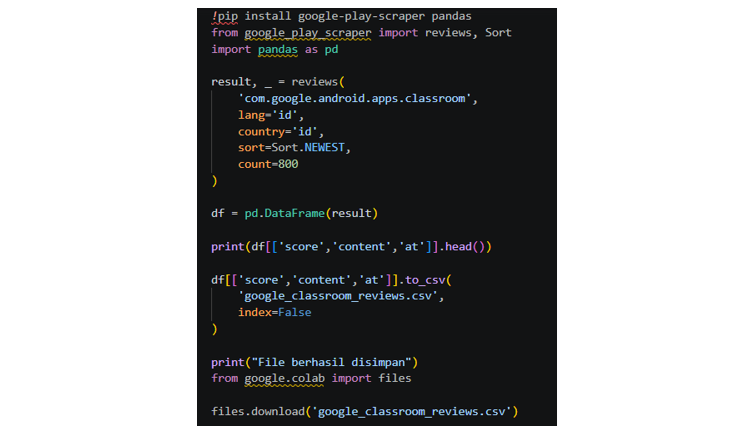
Google Classroom se utiliza para organizar actividades de aprendizaje; sin embargo, las evaluaciones estructuradas pueden pasar por alto los problemas señalados durante el uso cotidiano. Este estudio examinó 800 reseñas de Google Play para identificar problemas relacionados con la usabilidad, clasificarlos utilizando las cinco dimensiones de usabilidad de Nielsen y medir la proporción de comentarios que no se ajustaban a dicho marco. Las reseñas se recopilaron con el paquete «google-play-scraper» de Python, utilizando la configuración de idioma y país en indonesio, y se ordenaron de más reciente a más antigua. Mediante un análisis cualitativo de contenido guiado por el marco, se asignó a cada reseña una categoría principal: facilidad de aprendizaje, eficiencia, facilidad de memorización, errores, satisfacción u «Otros». Las frecuencias de las categorías se resumieron de forma descriptiva. Las valoraciones se concentraron en ambos extremos, con 347 reseñas de una estrella (43,38 %) y 288 reseñas de cinco estrellas (36,00 %). De las 800 reseñas, 427 (53,38 %) se clasificaron dentro de las dimensiones de Nielsen, mientras que 373 (46,63 %) se incluyeron en la categoría «Otros». Entre las reseñas clasificadas según el marco, los errores representaron el 56,44 % y la satisfacción el 37,00 %, mientras que la facilidad de aprendizaje, la eficiencia y la facilidad para recordar representaron en conjunto el 6,56 %. Las quejas más comunes relacionadas con los errores se referían a fallos de software, errores al subir tareas, dificultades para iniciar sesión, bloqueos y problemas con las notificaciones. El amplio tamaño de la categoría «Otros» indica que casi la mitad de las reseñas no pudieron clasificarse dentro de las cinco dimensiones según las reglas de codificación del estudio. Estos resultados sugieren que las reseñas de las tiendas de aplicaciones complementan las evaluaciones estructuradas de usabilidad al poner de relieve los problemas señalados por los usuarios en relación con tareas de aprendizaje esenciales. Dado que las reseñas fueron autoseleccionadas y recopiladas en un momento concreto, las frecuencias de las categorías no deben generalizarse al conjunto de los usuarios de Google Classroom.
RIS is compatible with Zotero, Mendeley, and EndNote. Immediate opening depends on the visitor's browser and reference-manager settings.
Declaraciones recogidas en el artículo publicado
Author Contributions
Rafiqa Rizalita: Conceptualization; Methodology; Investigation; Data Curation; Writing – Original Draft. Putut Aji Nalendro: Formal Analysis; Validation; Visualization; Writing – Review & Editing. Novi Febrianti: Writing – Review & Editing. All authors approved the manuscript and agreed to the author order.
Acknowledgments
Not applicable.
View statement in PDF · PDF page 12Financiación
This research received no specific grant from any funding agency in the public, commercial, or not-forprofit sectors.
View statement in PDF · PDF page 12Conflictos de Intereses
The authors declare no competing interests.
View statement in PDF · PDF page 12Ethics Approval
Formal ethical approval was not obtained. The study analyzed publicly available Google Play reviews without participant recruitment, direct interaction, or intervention. Reviewer usernames and other directly identifying information are not reported.
View statement in PDF · PDF page 12Informed Consent
Not applicable. The study used publicly available Google Play reviews without recruiting or interacting with participants or conducting an intervention. No private or confidential personal information was intentionally collected or used.
View statement in PDF · PDF page 12Consent for Publication
Not applicable. The study reports no identifiable individual participants or private personal information. Study or Protocol Registration Not applicable. The study did not involve a clinical trial or intervention requiring prospective registration.
View statement in PDF · PDF page 12Disponibilidad de Datos
The analysis used publicly available Google Classroom reviews retrieved from Google Play. Individual reviews may no longer be accessible in their original form because app-store content changes over time. The processed dataset and supporting analytical materials are available from the corresponding author upon reasonable request, subject to applicable terms of service and data-use requirements.
View statement in PDF · PDF page 12Generative AI Disclosure
During manuscript preparation, ChatGPT (OpenAI, GPT-5.6, accessed in 2026) and Claude (Anthropic, accessed in 2026) were used as language and research assistants, primarily for translation and text refinement. Grammarly (accessed in 2026) was used for grammar, spelling, clarity, and English-language proofreading. All AI-assisted material was reviewed and verified by the authors, who remain responsible for the content, accuracy, interpretation, and final manuscript. No AI system or AI-assisted technology is listed as an author. Preprint and Prior Dissemination The authors report that this manuscript has not previously been disseminated. It has not been published as a preprint, conference paper or abstract, thesis or dissertation, working paper, repository version, protocol, report, or translated publication. No substantially related manuscript using the same dataset or analysis has been published or submitted elsewhere.
View statement in PDF · PDF page 13Citas
31 References[1] S. Dhawan, “Online learning: A panacea in the time of COVID-19 crisis,” Journal of Educational Technology Systems, vol. 49, no. 1, pp. 5–22, 2020, doi: https://doi.org/10.1177/0047239520934018.
[2] UNESCO, “Education: From disruption to recovery,” UNESCO, 2020. [Online]. Available: https://en.unesco.org/covid19/educationresponse
[3] S. H. Alshammari, “The influence of technical support, perceived self-efficacy, and instructional design on students’ use of learning management systems,” Turkish Online Journal of Distance Education, vol. 21, no. 3, pp. 112–141, 2020, doi: https://doi.org/10.17718/tojde.762034.
[4] F. Martin and D. U. Bolliger, “Engagement matters: Student perceptions on the importance of engagement strategies in the online learning environment,” Online Learning, vol. 22, no. 1, pp. 205–222, 2018, doi: https://doi.org/10.24059/olj.v22i1.1092.
[5] J. A. Kumar and B. Bervell, “Google Classroom for mobile learning in higher education: Modelling the initial perceptions of students,” Education and Information Technologies, vol. 24, no. 2, pp. 1793–1817, 2019, doi: https://doi.org/10.1007/s10639-018-09858-z.
[6] K. A. Azhar and N. Iqbal, “Effectiveness of Google Classroom: Teachers’ perceptions,” Prizren Social Science Journal, vol. 2, no. 2, pp. 52–66, 2018.
[7] K. R. Heggart and J. Yoo, “Getting the most from Google Classroom: A pedagogical framework for tertiary educators,” Australian Journal of Teacher Education, vol. 43, no. 3, pp. 140–153, 2018, doi: https://doi.org/10.14221/ajte.2018v43n3.9.
[8] R. A. S. Al-Maroof and M. Al-Emran, “Students acceptance of Google Classroom: An exploratory study using PLS-SEM approach,” International Journal of Emerging Technologies in Learning (iJET), vol. 13, no. 6, pp. 112–123, 2018, doi: https://doi.org/10.3991/ijet.v13i06.8275.
[9] M. Alotumi, “Factors influencing graduate students’ behavioral intention to use Google Classroom: Case study-mixed methods research,” Education and Information Technologies, vol. 27, no. 7, pp. 10035–10063, 2022, doi: https://doi.org/10.1007/s10639-022-11051-2.
[10] A. Priyadi, E. Sediyono, and H. D. Purnomo, “Evaluasi Kebergunaan (Usability) dan Rekomendasi Penggunaan Google Classroom untuk Blended Learning di Perguruan Tinggi,” Jurnal Sistem Informasi Bisnis, vol. 11, no. 2, pp. 105–116, 2021, doi: https://doi.org/10.21456/vol11iss2pp105-116.
[11] A. Y. Pawestri and A. U. Khasanah, “The implementation of text mining to improve Google Classroom performance based on user review,” TEKNOSAINS: Jurnal Sains, Teknologi dan Informatika, vol. 13, no. 1, pp. 1–8, 2026, doi: https://doi.org/10.37373/tekno.v13i1.1479.
[12] O. Pramudia, R. Pratama, S. N. Azizah, and R. Novita, “Analisis Tematik Keluhan Pengguna terhadap UI/UX Google Meet Berdasarkan Kajian Literatur tentang Ulasan Google Play Store,” Journal Purnama Teknologi Kejuruan, vol. 1, no. 1, pp. 49–61, 2026. [Online]. Available: https://journal-purnama.com/index.php/purnatek/article/view/40
[13] K. Asafa, E. D. Sari, R. P. Adijaya, and R. P. Rahayu, “Analisis Antarmuka VClass Universitas Lampung: Evaluasi Prinsip Heuristik dan Eksplorasi Kebutuhan Sistem Pengingat Batas Waktu Tugas,” Journal Purnama Teknologi Kejuruan, vol. 1, no. 1, pp. 40–48, 2026. [Online]. Available: https://journal-purnama.com/index.php/purnatek/article/view/28
[14] International Organization for Standardization, “Ergonomics of human-system interaction—Part 11: Usability: Definitions and concepts,” ISO 9241-11:2018, 2018. [Online]. Available: https://www.iso.org/standard/63500.html
[15] J. Nielsen, Usability Engineering. San Diego, CA, USA: Academic Press, 1993.
[16] Z. Huang and M. Benyoucef, “A systematic literature review of mobile application usability: Addressing the design perspective,” Universal Access in the Information Society, vol. 22, no. 3, pp. 715–735, 2023, doi: https://doi.org/10.1007/s10209-022-00903-w.
[17] B. A. Kumar, S. S. Chand, and M. S. Goundar, “Usability testing of mobile learning applications: A systematic mapping study,” International Journal of Information and Learning Technology, vol. 41, no. 2, pp. 113–129, 2024, doi: https://doi.org/10.1108/IJILT-03-2023-0029.
[18] J. Dąbrowski, E. Letier, A. Perini, and A. Susi, “Analysing app reviews for software engineering: A systematic literature review,” Empirical Software Engineering, vol. 27, art. no. 43, 2022, doi: https://doi.org/10.1007/s10664-021-10065-7.
[19] D. Pagano and W. Maalej, “User feedback in the AppStore: An empirical study,” in Proc. 21st IEEE Int. Requirements Engineering Conf. (RE), 2013, pp. 125–134, doi: https://doi.org/10.1109/RE.2013.6636712.
[20] M. Tavakoli, L. Zhao, A. Heydari, and G. Nenadić, “Extracting useful software development information from mobile application reviews: A survey of intelligent mining techniques and tools,” Expert Systems with Applications, vol. 113, pp. 186–199, 2018, doi: https://doi.org/10.1016/j.eswa.2018.05.037.
[21] J. Dąbrowski, E. Letier, A. Perini, and A. Susi, “Mining and searching app reviews for requirements engineering: Evaluation and replication studies,” Information Systems, vol. 114, art. no. 102181, 2023, doi: https://doi.org/10.1016/j.is.2023.102181.
[22] X. Wang, T. Zhang, Y. Tan, W. Shang, and Y. Li, “How to effectively mine app reviews concerning software ecosystem? A survey of review characteristics,” Journal of Systems and Software, vol. 213, art. no. 112040, 2024, doi: https://doi.org/10.1016/j.jss.2024.112040.
[23] V. Schoenmueller, O. Netzer, and F. Stahl, “The polarity of online reviews: Prevalence, drivers and implications,” Journal of Marketing Research, vol. 57, no. 5, pp. 853–877, 2020, doi: https://doi.org/10.1177/0022243720941832.
[24] Y. Singh and P. K. Suri, “An empirical analysis of mobile learning app usage experience,” Technology in Society, vol. 68, art. no. 101929, 2022, doi: https://doi.org/10.1016/j.techsoc.2022.101929.
[25] D. Al-Fraihat, M. Joy, R. Masa’deh, and J. Sinclair, “Evaluating e-learning systems success: An empirical study,” Computers in Human Behavior, vol. 102, pp. 67–86, 2020, doi: https://doi.org/10.1016/j.chb.2019.08.004.
[26] S. Eom, N. J. Ashill, J. B. Arbaugh, and J. L. Stapleton, “The role of information technology in e-learning systems success,” Human Systems Management, vol. 31, no. 3–4, pp. 147–163, 2012, doi: https://doi.org/10.3233/HSM-2012-0767.
[27] P. Zaharias and A. Poylymenakou, “Developing a usability evaluation method for e-learning applications: Beyond functional usability,” International Journal of Human–Computer Interaction, vol. 25, no. 1, pp. 75–98, 2009, doi: https://doi.org/10.1080/10447310802546716.
[28] H. S. Jung, H. Lee, and K. C. Park, “Analysis of UX elements in educational applications for young children and implementation of ISO/IEC 25010 quality standards,” SAGE Open, vol. 15, no. 3, 2025, doi: https://doi.org/10.1177/21582440251377385.
[29] K. Krippendorff, Content Analysis: An Introduction to Its Methodology, 4th ed. Thousand Oaks, CA, USA: SAGE Publications, 2018.
[30] K. A. Neuendorf, The Content Analysis Guidebook, 2nd ed. Thousand Oaks, CA, USA: SAGE Publications, 2017.
[31] E. Liptrot, A. Montazami, H. A. Pearson, and A. K. Dubé, “Why this app: How user ratings and app store rankings impact parents’ choice of educational apps,” Computers & Education, vol. 238, art. no. 105410, 2025, doi: https://doi.org/10.1016/j.compedu.2025.105410.
Copyright and License

Esta obra está bajo una licencia internacional Creative Commons Atribución 4.0.
Derechos de autor 2026 Rafiqa Rizalita, Putut Aji Nalendro, Novi Febrianti