

1. Introduction
Dyslexia is a prevalent neurodevelopmental learning disorder characterized by persistent difficulties in reading accuracy, fluency, spelling, and language processing, which can substantially affect academic achievement and psychological well-being if left undiagnosed [1], [2]. Conventional dyslexia screening and diagnostic procedures typically rely on expert-administered psychometric tests and observational assessments, which are often time-consuming, resource-intensive, and subject to evaluator bias, limiting their scalability in educational settings, particularly in early childhood education [3].
Recent advances in artificial intelligence (AI) and machine learning have created new opportunities to develop automated and data-driven dyslexia detection systems [2]. Prior research has demonstrated that AI-based approaches can analyze behavioral, linguistic, and physiological signals to support early screening, achieving promising detection performance using modalities such as eye-tracking data, electroencephalography, and text-based linguistic features [4]. These studies highlight the potential of AI to complement traditional screening by providing more objective, scalable assessment mechanisms.
However, despite these advancements, several limitations remain evident in the existing literature. First, many AI-based dyslexia detection systems rely on single-modality data, which may fail to capture the multifaceted cognitive and behavioral characteristics associated with reading disorders [5]. Second, a substantial proportion of prior studies focus on offline or laboratory-based systems, reducing their accessibility for routine screening by parents and teachers [6]. Third, while deep learning models have been widely explored, limited attention has been paid to computationally efficient, real-time-deployable sequential architectures [7].
Sequential learning models, such as Recurrent Neural Networks (RNNs), are particularly well-suited for dyslexia detection tasks, as reading and speech processes inherently involve temporal dependencies [8], [9]. Among RNN variants, the Gated Recurrent Unit (GRU) offers a favorable balance between representational capacity and computational efficiency, making it suitable for mobile-based inference where resource constraints are critical. GRU architectures can capture long-term dependencies in sequential text and speech data while maintaining lower computational overhead than more complex recurrent or transformer-based models [10], [11].
In parallel with algorithmic development, there has been increasing interest in delivering AI-driven dyslexia screening tools through mobile platforms to enhance accessibility and real-world applicability. Mobile applications enable real-time analysis, user-friendly interaction, and independent screening outside clinical environments, which is particularly valuable for early identification in educational contexts. Nevertheless, research integrating multimodal sequential AI models into mobile applications for dyslexia detection remains limited.
Therefore, this study proposes an AI-based mobile application for early dyslexia detection that integrates text and speech analysis using a GRU-based sequential learning model. The primary contributions of this study are threefold: (1) the development of a multimodal dyslexia detection model that captures temporal patterns in children’s reading text and voice recordings using a GRU architecture; (2) the implementation of a mobile-based screening system capable of delivering real-time detection results and maintaining assessment history; and (3) empirical evidence demonstrating the feasibility of deploying lightweight sequential deep learning models for early dyslexia screening in non-clinical educational settings.
2. Methods
This study adopted a Research and Development (R&D) methodology to design, implement, and evaluate an Artificial Intelligence (AI)-based mobile application for early dyslexia detection [12]. The proposed approach integrates a deep learning model based on a Recurrent Neural Network (RNN), specifically the Gated Recurrent Unit (GRU), with a mobile application platform to enable accessible and real-time screening [13]. The methodological framework consisted of five main stages: requirement analysis, system design, AI model development, mobile application implementation, and system testing and evaluation.
2.1. Research Design
The research design followed an R&D paradigm, emphasizing the systematic development of a functional product through iterative evaluation. This approach was selected because the study's primary objective was not merely analytical but also constructive—namely, to develop and validate an AI-based mobile application capable of supporting early dyslexia screening in non-clinical settings. The R&D stages were operationalized into the following phases: (1) analysis of user and system requirements; (2) design of the system architecture, data flow, and database structure; (3) development and training of a GRU-based dyslexia detection model; (4) implementation of the mobile application and backend services; and (5) functional and performance testing of the integrated system.
2.2. Population and Sample
The target population of this study comprised elementary school children at the early reading stage. A total of 76 students were selected as research participants using a purposive sampling technique. The dataset used for model development consisted of children’s reading text inputs and voice recordings collected during structured word-reading and spelling tasks. These activities were specifically designed to elicit dyslexia-related indicators, including spelling inaccuracies, pronunciation inconsistencies, and variations in reading fluency.
|
No |
School Origin |
City/Region |
Number of Students |
Percentage |
|---|---|---|---|---|
|
1 |
SDN 13 Kapalo Koto Padang |
Padang |
52 |
68.42% |
|
2 |
SDN 04 Birugo Bukittinggi |
Bukittinggi |
16 |
21.05% |
|
3 |
SDN 02 Cupak Tangah |
Padang |
4 |
5.26% |
|
4 |
SDN 001 Bintan Dumai City |
Dumai |
1 |
1.32% |
|
5 |
SDN 022 Jayamukti Dumai |
Dumai |
1 |
1.32% |
|
6 |
SDN 027 Bukit Batrem Dumai |
Dumai |
1 |
1.32% |
|
7 |
SIT Raudhatul Jannah |
Dumai |
1 |
1.32% |
|
Total |
76 |
100% |
||
As presented in Table 1, the participants were drawn from several elementary schools across West Sumatra and Riau Provinces, providing variability in the collected data. Data collection procedures were conducted in accordance with ethical and privacy considerations, with informed consent obtained from parents or guardians, teachers, and school authorities. The purposive sampling strategy enabled the selection of participants who exhibited characteristics relevant to early dyslexia detection, thereby ensuring that the dataset captured meaningful linguistic and phonological patterns associated with reading difficulties.
2.3. Research Instruments
The research instruments consisted of integrated system components developed to support data acquisition, AI-based analysis, and result visualization. These instruments worked together to collect multimodal inputs, process sequential data using deep learning, and present detection results through a mobile interface. The instruments employed in this study are summarized in Table 2.
|
No |
Instrument |
Description |
Output |
|---|---|---|---|
|
1 |
Text Input Module |
Module for collecting children’s reading and spelling responses in textual form through the mobile application |
Text data |
|
2 |
Audio Input Module |
Module for recording children’s reading voices in MP3 format for pronunciation analysis |
Audio data |
|
3 |
GRU-Based AI Model |
Deep learning model based on the Gated Recurrent Unit used to analyze sequential text and audio patterns |
Dyslexia detection result |
|
4 |
Mobile Application Interface |
User interface developed using Flutter to manage input, display detection results, and show detection history |
Detection visualization |
|
5 |
Backend and Database System |
RESTful backend service integrated with a MySQL database to store user data and detection history |
Structured data storage |
2.4. Research Procedure
2.4.1. System Requirement Analysis
System requirement analysis was conducted through a structured literature review and observation of user needs in educational contexts. This stage identified both functional and non-functional requirements. Functional requirements included user authentication, text and audio data input, dyslexia detection processing, result visualization, and storage of detection history. Non-functional requirements encompassed application responsiveness, usability, data security, and system reliability.
The outcomes of this analysis informed subsequent system design decisions and ensured alignment between user needs, technical feasibility, and research objectives.
2.4.2. System Design
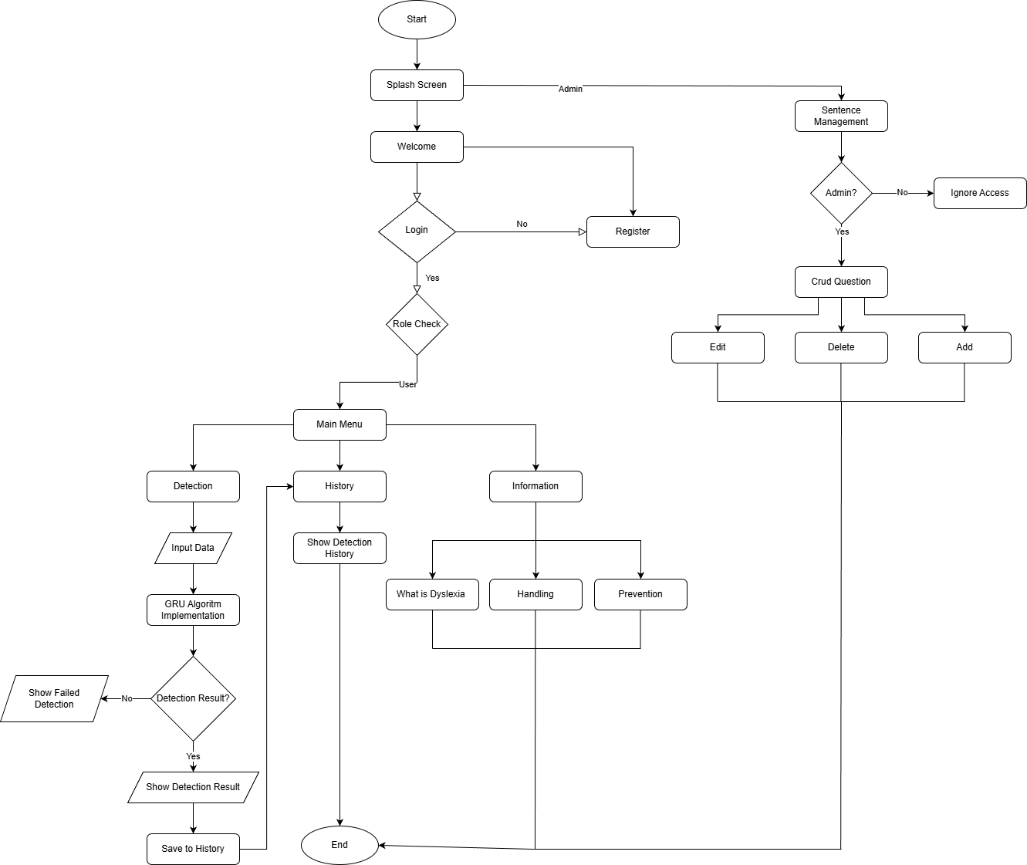
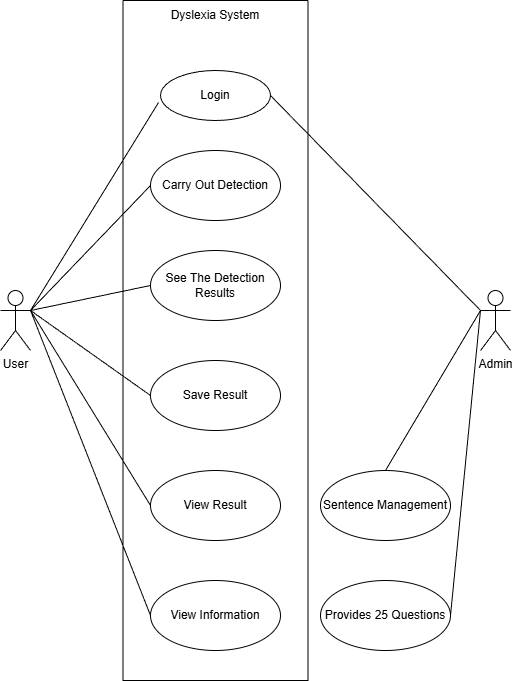
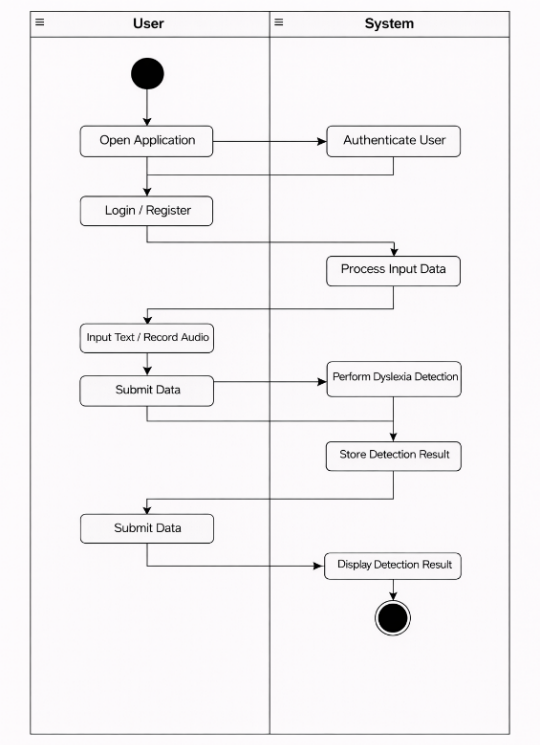
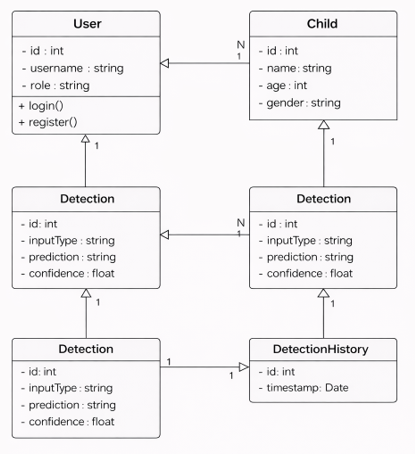
The system design stage focused on defining the overall architecture and interactions among system components to support the dyslexia detection process. Design artifacts included system flowcharts, use case diagrams, activity diagrams, class diagrams, and an entity relationship diagram (ERD). These diagrams collectively illustrate the functional logic, object-oriented structure, and data management strategy of the proposed system.
2.4.2.1. Flowchart System
The flowchart illustrates the sequential operational workflow of the application, beginning with user authentication, followed by text and audio input, data transmission to the backend server, processing by the GRU-based AI model, and presentation of detection results to the user. This process flow, shown in Figure 1, provides a high-level overview of system execution from input acquisition to output delivery.
2.4.2.2. Use Case Diagram
The use case diagram depicts the functional interactions between system actors and the application, as presented in Figure 2. Two primary actors are defined: users and administrators. Users can register, log in, perform dyslexia detection, view results, and access their detection history. Administrators are responsible for managing assessment content, including sentence inputs and the provision of 25 standardized questions. This diagram establishes the system's functional scope and access boundaries.
2.4.2.3. Activity Diagram
The activity diagram shown in Figure 3 outlines the step-by-step workflow of user interactions within the application. It visualizes the sequence of actions, including authentication, data input submission, AI processing, and result visualization, along with the decision points that govern system responses.
2.4.2.4. Class Diagram
The class diagram models the object-oriented structure of the system by defining classes, attributes, methods, and relationships among the system's core entities. As illustrated in Figure 4, this diagram supports modular implementation and structured data exchange between the mobile application, backend services, and database.
2.4.2.5. Entity Relationship Diagram
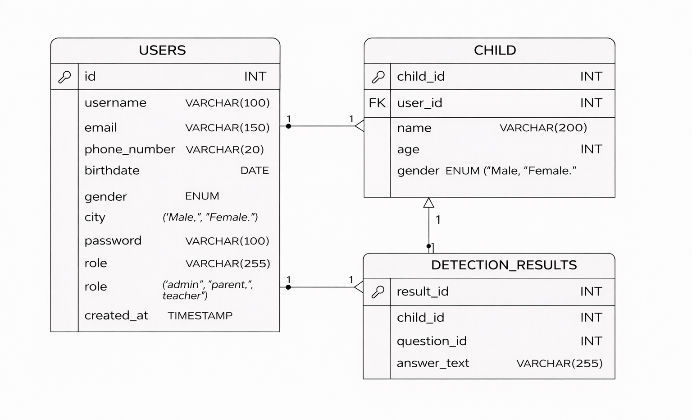
The Entity Relationship Diagram (ERD) in Figure 5 illustrates the database structure of the dyslexia detection system. The database consists of three main entities: Users, Child, and Detection_Results. The Users entity stores account and profile information for parents, teachers, and administrators. Each user may be associated with one or more children recorded in the Child entity through foreign key relationships. The Detection_Results entity stores screening outcomes and is linked to the Child entity, allowing multiple detection records per child. These relationships ensure data integrity, minimize redundancy, and support efficient data retrieval.
2.4.3. Artificial Intelligence Modeling Using GRU
The AI model was developed using a Gated Recurrent Unit (GRU) architecture due to its suitability for modeling sequential data and its computational efficiency. Text data were preprocessed using normalization, tokenization, and sequence encoding, while audio data were preprocessed and feature-extracted to capture temporal speech characteristics. The GRU model was designed to learn temporal dependencies associated with dyslexia-related reading and pronunciation patterns.
Model training and validation were performed using a partitioned dataset to assess learning behavior and generalization capability before deployment. Performance metrics were monitored during training to evaluate convergence and stability.
2.4.4. Mobile Application Development
The mobile application was developed using the Flutter framework to support cross-platform deployment on Android devices. Flutter was selected for its single codebase architecture, responsiveness, and ability to implement interactive user interfaces efficiently [14]. The application implements core functionalities, including user authentication, child data management, text input, audio recording, visualization of detection results, and access to screening history.
The application communicates with the backend system via a RESTful API implemented using FastAPI. Text and audio inputs are transmitted to the backend through HTTP requests, where preprocessing, inference, and result generation are performed. The mobile application functions as a client-side interface, while computationally intensive processing is handled server-side. Integration testing was conducted to ensure seamless communication between the application, backend services, and database.
2.4.5. System Testing
System testing was conducted to verify that the application met the defined functional and non-functional requirements. Functional testing validated the correctness of each application feature, while performance testing assessed system stability and response time under normal usage conditions [15]. Black-box testing was employed to evaluate user interaction flows and application behavior without reference to internal implementation details [16].
2.5. Data Analysis Techniques
Data analysis focused on evaluating both AI model performance and overall system functionality. Model performance was assessed using accuracy and loss metrics obtained during training and testing phases. System-level evaluation involved verifying detection outputs, application responsiveness, and data integrity. The analysis aimed to determine the effectiveness, reliability, and practical feasibility of the developed system as an early dyslexia screening tool.
3. Results
This section presents the results of system implementation, AI model performance, and application testing. The results are organized into three subsections: system implementation, model performance evaluation, and application testing outcomes.
3.1. System Implementation
The proposed dyslexia detection system was implemented by integrating a mobile application, backend services, and a GRU-based Artificial Intelligence model. This subsection describes the implementation outcomes of each system component and demonstrates how they function cohesively to support early dyslexia screening.
3.1.1. Mobile Application Development
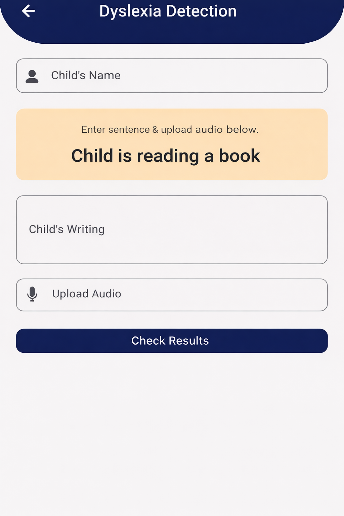
The mobile application was developed using the Flutter framework to support cross-platform deployment on Android devices. The application provides essential functionalities, including user authentication, child profile management, text input, audio recording, and dyslexia detection. Through the application interface, users can conduct reading assessments by entering textual responses or recording children’s reading voices directly.
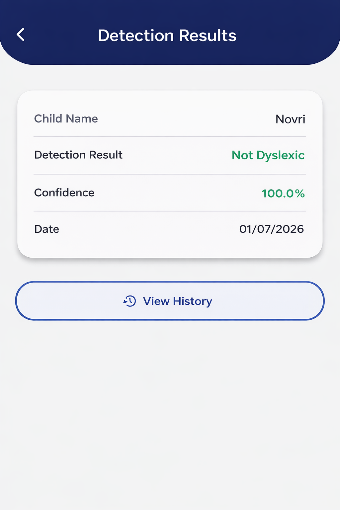
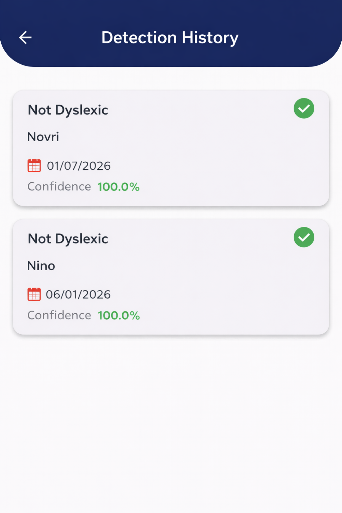
The dyslexia detection interface is illustrated in Figure 6a, where users enter the child’s name, written text, and the corresponding audio recording before initiating the detection process. After processing is completed, the application presents prediction outcomes on a dedicated result page, displaying the detected reading condition, confidence value, and detection date, as shown in Figure 6b. In addition, all detection results are automatically stored and can be accessed through the detection history feature, enabling users to review previous screening records. The detection history interface is presented in Figure 6c.
|
|
|
|
|
|---|---|---|---|
|
(a) |
(b) |
(c) |
|
3.1.2. Backend System Implementation
The backend system for the proposed application, referred to as DislexiCare, was implemented using two primary components: an API backend built with FastAPI and a database backend powered by MySQL. These components collectively support data preprocessing, AI model inference, and structured data management.
The FastAPI backend exposes a set of RESTful endpoints that handle system operations and dyslexia detection requests. The availability and connectivity of the backend service were verified via a basic GET endpoint at the root path (/), ensuring the backend is operational before executing detection processes. The FastAPI interface and endpoint documentation are illustrated in Figure 7.
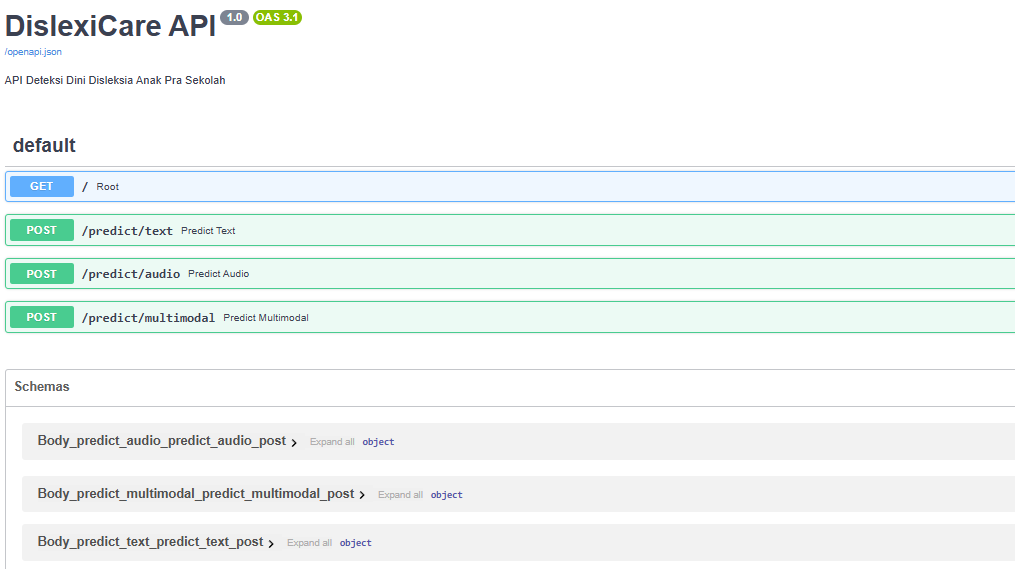
The core dyslexia-detection functionality is implemented via multiple POST endpoints. The /predict/text endpoint processes textual inputs such as children’s reading or writing responses to identify dyslexia-related error patterns. The /predict/audio endpoint analyzes children’s voice recordings to detect phonological and pronunciation difficulties. Furthermore, the /predict/multimodal endpoint integrates text and audio inputs to perform multimodal analysis, enabling the system to generate more comprehensive predictions by leveraging multiple data modalities.
The database backend used MySQL for persistent data storage. The database structure, illustrated in Figure 8, consists of four main tables: users, children, sentences, and detection_results. The users table stores account and authentication information, while the children table maintains child identity data, allowing a single user to manage multiple child profiles. The sentences table stores reference reading materials managed by administrators, and the detection_results table records dyslexia screening outcomes, including prediction labels, confidence values, and timestamps.
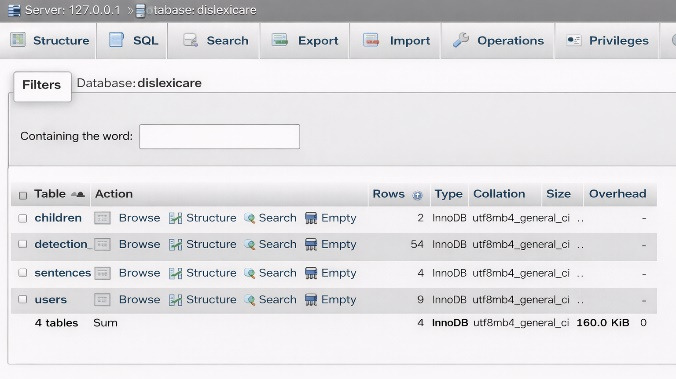
All prediction outputs generated by the FastAPI backend are automatically stored in the database and can be retrieved by the mobile application via API requests. This backend implementation effectively supports real-time dyslexia detection, secure data storage, and retrieval of historical screening records.
3.1.3. GRU Model Integration
The Gated Recurrent Unit (GRU) model was successfully integrated into the backend system for dyslexia detection using sequential text and audio data. This integration enables the trained model to receive input data from the FastAPI backend and generate prediction outputs in real time.
Textual inputs submitted from the mobile application undergo preprocessing steps, including tokenization and sequence padding, before being passed to the GRU model for inference. For audio inputs, children’s voice recordings are processed through feature extraction to obtain Mel-Frequency Cepstral Coefficients (MFCC), which capture salient acoustic characteristics of speech. These MFCC features are then used as sequential inputs for the detection process.
In the multimodal detection scenario, textual and audio features are combined to produce a unified prediction. The GRU model processes the temporal patterns embedded in the multimodal input and produces prediction labels along with confidence values. The inference results are returned to the backend system and subsequently transmitted to the mobile application for visualization and storage in the detection history.
3.2. Model Performance Result
The performance of the GRU-based dyslexia detection model was evaluated using accuracy and loss metrics obtained during the training and validation phases. These metrics were used to assess the model’s learning behavior, convergence, and generalization capability when processing sequential text and audio data.
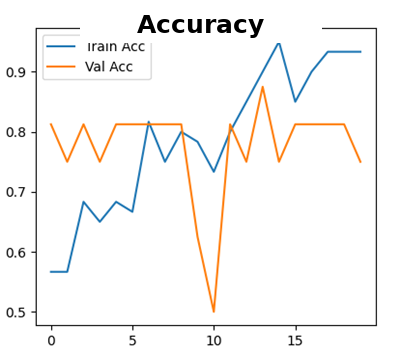
The accuracy curve of the GRU model across training epochs is presented in Figure 9. The results indicate a consistent increase in accuracy as training progressed, suggesting that the model effectively learned dyslexia-related patterns from the input data. The absence of abrupt fluctuations in the accuracy trend reflects stable learning behavior.
The loss curve during training is illustrated in Figure 10. The gradual decrease in loss values across epochs indicates effective optimization and reduced prediction error. The convergence of the loss curve suggests that the model reached a stable learning state without exhibiting instability.
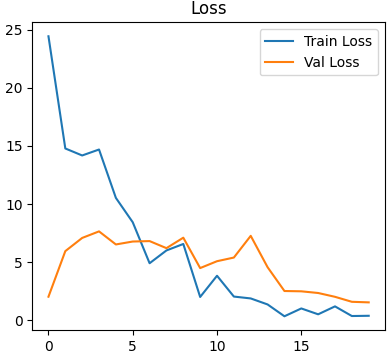
A summary of the model performance evaluation is provided in Table 3. The GRU model achieved high training accuracy and maintained relatively stable validation accuracy. The low and stable loss values observed during validation indicate that the model did not experience severe overfitting. Overall, the performance results demonstrate that the GRU model exhibits adequate generalization capability and is suitable for deployment as a prototype dyslexia detection system.
|
Evaluation Parameter |
Train Data |
Validation Data |
Description |
|---|---|---|---|
|
Final accuracy |
High (≈ >90%) |
Moderately High (≈ 80%) |
The model successfully learned dyslexia-related patterns |
|
Final loss |
Low (close to zero) |
Low and stable |
Prediction error decreased during training |
|
Training trend |
Increasing |
Relatively stable |
No severe overfitting observed |
|
Model Generalization |
Good |
Fairly good |
Suitable for prototype implementation |
3.3. Application Testing Result
Application testing was conducted to evaluate the functional performance of the developed mobile application. The testing process focused on verifying that each feature operated as intended. Black-box testing was applied, whereby system behavior was evaluated based on input-output relationships without consideration of internal implementation details.
The testing scenarios included user authentication, child data input, text and audio submission, dyslexia detection processing, result visualization, and access to detection history. Each scenario was tested using valid input data, and the system responses were observed and recorded.
The functional testing results, summarized in Table 4, indicate that all core application features operated as expected. The application successfully processed user inputs, communicated with the backend system, displayed prediction outputs correctly, and stored detection results in the database. No critical functional errors were identified during testing.
|
Feature |
Test Scenario |
Expected Result |
Actual Result |
Status |
|---|---|---|---|---|
|
User Login |
User enters valid credentials |
User successfully logged in |
Successful |
Pass |
|
Text Input |
User inputs reading text |
Text data accepted |
Successful |
Pass |
|
Audio Upload |
User uploads an audio file |
Audio file processed |
Successful |
Pass |
|
Dyslexia Detection |
User submits text and audio |
Detection result generated |
Successful |
Pass |
|
Result Display |
The system shows the prediction output |
Result displayed correctly |
Successful |
Pass |
|
Detection History |
User accesses the history page |
History data displayed |
Successful |
Pass |
Overall, the application testing results confirm that the developed system meets the defined functional requirements and can support dyslexia detection in a mobile application environment.
4. Discussion
The implementation of an artificial intelligence-based system for early dyslexia detection in this study aligns with a growing body of international research emphasizing the role of intelligent technologies in supporting early identification of learning difficulties. Dyslexia is widely recognized as a neurodevelopmental disorder that primarily affects reading accuracy, fluency, and phonological processing, and delayed identification has been consistently associated with adverse academic trajectories and psychosocial outcomes. In this context, the stable learning behavior and functional performance observed in the proposed system support previous findings suggesting that computational models can assist educators and parents in identifying early risk indicators before formal clinical diagnosis [1], [7].
The findings of this study contribute to existing research by demonstrating that a GRU-based sequential learning model can be effectively embedded within a mobile application to support real-time dyslexia screening. Consistent with international studies reporting the suitability of GRU architectures for temporal data modeling, the accuracy and loss trends observed during model training indicate that the GRU model captured meaningful sequential patterns in both textual and speech-based inputs [8], [17]. Compared to more complex recurrent architectures such as LSTM, GRU offers reduced computational complexity while maintaining competitive performance, which is particularly advantageous for mobile and real-time applications [18], [19]. The results of this study therefore reinforce prior evidence that GRU architectures offer a favorable balance between predictive performance and computational efficiency in resource-constrained environments.
Importantly, dyslexia-related reading difficulties extend beyond written text and are closely associated with phonological processing and speech production characteristics. Previous international research has consistently reported that children with dyslexia may exhibit atypical pronunciation patterns, delayed articulation, and reduced phonemic awareness during reading activities [20]. The multimodal design adopted in this study, integrating both textual input and audio-based speech features, enabled the system to capture a broader spectrum of dyslexia-related indicators. The observed model stability and detection performance are consistent with recent deep learning studies, indicating that multimodal approaches generally outperform unimodal systems by leveraging complementary linguistic and acoustic information [6]. Open-access multimodal dyslexia studies further support this observation, reporting that combined text–speech representations enhance the robustness of early screening models by capturing temporal and phonological complexities inherent in reading behavior.
From a system implementation perspective, deploying the dyslexia detection model within a mobile application environment substantially enhances accessibility and practical applicability. Mobile-based educational and health-related applications have been widely recognized for their ability to deliver flexible, user-centered, and real-time support across diverse contexts [21], [22]. In this study, the use of the Flutter framework facilitated cross-platform development and responsive interface design, aligning with recent mobile development research that highlights Flutter’s efficiency and scalability [23]. The successful integration of backend AI inference with a mobile front-end further demonstrates the feasibility of deploying sequential deep learning models in everyday screening scenarios.
Moreover, recent studies in mobile-assisted learning and digital health screening indicate that smartphone-based AI applications can reduce structural barriers to early assessment by enabling continuous monitoring and data collection in naturalistic environments such as homes and schools [24], [25]. The ability of the proposed system to store longitudinal screening data and provide historical detection records supports this paradigm, allowing parents and educators to observe potential patterns over time rather than relying on isolated assessments. This longitudinal perspective is particularly relevant for dyslexia screening, where early indicators may emerge gradually rather than as discrete diagnostic events.
Finally, the integration of artificial intelligence within this educational screening application reflects a broader global shift toward AI-assisted learning and assessment systems. In line with international ethical guidelines, the AI model developed in this study is explicitly positioned as a decision-support tool rather than a diagnostic authority. This positioning aligns with contemporary ethical AI research, which emphasizes that AI-driven screening systems should complement professional expertise and support early intervention pathways without replacing formal diagnostic procedures [26], [27]. By framing the proposed system as an early screening aid, this study adheres to responsible AI principles while offering a practical, scalable solution to support early dyslexia identification.
5. Conclusion
This study presented the design, implementation, and evaluation of an artificial intelligence–based mobile application for early dyslexia detection in children. The proposed system integrates a Gated Recurrent Unit (GRU)–based deep learning model with a mobile application developed with the Flutter framework and a backend service that processes sequential text and audio inputs. By leveraging multimodal data, the system captures both linguistic and phonological characteristics associated with early reading difficulties. The experimental results demonstrate that the GRU-based model learned relevant sequential patterns from textual and auditory data, as reflected in satisfactory accuracy and stable loss values during training and validation. These findings indicate that sequential deep learning models can effectively model temporal dependencies inherent in children’s reading and speech behaviors. In addition, system-level testing confirmed that the developed mobile application functions as intended, supporting user authentication, data entry, dyslexia detection processing, result visualization, and storage of screening history.
From a practical perspective, integrating multimodal inputs provides a more comprehensive representation of reading behavior than single-modality approaches. The mobile-based implementation further enhances accessibility, allowing parents and educators to conduct early dyslexia screening in non-clinical educational environments. Importantly, the proposed system is positioned as an early screening support tool rather than a diagnostic instrument, thereby complementing professional assessment and aligning with ethical recommendations for the responsible use of AI in educational and health-related contexts. Despite these contributions, this study represents an initial step toward mobile-based AI-assisted dyslexia screening. The evaluation was conducted within a limited dataset and controlled implementation setting, which may constrain the generalizability of the findings. Future work should therefore focus on expanding the dataset to include a more diverse population of learners, incorporating longitudinal data to observe developmental reading patterns, and further optimizing the model architecture to enhance generalization performance. Additional large-scale validation in authentic classroom and home-based settings is also recommended to assess usability, reliability, and real-world effectiveness across varied educational contexts. Overall, this study demonstrates the feasibility of integrating lightweight sequential deep learning models into mobile platforms to support early dyslexia screening. The findings contribute to the growing body of research on AI-assisted educational assessment and highlight the potential of mobile-based multimodal systems to support early identification and intervention for learning difficulties.
Declarations
Author Contributions
Muhamad Fathur Rahman: Conceptualization, Methodology, Software, Data Curation, Investigation, Writing – Original Draft, Writing – Review & Editing. Resmi Darni: Supervision, Resources, Validation, Writing – Review & Editing. Dony Novaliendry: Validation, Writing – Review & Editing. Khairi Budayawan: Supervision, Validation, Writing – Review & Editing. All authors have read and approved the final version of this manuscript.
Acknowledgments
The authors would like to thank all individuals, institutions, and external collaborators who provided invaluable guidance, technical support, and insights throughout the completion of this research. Their expertise significantly contributed to the rigor, quality, and practical relevance of this study.
Ethical Approval
This study did not involve direct experimental interventions on human or animal subjects. The research focused on application development and system testing. Data were collected through interviews with relevant participants after obtaining informed consent from parents or teachers. All data were processed anonymously to ensure privacy and confidentiality, and the study was conducted in accordance with applicable ethical research standards.
Informed Consent
Informed Consent was obtained verbally from all participants involved in this study. For participants who were minors, consent was obtained from their parents, teachers, and the school authorities. All data collected was anonymized to protect the privacy and confidentiality of the participants.
Funding
The authors declare that this research was conducted independently and did not receive any external funding or financial support. All stages of the study, including system design, development, testing, and manuscript preparation, were carried out without external grants or sponsorships.
Data Availability Statement
The data supporting the findings of this study are not publicly available due to privacy and confidentiality concerns related to the participants. Summary data are included in the manuscript, and additional information may be provided by the corresponding author upon reasonable request under strict confidentiality conditions.
Competing Interests
The authors confirm that there are no conflicts of interest, financial or otherwise, that could have influenced the research or the outcomes reported in this study.
Generative AI and AI-Assisted Technologies Statement
During the preparation of this manuscript, the author used generative AI and AI-assisted tools, including ChatGPT and Grammarly, to support language editing and proofreading. All content generated or assisted by these tools was carefully reviewed, revised, and validated by the author to ensure accuracy, originality, and academic integrity. The author takes full responsibility for the content of the manuscript and confirms that the use of these tools did not affect the study's scientific validity.
References
- M. J. Snowling, C. Hulme, and K. Nation, “Defining and understanding dyslexia: Past, present and future,” Oxford Review of Education, vol. 46, no. 4, pp. 501–513, Aug. 2020, doi: 10.1080/03054985.2020.1765756.
- Y. Alkhurayyif and A. R. W. Sait, “A review of artificial intelligence-based dyslexia detection techniques,” Diagnostics, vol. 14, no. 21, Art. no. 2362, 2024, doi: 10.3390/diagnostics14212362.
- G. Swami and Y. K. M., “Early detection of dyslexia using multimodal analysis of behavioral, neurophysiological, and linguistic markers,” in Proc. Int. Conf. Future Technologies (INCOFT), 2025, pp. 338–345, doi: 10.5220/0013615600004664.
- Y. Alkhurayyif and A. R. W. Sait, “Deep learning-driven dyslexia detection model using multi-modality data,” PeerJ Computer Science, vol. 10, pp. 1–22, 2024, doi: 10.7717/peerj-cs.2077..
- R. Kolinsky and M. Tossonian, “Phonological and orthographic processing in basic literacy adults and dyslexic children,” Reading and Writing, vol. 36, no. 7, pp. 1683–1706, Jul. 2023, doi: 10.1007/s11145-022-10347-6.
- M. Rauschenberger, R. Baeza-Yates, and L. Rello, “A universal screening tool for dyslexia by a web-game and machine learning,” Frontiers in Computer Science, vol. 3, Art. no. 628634, 2022, doi: 10.3389/fcomp.2021.628634.
- S. Mohsen, “Recognition of human activity using GRU deep learning algorithm,” Multimedia Tools and Applications, vol. 82, no. 30, pp. 47733–47749, 2023, doi: 10.1007/s11042-023-15571-y.
- X. Zhang, J. Yang, and Y. Liu, “A review on deep learning for intelligent speech recognition,” Neurocomputing, vol. 443, pp. 1–17, Jun. 2021, doi: 10.1016/j.neucom.2021.02.080.
- Y. Alharbi and N. Alsubaie, “Deep recurrent neural network for sequence modeling: A review,” Expert Systems, vol. 39, no. 8, Art. no. e12939, 2022, doi: 10.1111/exsy.12939.
- W. Yin, K. Kann, M. Yu, and H. Schütze, “Comparative study of CNN and RNN for natural language processing,” Neurocomputing, vol. 366, pp. 43–52, 2020, doi: 10.1016/j.neucom.2019.07.067.
- K. Cho et al., “On the properties of neural machine translation: Encoder–decoder approaches,” Neural Computing and Applications, vol. 32, pp. 12265–12280, 2020, doi: 10.1007/s00521-020-04874-2.
- O. Zawacki-Richter, V. I. Marín, M. Bond, and F. Gouverneur, “Systematic review of research on artificial intelligence applications in higher education—Where are the educators?,” International Journal of Educational Technology in Higher Education, vol. 17, pp. 1–27, 2020.
- A. Khan, A. Sohail, U. Zahoora, and A. S. Qureshi, “A survey of the recent architectures of deep convolutional neural networks,” Artificial Intelligence Review, vol. 53, pp. 5455–5516, 2020, doi: 10.1007/s10462-020-09825-6.
- S. A. Kinari, N. Funabiki, S. T. Aung, K. H. Wai, M. Mentari, and P. Puspitaningayu, “An independent learning system for Flutter cross-platform mobile programming with code modification problems,” Information, vol. 15, no. 10, Art. no. 614, 2024, doi: 10.3390/info15100614.
- V. Garousi, M. Felderer, and M. V. Mäntylä, “Guidelines for including grey literature and conducting multivocal literature reviews in software engineering,” Information and Software Technology, vol. 106, pp. 101–121, 2020, doi: 10.1016/j.infsof.2018.09.006.
- M. Akour, M. Alenezi, and M. Alshraideh, “Software testing techniques: A systematic mapping study,” IEEE Access, vol. 8, pp. 168772–168799, 2020, doi: 10.1109/ACCESS.2020.3023812.
- A. I. Putri and Y. Syarif, “Implementation of gated recurrent unit, long short-term memory, and derivatives for gold price prediction,” vol. 2, pp. 68–80, 2025.
- J. Schmidhuber, “Deep learning in neural networks: An overview,” Neural Networks, vol. 61, pp. 85–117, 2015, doi: 10.1016/j.neunet.2014.09.003.
- J. Chung, C. Gulcehre, K. Cho, and Y. Bengio, “Empirical evaluation of gated recurrent neural networks on sequence modeling,” arXiv preprint, 2014. [Online]. Available: http://arxiv.org/abs/1412.3555
- C. Liu and C. Chan, “Deep learning-based fall detection algorithm using ensemble model of coarse-fine CNN and GRU networks,” unpublished.
- R. Niu, L. Ni, and F. Zhu, “Emerging technologies and neuroscience-based approaches in dyslexia: A narrative review toward integrative and personalized solutions,” Frontiers in Human Neuroscience, vol. 19, 2025, doi: 10.3389/fnhum.2025.1683924.
- D. Corrochano, E. Ferrari, M. A. López-Luengo, and V. Ortega-Quevedo, “Educational gardens and climate change education: An analysis of Spanish preservice teachers’ perceptions,” Education Sciences, vol. 12, no. 4, 2022, doi: 10.3390/educsci12040275.
- O. Zawacki-Richter, V. I. Marín, M. Bond, and F. Gouverneur, “Systematic review of research on artificial intelligence applications in higher education—Where are the educators?,” International Journal of Educational Technology in Higher Education, vol. 16, no. 1, 2019, doi: 10.1186/s41239-019-0171-0.
- S.-J. Kim, M.-W. Park, H.-J. Choi, and J.-H. Lee, “Mobile health applications powered by AI,” KAIST, South Korea, Dec. 2023.
- A. S. Irawan et al., “Beyond the interface: Benchmarking pediatric mobile health applications for monitoring child growth using the Mobile App Rating Scale,” Frontiers in Digital Health, vol. 7, pp. 1–13, 2025, doi: 10.3389/fdgth.2025.1621293.
- O. Bulut and M. Beiting-Parrish, “The rise of artificial intelligence in educational measurement: Opportunities and ethical challenges,” Chinese/English Journal of Educational Measurement and Evaluation, vol. 5, no. 3, pp. 1–59, 2024, doi: 10.59863/miql7785.
- M. Perkins, J. Roe, and L. Furze, “The AI assessment scale revisited: A framework for educational assessment,” arXiv preprint, 2024. [Online]. Available: http://arxiv.org/abs/2412.09029
Author Biographies

Muhamad Fathur Rahman is an undergraduate student in the Informatics Engineering program at the Faculty of Engineering, Universitas Negeri Padang, Indonesia. He has academic experience in information technology, with a particular interest in artificial intelligence, machine learning, and mobile application development. His research focuses on applying deep learning techniques to educational and health-related problem-solving, including the development of intelligent systems for the detection of learning disorders.



Resmi Darni is a faculty member at the Faculty of Engineering, Universitas Negeri Padang (UNP), Indonesia. Her expertise lies in educational technology, information systems development, and digital learning media, including augmented reality (AR) applications. She is actively involved in research and community service projects, such as AI-based career information systems for vocational students, AR-based learning media for physical education courses, and digital cooperative systems in collaboration with local community initiatives.




Doni Novaliendry is a faculty member at the Faculty of Engineering, Universitas Negeri Padang (UNP), Indonesia. His research interests include artificial intelligence, machine learning, data mining, image processing, and technology-enhanced learning. He is actively involved in the development of educational applications and international research collaborations.




Khairi Budayawan is an Assistant Professor at the Faculty of Engineering, Universitas Negeri Padang (UNP), Indonesia. He has been serving as a lecturer at UNP since 2005 and was appointed as an Assistant Professor in 2019. His professional expertise includes software engineering, information systems design, and technical development project implementation. He has participated in various research and development initiatives, including the design of measurement instruments and information systems for academic documentation.



Publisher’s and Journal’s Note
Sagamedia Teknologi Nusantara, as the publisher and editor of the Journal of Hypermedia & Technology-Enhanced Learning (J-HyTEL), upholds the highest ethical standards in academic publishing. The journal remains neutral with regard to jurisdictional claims in published maps and institutional affiliations. Authors are fully responsible for the originality, accuracy, and integrity of their work. Post-publication ethical concerns will be addressed through corrections, clarifications, or retractions as necessary. The content of this publication has not been approved by the United Nations and does not reflect the views of the United Nations or its officials or Member States. https://www.un.org/sustainabledevelopment
Copyright & License

© 2026 Muhamad Fathur Rahman, Resmi Darni, Dony Novaliendry, Khairi Budayawan. Authors retain copyright.
This article is licensed under a Creative Commons Attribution 4.0 International License, which permits use, sharing, adaptation, distribution, and reproduction in any medium or format, provided that appropriate credit is given to the original author(s) and the source, a link to the Creative Commons license is provided, and any modifications are indicated. Unless otherwise specified in a credit line, this article’s images or other third-party material are included under the Creative Commons license. If certain material is not covered by the article’s Creative Commons license and its intended use is not permitted by statutory regulation or exceeds the allowed usage, permission must be obtained directly from the copyright holder. http://creativecommons.org/licenses/by/4.0/.
Read the licence terms