

1. Introduction
Digital technology has brought significant changes to various aspects of life, including elementary school education [1], [2]. Elementary school students, who are often referred to as digital natives, grow up in an environment saturated with fast-paced technology and information. For this generation, social media platforms serve as primary hubs for learning, entertainment, and social interaction. However, this closeness to technology is not always accompanied by an adequate understanding of how to use the internet safely and wisely [3], [4]. This discrepancy underscores the critical need for digital literacy as a fundamental competency to be established during early childhood education.
In the Indonesian context, the urgency for digital literacy is even stronger [5], [6], [7], [8]. According to Statistics Indonesia [9], around 39.71% of young children in Indonesia already use cell phones, and about 35.57% have accessed the internet. The data shows that almost 5.88% of babies under one year old use gadgets, and approximately 4.33% are already online. For children aged 1-4, the figures indicate that approximately 37.02% use phones, and around 33.80% have internet access. For children aged 5-6, the numbers increase to approximately 58.25% and 51.19%, respectively.
This trend escalates as students progress through elementary school; notably, in several suburban and underdeveloped areas, children aged 13–14 have already demonstrated symptoms of social media addiction. While exposure begins at a very young age, the transition into formal schooling marks a critical period in which internet use becomes more intensive yet remains largely unmonitored. Consequently, school-aged children, particularly those in the sixth grade, become increasingly vulnerable to cyber threats, and intervening at this developmental stage is a strategic necessity.
Beyond these threats, low digital literacy also makes children susceptible to misinformation. They often struggle to distinguish between true and false information, particularly amid the overwhelming volume of social media content. Research by Meilida et al. [10] demonstrated that digital literacy programs can improve students’ ability to recognize misinformation, most existing studies focus on major urban centers or specific clinical cases of addiction. There remains a notable research gap concerning how action-based learning interventions specifically impact the social-affective and ethical dimensions of digital literacy in suburban elementary settings. This study addresses this gap by implementing a participatory action-research framework tailored to the unique socio-cultural dynamics of a suburban Indonesian school.
Previous literature reviews on community service in various regions also show a positive impact on improving digital literacy. For instance, a program in Banjarmasin successfully fostered a critical attitude among elementary school students towards cyberbullying. Through interactive sessions, children became more confident in rejecting unethical online behavior and in reporting it to teachers or parents [10]. Another program in Tangerang, conducted by Sumitro et al. [11], demonstrated that educational and participatory methods, such as lectures, discussions, and role-playing, are effective in equipping students with basic skills to handle harmful content and to introduce healthy media ethics. However, this study diverges from prior work by focusing on a holistic integration of digital awareness and reflection through a classroom-based seminar model.
This study aimed to understand the digital literacy status among elementary school students in a suburban area in Indonesia, based on their engagement, understanding, behavior, digital awareness, and reflection, and to enhance this status by conducting a class seminar learning as action-based research. The researchers conducted an action-based study through a classroom seminar, socializing digital literacy concepts to sixth-grade students at the sampled school, with a community service program group serving as the facilitators. The hope was that the program would not only make students technologically savvy but also develop their ethical, social, and security awareness when using digital technology. In terms of guiding the study implementation, the authors used two research questions:
RQ1: What was the initial digital literacy status of the sampled students before the classroom seminar intervention?
RQ2: How did their digital literacy improve after participating in a series of classroom seminar interventions?
The following sections of this paper elucidate five sections. The literature review section provides a brief description of the theoretical aspects of the research implementation, referencing previous literature. The research method section explains the methodological aspects of this action-based study. The results section presents the research findings referring to the research implementation. The discussion section presents the results of this study in relation to previous studies and addresses the proposed research questions. At the end of the paper, the researchers outline the conclusions, limitations, and research recommendations for similar future activities.
2. Literature Review
Digital literacy is currently viewed as a fundamental skill that students at all levels of education must possess [1], [2]. These skills extend beyond the technical ability to operate devices and encompass critical thinking, problem-solving, communication, and responsible social engagement in online environments [3], [4]. De Groot [12] emphasized that this skill is linked to academic success and students’ readiness to face future global challenges. Mastering this skill from an early age serves as a foundation for long-term learning success while minimizing the risks associated with using digital devices [13].
Beyond academic aspects, digital literacy is closely related to children’s psychosocial development [13]. Children who are regularly educated in digital literacy tend to be more empathetic, better able to work in groups, and less easily provoked by harmful content [14]. A study by Ramadhani et al. [15] revealed that early digital literacy education contributes to the formation of children’s character, making them more critical, creative, and resilient in facing the challenges of the digital world. Based on the explanation above, it is clear that introducing digital literacy early on cannot be postponed.
In addition, digital literacy is not just about the technical skills of using digital devices; it also includes the ability to think critically, filter information, understand media ethics, and be aware of digital security [16]. Previous studies by Clayborne et al. [17], Diaz et al. [18], and Zhou and Suntrayuth [19] indicated that providing school-aged children with digital literacy knowledge can help them become productive, creative, and protected internet users [17], [18], [19]. Digital device use offers excellent opportunities for children to develop their competencies [13]. With proper guidance, students can access a broader range of learning resources, develop new skills, and even explore potential careers in the digital world. For example, young people are now inspired by professions such as content creators, “selebgram” (social media influencers), or professional gamers. This description confirms that digital literacy encourages children’s creativity and boosts their self-confidence in using technology for both academic and non-academic purposes [17], [18], [19].
Furthermore, the digital divide is also a determining factor in digital literacy [20], [21]. This aspect is not only related to limited access to technology and digital infrastructure, but also to socio-economic, cultural, and pedagogical factors [22]. Students in remote, rural, and peri-urban areas often face limited internet access, a lack of learning devices, and minimal regulatory policy support for technology integration [23], [24], [25]. On the other hand, many educators in the aforementioned regions lack adequate digital competence to use technology effectively in learning [26]. Fundamentally, these two phenomena impact students’ ability to develop digital skills [21], [27]. A study by Kuputri [21] showed that children in remote, rural, and marginalized areas are more likely to lag behind their urban peers in digital literacy. This gap has the potential to widen educational inequalities among school students, hindering their future socio-economic participation.
One practical approach to narrowing the digital literacy gap is through the implementation of a community service program [28], [29], particularly action-based learning programs in schools. The program enhances students’ digital literacy and facilitates the collaborative involvement of stakeholders, e.g., higher education institutions, non-governmental organizations, and elementary schools themselves [29]. Active participation and collaborative learning activities can enhance the impact of interventions, as the improvement process is not a one-time event but is continually adjusted based on evaluation results. The mutual benefits for students or volunteers and schools as facilitators, as well as for students as learners, can be shared to strengthen access to knowledge, experience, and digital literacy skills. Afzal and Hussain [28] demonstrated that community service programs not only enhance students’ digital skills but also cultivate social attitudes such as responsibility, collaboration, and empathy. Community-based activity models are even more significant because they can be tailored to local needs and empower educational stakeholders to participate in the learning process, thereby narrowing the digital literacy gap.
Prior literature [28], [29], [30, [31] indicated that, despite the abundance of research on digital literacy, gaps persist, particularly in activities that combine community service programs with action research approaches in the elementary school context. Most research focuses on infrastructure provision or teacher training, while participatory community-based approaches are relatively rare. Therefore, research that integrates these two approaches is expected to provide new, more contextual, sustainable, and directly impactful contributions to improving digital literacy in rural elementary schools.
Conceptually, digital literacy framework can be described as a continuous learning cycle (Figure 1), starting from student engagement [1], [14], [32], forming understanding [13], [16], [33], [34], encouraging it to become a habit [34], [35], [36], raising digital awareness [8], [33], [37], and evaluating the form of reflection to then strengthen literacy through re-engagement in a continuous learning cycle [2], [16], [37]. The five aspects: engagement, understanding, behavior, digital awareness, and reflection, are essential and coherent parts of the study of digital literacy among children. Digital literacy is not only about technical skills but also encompasses cognitive, affective, social, and metacognitive processes in the use of digital technology.
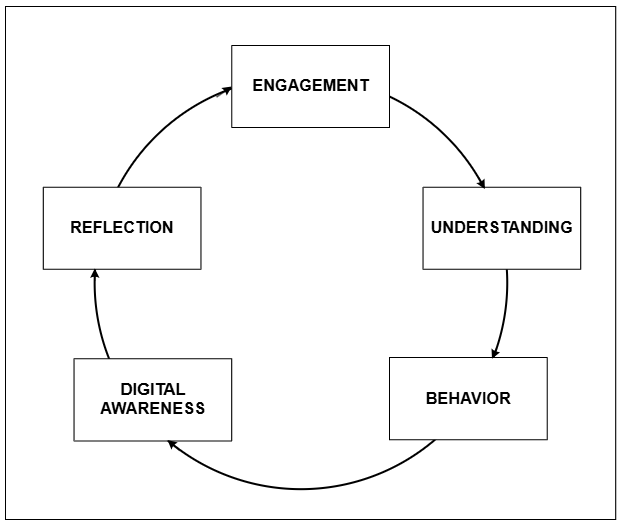
In the context of digital literacy, engagement refers to students’ level of active behavioral, cognitive, and emotional involvement when interacting with digital technology in the learning process [1], [14], [32]. Zheng et al. [14], Harverson et al. [1], and Al-Obaydi et al. [32] explained that this aspect encompasses students’ participation in digital-based learning activities, their attention to the material, and their interest and motivation to use digital technology meaningfully. The studies showed that strong digital literacy is linked to student engagement, as students feel more confident and able to actively interact with digital content and technology-based learning environments. Engagement is also closely related to how students interact socially, collaborate, discuss, and solve problems using digital media. Consequently, this aspect ultimately improves the quality of learning [32].
Furthermore, understanding refers to students’ cognitive abilities to access, understand, evaluate, and interpret information from digital media [13], [16], [33], 34]. In addition to technical skills in using digital devices, this aspect encompasses students’ ability to think critically about the content, context, and credibility of information obtained from digital media [13]. Arkan and Bal [13], Tham et al. [16], and M et al. [33] emphasized that the effectiveness of digital literacy is demonstrated by a student’s ability to distinguish the validity of information, understand messages in various digital formats, and relate that information to learning objectives. Indeed, for elementary school students, this understanding is essential for building a foundation in critical thinking and information-processing skills from an early age [34]. This aspect is related to the proliferation of diverse and questionable digital information.
Next is the behavior aspect. This aspect refers to actual behavior in using digital technology, including how users search for information, interact in digital spaces, and adhere to norms and ethics for technology use [34], [35], [36]. The emphasis is on how knowledge and understanding of digital literacy are translated into daily actions in a responsible, safe, and productive manner. Previous studies [34], [35], [36] indicated that digital literacy significantly influences user behavior, particularly negative aspects of digital technology use, such as the spread of misinformation, privacy violations, and negative interactions online. For this reason, fostering positive digital behavior is important for elementary school-aged children to develop their future digital literacy in a sustainable technology-use context.
Digital awareness is another important aspect in digital literacy studies [8], [33], [37]. This aspect refers to users’ understanding of the social, ethical, risk, and impact contexts of digital technology use. Iskandar et al. [8], M et al. [33], and Loginov [37] indicated that this awareness relates to how users understand personal data security, privacy, digital communication ethics, and the social consequences of online activities, enabling them to be responsible and reflective. Therefore, this aspect needs to be developed early in elementary school to help students become aware of the advantages, disadvantages, opportunities, and threats of digital technology use [8], [33], [37]. The hope is that they will use digital media safely and ethically.
Furthermore, students’ ability to reflect on their learning experiences using digital technology is also a crucial component of digital literacy at the elementary school level [2], [16], [37]. Once they can express their experiences, they are expected to evaluate the processes, outcomes, and techniques used with digital technology. Reflection is part of metacognitive skills [16], [37]. This aspect enables students to recognize the strengths and limitations of their digital capabilities and plan for future improvements, becoming not merely passive users of technology but also active learners in activities that use digital technology.
In summary, the five aspects mentioned above constitute essential and coherent components in studies of digital literacy among children [13], [16]. Engagement is the initial factor that enables students to participate actively in interactions during the digital literacy learning process. This first aspect then allows the formation of understanding, how they comprehend, interpret, and critically evaluate digital information. Based on this understanding, behavior is shaped as students respond and make concrete decisions in their daily use of digital technology. This behavioral aspect further encourages students to develop digital awareness of the risks, ethics, and social impacts of technology. This awareness is expected to form the foundation for safe and responsible digital behavior. Finally, this learning cycle encourages students to reflect on their digital experiences as they evaluate their use of digital technology. In short, these five aspects form a continuous learning cycle.
3. Research Methods
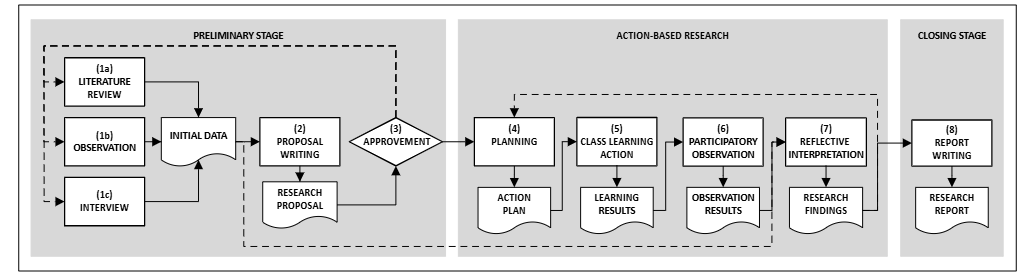
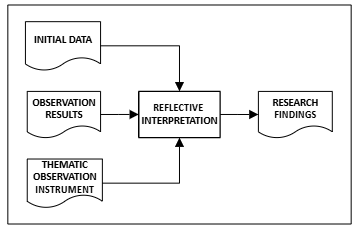
Procedurally, this action-based learning research was carried out in three main stages (Figure 2). First, we conducted a preliminary stage by reviewing the relevant literature and visiting the school twice, where the research was implemented. The visits were to collect initial data by observing the class learning environment and interviewing school stakeholders, including the principal, class teachers, and students. This early stage aimed to obtain initial data for the research proposal writing and to get its approval from the school. Second, we carried out action-based research through a classroom learning seminar, in line with the proposal approved by the school party. We repeatedly implemented the instructional planning, action learning, participatory observation, and reflective interpretation stages, based on the number of learning sessions, in the context of the action-based study [31], [38]. Finally, we closed this study by writing the research report.
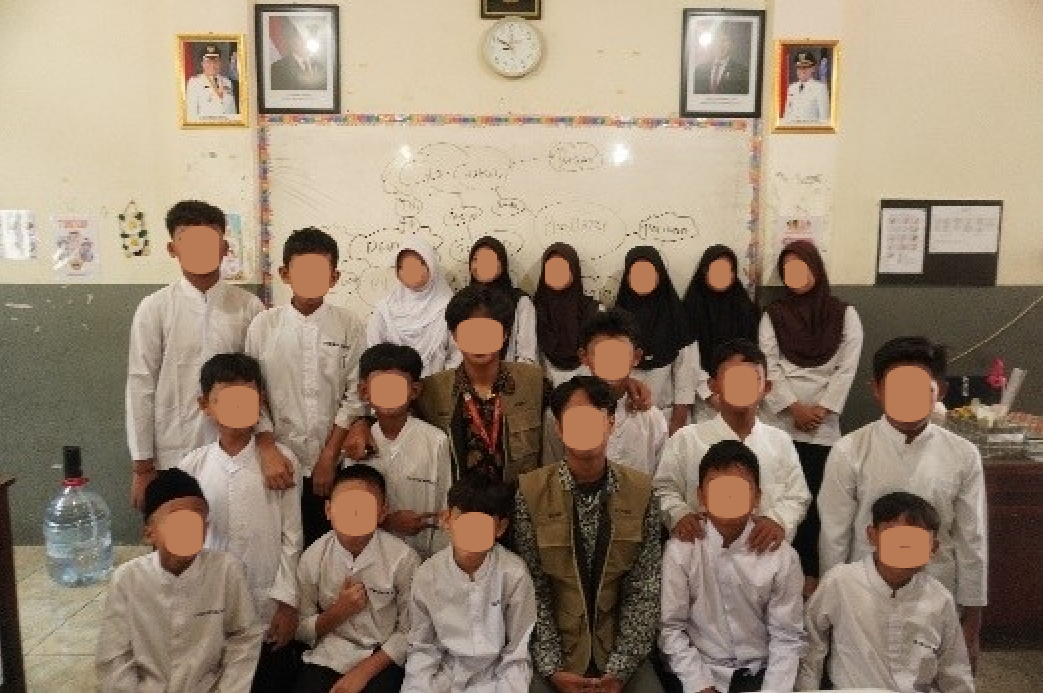
In this study, we recruited 18 participants, sixth-grade students from a private elementary school in a suburban subdistrict of South Tangerang City, one of the satellite cities of the Indonesian capital (Figure 3). Although this peri-urban area has relatively high internet penetration, the characteristics of this suburban area also tend to create an imbalance between access to technology and adequate digital literacy skills [25], [39], [40]. In general, various scientific studies show that increased internet access is not always accompanied by critical understanding, ethical digital behavior, and awareness of digital risks, especially among elementary school-age groups [8], [13], [41].
In this context, the selected participants have a strong engagement with digital technology, especially for entertainment and communication, but still need reinforcement in safe, reflective, and educational digital use. Therefore, this research location is contextually interesting to study its relationship to digital literacy through a qualitative action research approach that aligns with the social and geographic characteristics of the suburban area.
|
No |
Themes |
Descriptions |
References |
|---|---|---|---|
|
1. |
Engagement |
Participants actively participate in discussions, games, and quizzes. |
|
|
2. |
Understanding |
Participants respond correctly to questions about internet use, cyberbullying, hoaxes, and careers. |
|
|
3. |
Behavior |
Participants show respectful interaction, empathy during role-play, and curiosity during the career session. |
|
|
4. |
Digital Awareness |
Participants were able to identify hoaxes and suspicious links and to express caution. |
|
|
5. |
Reflection |
Participants share meaningful insights during the closing session. |
|
No |
Remarks |
Descriptions |
Duration |
|---|---|---|---|
|
1. |
Title: |
Digital Literacy for the 6th Grade Elementary School |
4 hours |
|
2. |
Learning Objectives: |
By the end of the seminar, students will be able to: Use the internet responsibly for learning. Recognize and respond to cyberbullying and online threats. Identify hoaxes and misinformation online. Understand future digital career/work opportunities. Understand online safety practices. |
|
|
3. |
Session 1: |
Using the internet for learning |
60 minutes |
|
Objective: |
Introduce the internet as a positive tool for education. |
||
|
Activities: |
Ice Breaking: Q&A around how students use the internet every day. Interactive Presentation: Present educational websites like YouTube Edu, Wikipedia, and online learning platforms. Group Discussion: Students share their experiences using the internet Mini Quiz: Questions around educational websites and their benefits |
10 minutes 20 minutes 15 minutes 15 minutes |
|
|
4. |
Session 2: |
Cyberbullying awareness and prevention |
45 minutes |
|
Objective: |
Help students understand cyberbullying and how to respond to it. |
||
|
Activities: |
Storytelling: Share a real or fictional story about cyberbullying in class. Open Discussion: Talk about how victims feel and what actions can be taken. Role Play: Students act as a victim, a bully, and a helper |
15 minutes 15 minutes 15 minutes |
|
No |
Remarks |
Descriptions |
Duration |
|---|---|---|---|
|
5. |
Session 3: |
Understanding hoaxes |
45 minutes |
|
Objective: |
Teach students to identify fake news and misinformation. |
||
|
Activities: |
Visual Presentation: Show examples of hoaxes and their characteristics. Game: “Hoax or Fact?” Students guess which news is real or fake. Discussion: How to verify information (check sources, logic, etc.). |
15 minutes 15 minutes 15 minutes |
|
|
6. |
Session 4: |
Digital career opportunities |
45 minutes |
|
Objective: |
Introduce modern digital careers to inspire students. |
||
|
Activities: |
Video Presentation: Profiles of content creators, influencers, and pro-gamers. Discussion: What is exciting and challenging about these careers? Interactive Quiz: Fun facts and terminology related to digital careers. |
15 minutes 15 minutes 15 minutes |
|
|
7. |
Session 5: |
Being cautious with dangerous links |
45 minutes |
|
Objective: |
Teach students to recognize and avoid harmful links. |
||
|
Simulation: Show examples of safe vs. suspicious links. Discussion: What to do when receiving a suspicious link. Game: “Click or Not?”: Students decide whether a link is safe to click. |
15 minutes 15 minutes 15 minutes |
||
|
8. |
Session 6: |
Closing & reflection |
15 minutes |
|
Activities: |
Group Reflection: What was most memorable and worthwhile? Quick Evaluation: Final quiz or reflection sheet. Appreciation & Motivation: Encourage students to continue learning safety |
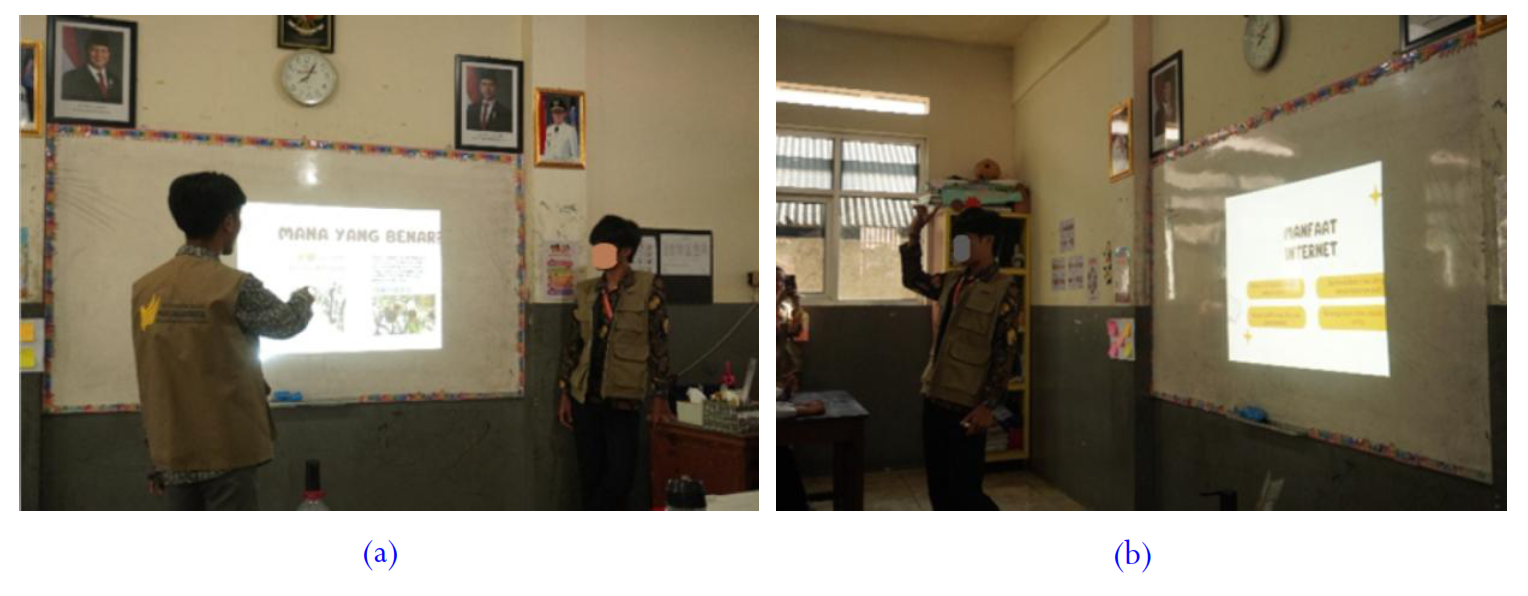
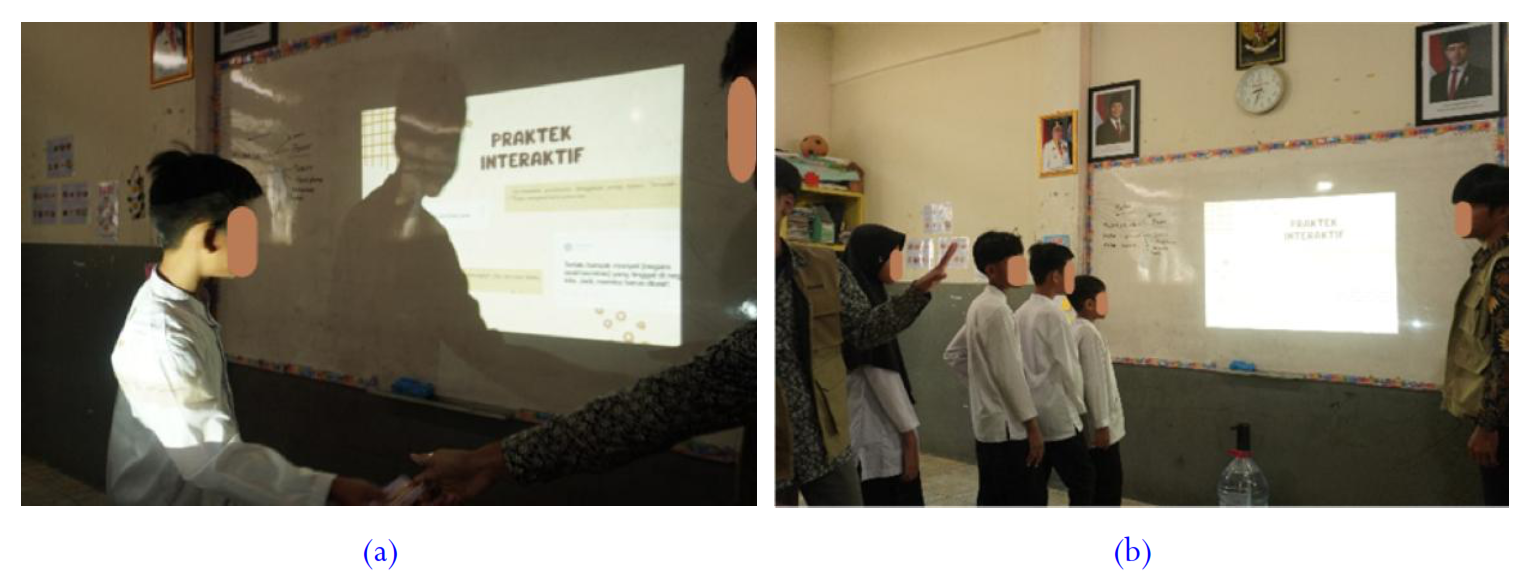
Furthermore, practical exercises were conducted to observe real-time student engagement, such as classifying social media comments (Figure 5a) and participating in interactive quizzes (Figure 5b). In the data analysis stage, the collected data were deconstructed and classified into meaningful units based on the five predetermined themes (Table 1). Each observational data point was coded thematically to identify patterns of understanding, misconceptions, and behavioral changes among participants. For instance, students’ responses during the interactive quiz on digital career terminology, as shown in the fourth learning session (Table 2), were analyzed to assess how these phenomena inspired their digital aspirations.
4. Results
Referring to the research procedure designed in this study (See Figure 1), this section outlines two procedural result points: the initial data obtained during the preliminary research and the results of the interpretation and reflection stages.
First, the following descriptions provide an overview of digital literacy before the classroom seminar intervention, including engagement, understanding, behavior, digital awareness, and reflection.
We found that students’ engagement with digital devices outside of school is relatively high when using their parents’ smartphones. However, this engagement was dominated by entertainment activities (approximately 70%), e.g., playing games or watching non-educational content. Their engagement in using technology for learning or independent exploration remained low. Most students were active technology users, but their usage showed low engagement in learning activities.
In addition, the participants presented a fairly adequate operational understanding of technology, particularly smartphones. Nearly all students (around 90%) were able to operate the basic functions of various digital applications, e.g., chatting, video searching, and internet navigation. However, their understanding of the critical aspects of digital content was relatively weak. Most students tended to accept information presented online as an absolute fact. We initiated that only a small proportion of students demonstrate a basic awareness of the importance of verifying sources or identifying misleading information (e.g., hoaxes), as the following excerpt from an interview with a student indicated:
A facilitator: “If you see content on TikTok or Instagram about cheap cell phones for sale, do you simply believe it or do you check its veracity first?”
A student: “Yeah, usually I just believe it, Sis. There is a video, so it must be true. Besides, many people who have already purchased it have commented that they are delighted. So, I figured there was no need to check. If it were a lie, the admin would have deleted it, right?”
Meanwhile, the initial observations have also shown that students tend to be impulsive and lack self-discipline in their smartphone use. They demonstrated low awareness of the intensity of smartphone use. In online communication, most students were swept up in coarse, colloquial language. The students tended to share video content straightforwardly and to engage in copy-pasting behavior in digital social interactions.
Furthermore, we indicated that students have a relatively low awareness of security and privacy risks. Most of these participants were careless about maintaining the confidentiality of their personal data. They demonstrated, when prompted, that they could open their social media applications using their passwords in front of researchers. Most students readily shared their social media app passwords and displayed them to the researcher. This phenomenon indicates that most students are unaware of the digital security risks associated with using such technology.
Moreover, we found that the majority of students (around 90%) are unable to reflect on their digital technology habits and usage. Their self-evaluation of digital habits tended to be reactive or emotional (“happy” or “bored”). Only a small number of students interviewed could articulate at least one negative personal impact of excessive digital use. Most students generally lack internal mechanisms for learning from digital mistakes, and positive behavioral changes typically occur only after warnings or strict adult supervision.
In short, the preliminary results of this study showed that although most students actively use digital devices, their use for learning remains low, primarily for entertainment. Furthermore, while their understanding of technology usage is quite good, their critical thinking skills regarding digital information are very weak—many students tend to trust social media content without verification. Furthermore, device use is often impulsive and unethical, awareness of digital security remains low, and self-reflection skills regarding technology use are only beginning to develop. Overall, these findings emphasize the need for digital literacy education that emphasizes ethics, security, and critical thinking among the elementary school students in the study sample.
Second, the elucidations below present results of the interpretation and reflection stages in the action research following each session of the learning plan (see Table 1). Here, we explain each session in terms of five themes (see Table 2).
In the first seminar session, we found that more than half of the students showed their interest by exploring the internet use beyond entertainment (engagement). The interest was indicated by a question, “Bro, if I want to make a good presentation video like on YouTube, what application should I use?” The majority of the participants (around 80%) were able to distinguish between important and unimportant information in chat (understanding). We have also identified that around half of the pupils start using the timer features of digital devices when using the internet (behavior) and try to set privacy features in internet browser applications (digital awareness). A student revealed: “I really like watching YouTube and playing TikTok, because it is fun. Sometimes I watch until late at night, and it is fine as long as the phone does not get hot. I do not think about the dangers of the internet, because I watch funny videos and play games, I do not do anything strange.” These statements indicate that the participants considered digital entertainment activities completely safe; they were only aware of physical risks, not behavioral risks (reflection).
In addition, we indicated that more than half of the students showed a strong interest in bullying and its prevention topics during the second seminar session (engagement). A student’s question presented this concern: “Bro, is our habit of teasing each other in WhatsApp groups considered cyberbullying or just joking?” However, we have also found that only about one-third of the participants can explain the difference between joking and cyberbullying, and categorize content as threats, digital verbal harassment, or sharing photos without permission (understanding). Almost half of them demonstrated their empathy through role-playing in the bullying game and their curiosity about how to report a digital bullying incident (behavior). Moreover, we identified indications of digital awareness among a small number of students (5, 30%) who were able to locate digital conversations that could potentially lead to bullying and to utilize blocking and reporting features on social media apps (reflection).
Further, in the third seminar session, the majority of participants (approximately 90%) had significant concern about the hoax understanding topic (engagement). This focus peaked when they were invited to use hoax identification apps (i.e., Hoax Buster Tools), compare and comment on several examples of hoax information (understanding). “This is a hoax! Here is the proof (pointing to the app’s test results)!” expressed by one of the students. The majority of them completed enthusiastically the four hoax verification exercises provided in this session (behavior). “If there is a WhatsApp message from Budi tomorrow about the school holidays, do not believe it immediately. Let us ask the teacher directly!” joked a female student, drawing laughter from most of her friends in the class (digital awareness and reflection).
Next, in the fourth seminar session, we noted that most students (around 80%) showed enthusiasm for the diversity of digital career opportunities (engagement). A question proved this engagement, “Bro, is there an app for editing videos using a cellphone?” When the seminar facilitators gave three examples of digital jobs (i.e., influencer, digital marketing, and content creator), only a small number of these students were able to distinguish between the examples and practice following and unfollowing a social media account (understanding and behavior). Similarly, the students also highlighted the ethical aspects of using other people’s content during the content creation simulation session (digital awareness). Most students still view digital activities as mere entertainment and creative pursuits, without considering the challenges and risks (reflection). “It seems fun to be a YouTuber; all you have to do is make videos and go viral and become famous,” said one of them.
Furthermore, in the fifth session, which focused on being cautious with dangerous links. We found that most students were interested in the digital awareness aspects of the classroom explanation (engagement). A question from one student confirmed this: “Bro, if a message asking for a password while online, is it definitely a scam? Like when playing free games, it often appears.” Respectively, only about one-third of students were able to identify and verify the authenticity of suspicious links for fraudulent purposes (understanding and behavior). We have also noted that almost half of them can activate privacy and safe browsing features on their social media accounts (digital awareness). Most of the participants were less aware of risks and less vigilant in their digital activities (reflection). A student expressed: “Usually, I just click on links shared by friends, Bro. I am just curious about their jokes. “
In the last session, we found that the majority of the students engage in digital activities as safe entertainment without considering the risks and potential negative impacts. However, a small number of students demonstrated digital awareness regarding the benefits of digital education, the potential for digital bullying, the veracity of information, career opportunities in the digital world, and its potential risks.
In brief, most students have shown high enthusiasm during the six seminar sessions, especially during discussions on hoaxes (almost 90%), digital career opportunities (around 80%), and malicious links (over 55%). They understood how to distinguish important from unimportant information, but understanding more complex concepts (such as the difference between joking and cyberbullying) was still limited to around one-third. The participants began to demonstrate positive behaviors, such as using the timer feature and enthusiasm for verifying hoaxes. Meanwhile, only a small number of them can take security precautions, such as verifying the authenticity of a message link. In terms of digital awareness, the majority of pupils (around 60%) are interested in using privacy features, though only about half can activate their social media accounts. Reflectively, the majority of the students viewed digital activities primarily as safe entertainment, without fully considering the risks and potential negative impacts.
5. Discussion
RQ1: What was the initial digital literacy status of the sampled students before the classroom seminar intervention?
Results of the preliminary study indicated that students have high levels of digital technology use in terms of intensity and frequency, but low quality, particularly for learning purposes. Most students were actively engaged with digital devices, particularly through their parents' smartphones, but this engagement was dominated by non-educational activities, such as playing games and watching videos. This finding aligns with the literature, which confirms that children‘s digital engagement is often superficial if not pedagogically guided [1], [8], [26]. In the context of digital literacy, engagement is not simply understood as the intensity of technology use but also encompasses students‘ cognitive and affective involvement in digital-based learning activities [1], [44]. Therefore, the participants‘ initial engagement in this study can be categorized as not yet meaningful.
Meanwhile, in terms of understanding and behavior, the preliminary study results indicate a clear gap between students’ technical abilities and their critical thinking skills. Although most students were able to operate the basic functions of digital applications, they tended to receive digital information passively, without any evaluation or verification. This situation confirms prior literature’s findings that children’s digital literacy often stops at the operational level and has not yet developed into higher-level cognitive skills, such as evaluating content and understanding the context of information literacy [7], [10], [19], [27], [28]. This limited understanding then manifests in students’ digital habits, such as impulsive behavior, copy-pasting, use of offensive language in online communication, and a lack of self-control in device use. The literature confirms that low digital literacy directly contributes to the formation of unethical and unproductive digital habits [28], [29], [30]; thus, the findings of this study strengthen the link between weak understanding and problematic digital habits.
Furthermore, aspects of digital awareness and reflection indicated that most students lack an adequate understanding of the security risks, privacy, and social consequences of digital technology use. This careless attitude towards safeguarding personal data and inability to recognize potential digital dangers confirms literature findings emphasizing the importance of developing digital awareness from elementary school age [27], [31], [32]. Furthermore, students’ ability to reflect on their digital habits remains very limited and tends to be emotional rather than metacognitive. In fact, reflection is a crucial component in the continuous digital literacy cycle because it allows students to evaluate their digital experiences and plan for future improvements [2], [5], [10]. Thus, these findings indicate that the five aspects of digital literacy in the early stages are still developing to varying degrees and are not yet fully integrated, underscoring the urgency of action-based learning interventions to comprehensively strengthen students’ digital literacy.
RQ2: How did their digital literacy improve after participating in a series of classroom seminar interventions?
Results of the classroom seminar showed an apparent increase in student engagement in more meaningful digital activities. In the preliminary study, student engagement was dominated by passive entertainment use of technology. However, after the intervention, the majority of students showed active interest in digital literacy topics such as hoaxes, cyberbullying, link security, and digital career opportunities, as evidenced by critical questioning and participation in class discussions. These findings confirm the literature review, which suggests that contextually grounded discussion-based learning and hands-on experience can shift children’s digital engagement from entertainment to deeper cognitive engagement [1], [8], [26]. Thus, the seminar intervention served as an effective catalyst for transforming initial superficial engagement into more conscious and purposeful engagement.
Regarding understanding and behavior, the intervention results also showed a gradual increase relative to baseline, though not evenly distributed across all topics. In the preliminary study, students tended to receive digital information passively and exhibit impulsive behavior. After the intervention, most students were able to distinguish important from unimportant information, practice verifying hoaxes, and begin using the timer feature and simulation for reporting digital bullying. These findings are consistent with the literature, which asserts that improving conceptual understanding of digital literacy will directly influence more responsible digital habits [7], [10], [19], [27], [28]. However, limited knowledge of more abstract concepts, such as distinguishing between joking and cyberbullying, indicates that behavioral change requires repeated reinforcement and cannot be achieved through a single intervention, as the literature review also emphasizes.
Furthermore, regarding digital awareness and reflection, the intervention results showed initial, but still partial, improvements. Compared with preliminary studies that showed low awareness of digital privacy and security, post-intervention, some students began to recognize digital risks, activate privacy features, and demonstrate vigilance against hoaxes and malicious links. This confirms the literature, which emphasizes that digital awareness can be fostered through explicit and simulated learning from an early age [27], [31], [32]. However, in terms of reflection, most students still viewed digital activities as safe entertainment. It was not yet fully able to consider the long-term consequences of their digital practices. The literature review confirms that reflection is the highest stage in digital literacy, developing gradually and requiring ongoing support [2], [10], [27].
Thus, the results of this study indicate that the classroom seminar intervention was effective in increasing students’ digital engagement, understanding, habits, and awareness. However, strengthening critical reflection still requires further cycles of action-based research.
In summary, this study showed that although initially almost all students actively used digital technology for entertainment, they still lacked critical understanding, ethical behavior, digital awareness, and reflection skills. The intervention, delivered as a digital literacy seminar, has gradually improved all of these aspects. Students began to shift from passive use to active participation, from understanding to simply receiving information, to being able to recognize hoaxes, risks, and digital opportunities, from developing impulsive behavior to consciously considering aspects of security, privacy, and ethics, and gradually being able to reflect on the activities of using digital technology from subjective aspects to more objective and critical aspects. Overall, this class seminar intervention has helped direct students from digital use focused on entertainment to safer, more necessary, and more reflective digital literacy practices.
6. Conclusion
This research was motivated by the behavioral use of the internet among Elementary school students in Indonesia, which, on the one hand, opens up opportunities for self-development, but, on the other hand, creates vulnerability to hoaxes, cyberbullying, and other digital risks. To address this challenge, action-based research was conducted at a private elementary school in South Tangerang, involving 18 sixth-grade students. The method employed was an educational, participatory approach that incorporated classroom seminars, interactive discussions, and hands-on practice through a community service program. The research results show that the classroom seminar intervention was effective in increasing students’ digital engagement, understanding, behaviour, digital awareness, and reflection. However, strengthening critical reflection still requires further cycles of action-based research.
This study may strengthen elementary school students’ digital literacy through a participatory learning model. The program not only improved cognitive knowledge but also social and affective skills, e.g., communication, courage, empathy, and critical thinking. Thus, this research confirms that digital literacy is a fundamental competency that should be integrated into the continuous learning cycle to enhance digital literacy levels, in line with the urgency emphasized in various literature reviews.
Although it yielded positive results, this research has limitations, namely, a small sample size for one class, which limits its generalizability. In addition, this study focused on a short-term intervention, so the long-term impact on students’ digital behavior has not been measured. Therefore, the authors recommend involving a broader sample and various school contexts and using longitudinal evaluations to monitor the program’s effectiveness continuously. As a recommendation, this action-based digital literacy program should be expanded to more action cycles, with collaborative support from schools, parents, and education policymakers. Moreover, integrating digital literacy into the formal curriculum should be systematic, with adjustments made to meet local needs and respond to technological developments.
Declarations
Author Contributions
Aang Subiyakto: Supervision, Conceptualization, Methodology, Writing – Review & Editing. Sulaiman Haris: Investigation, Data curation, Writing – Original Draft. Anisya Rahma: Investigation, Visualization, Writing – Original Draft. All authors have read and approved the final version of this manuscript.
Acknowledgments
The authors would like to thank the Center for Community Service, UIN Syarif Hidayatullah Jakarta, Indonesia, and all parties involved in the implementation of this action-based study.
Ethical Approval
The researcher confirms that all participants voluntarily participated after being informed of the study’s purpose, benefits, and procedures, and each provided informed consent. The confidentiality of participants’ identities and data was strictly maintained.
Funding
The Center for Community Service at UIN Syarif Hidayatullah Jakarta funded this research.
Competing Interests
The authors declare no competing interests.
Generative AI and AI-Assisted Technologies Statement
The authors declare that AI or AI-assisted technologies were used to prepare this manuscript, especially to generate ideas (e.g., ChatGPT and Gemini), and to check and proofread the English (i.e., Grammarly). All parts were written, reviewed, and edited manually by the authors, who take full responsibility for the accuracy and integrity of the manuscript.
References
- J. Harverson, C. Zomer, C. Chu, S. Horwood, M. Horwood, M. Nicholas, and L. Paatsch, “Children’s engagement with digital technology in educational spaces: A scoping review,” Computers & Education, vol. 240, Art. no. 105454, Jan. 2026, doi: 10.1016/j.compedu.2025.105454.
- F. Pang and J. A. D. Datu, “Can digital assistive technology interventions foster well-being among students with disabilities? A meta-analytic review,” Educational Research Review, vol. 49, Art. no. 100729, Nov. 2025, doi: 10.1016/j.edurev.2025.100729.
- A. Topan, A. Gündoğdu Karakaya, B. Akkoç, and A. Kurt, “Children’s social media use behaviors according to parents’ social media addiction and methods used by parents,” Journal of Pediatric Nursing, vol. 84, pp. 347–352, 2025, doi: 10.1016/j.pedn.2025.06.046.
- C. Tipple and C. Branch-Smith, “Parenting in the age of social media: The buffering effect of parental self-efficacy on the relationship between parental social media use and parent–child relationship quality,” Acta Psychologica, vol. 258, Art. no. 105235, Aug. 2025, doi: 10.1016/j.actpsy.2025.105235.
- Asmayawati, Yufiarti, and E. Yetti, “Pedagogical innovation and curricular adaptation in enhancing digital literacy: A local wisdom approach for sustainable development in the Indonesian context,” Journal of Open Innovation: Technology, Market, and Complexity, vol. 10, no. 1, Art. no. 100233, Mar. 2024, doi: 10.1016/j.joitmc.2024.100233.
- G. I. Sari, S. Winasis, I. Pratiwi, U. W. Nuryanto, and Basrowi, “Strengthening digital literacy in Indonesia: Collaboration, innovation, and sustainability education,” Social Sciences & Humanities Open, vol. 10, Art. no. 101100, 2024, doi: 10.1016/j.ssaho.2024.101100.
- P. Ananto and S. K. Ningsih, “An examination of Indonesian teachers’ and students’ perceptions and levels of digital citizenship,” Heliyon, vol. 9, no. 8, Art. no. e18987, Aug. 2023, doi: 10.1016/j.heliyon.2023.e18987.
- R. Iskandar, A. Maksum, and A. Marini, “Digital citizenship literacy in Indonesia: The role of privacy awareness and social campaigns,” Social Sciences & Humanities Open, vol. 12, Art. no. 101697, Jan. 2025, doi: 10.1016/j.ssaho.2025.101697.
- Statistics Indonesia, “Percentage of population aged 5 years and over who accessed the internet in the last 3 months by province and highest level of education completed, 2023,” Statistics Indonesia, 2023. [Online]. Available: https://www.bps.go.id. Accessed: Jan. 2026.
- A. Meilida, B. A. Iskandar, and N. L. Sari, “Studi kasus peran literasi digital dalam mencegah cyberbullying di SDN Seberang Masjid 1 Banjarmasin,” Pendas: Jurnal Ilmiah Pendidikan Dasar, vol. 10, no. 2, pp. 277–293, 2025. 10.23969/jp.v10i02.26570.
- F. O. de Groot, “Sticky voices: Affect and critical digital literacies in multimodal academic feedback,” System, vol. 134, Art. no. 103808, Nov. 2025, doi: 10.1016/j.system.2025.103808.
- Y. Zhang, “Impact of digital literacy on college students’ English proficiency: The mediating role of learning motivation and the moderating effect of technological self-efficacy,” Acta Psychologica, vol. 259, Art. no. 105452, Sep. 2025, doi: 10.1016/j.actpsy.2025.105452.
- Z. Arkan and M. Bal, “The relationship between school-age students’ literacy skills and digital well-being: A systematic review,” BMC Psychology, vol. 13, no. 1, Art. no. 1240, Nov. 2025, doi: 10.1186/s40359-025-03573-4.
- Y. Zheng, J. Zhang, Y. Li, X. Wu, R. Ding, X. Luo, P. Liu, and J. Huang, “Effects of digital game-based learning on students’ digital etiquette literacy, learning motivations, and engagement,” Heliyon, vol. 10, no. 1, Art. no. e23490, Jan. 2024, doi: 10.1016/j.heliyon.2023.e23490.
- K. R. Ramadhani, A. Adrias, and A. P. Zulkarnaini, “Pengaruh Literasi Digital Terhadap Psikologi Anak Sekolah Dasar,” Jurnal Pendidikan, Bahasa dan Budaya, vol. 4, no. 1, pp. 201-210, 2025, doi: 10.55606/jpbb.v4i1.5671.
- J. C. K. Tham, K. D. Burnham, D. L. Hocutt, N. Ranade, J. Misak, A. H. Duin, I. Pedersen, and J. L. Campbell, “Metaphors, mental models, and multiplicity: Understanding student perception of digital literacy,” Computers and Composition, vol. 59, Art. no. 102628, Mar. 2021, doi: 10.1016/j.compcom.2021.102628.
- Z. M. Clayborne, S. L. Wong, K. C. Roberts, S. A. Prince, G. Gariépy, G. S. Goldfield, I. Janssen, and J. J. Lang, “Associations between social media use and positive mental health among adolescents: Findings from the Canadian Health Behaviour in School-aged Children Study,” Journal of Psychiatric Research, vol. 181, pp. 333–339, Jan. 2025, doi: 10.1016/j.jpsychires.2024.11.071.
- A. D. Diaz, D. A. Peeples, and P. E. Weigle, “Depression and social media use in children and adolescents,” Pediatric Clinics of North America, vol. 72, no. 2, pp. 175–187, Apr. 2025, doi: 10.1016/j.pcl.2024.07.033.
- J. Zhou and S. Suntrayuth, “Social media-facilitated learning and parents’ purchase intentions of non-academic tutoring services for children,” Acta Psychologica, vol. 255, Art. no. 104886, May 2025, doi: 10.1016/j.actpsy.2025.104886.
- M. Aydin, “Does the digital divide matter? Factors and conditions that promote ICT literacy,” Telematics and Informatics, vol. 58, Art. no. 101536, May 2021, doi: 10.1016/j.tele.2020.101536.
- N. M. Kuputri, “Digital divide: A critical approach to digital literacy in ‘Making Indonesia 4.0’,” in Proc. 2nd Tarumanagara Int. Conf. on the Applications of Social Sciences and Humanities (TICASH 2020), Atlantis Press, 2020, pp. 1–6, doi: 10.2991/assehr.k.201209.001.
- J. Lukáč, Z. Kudlová, J. Kopčáková, and P. Gallo, “Impact of socio-economic factors on digital literacy and security,” TEM Journal, vol. 14, no. 1, p. 925, 2025, doi: 10.18421/TEM141-81.
- A. Chakrabarti, M. Sarkar, and A. Rai, “Digital divide in education in urban, peri-urban, and rural areas in India: Coochbehar, a backward district of West Bengal in perspective,” in Political Economy of Emerging Urban and Peri-urban Spaces in India: A Roadmap Towards Environmental and Social Sustainability, M. Mishra, V. R. Sharma, and A. Chakrabarti, Eds. Singapore: Springer Nature, 2024, pp. 239–253, doi: 10.1007/978-981-97-8872-9_13.
- I. D. R. Sari, A Study of Professional Connectedness and Isolation in the Learning Lives of Remote and Peri-Urban Primary School Teachers in Indonesia, Ph.D. dissertation, Univ. of Sussex, Brighton, U.K., 2024.
- T. Adam, “Digital literacy needs for online learning among peri-urban, marginalised youth in South Africa,” International Journal of Mobile and Blended Learning, vol. 14, no. 3, 2022, doi: 10.4018/IJMBL.310940.
- M. L. Hidayat, Hariyatmi, D. S. Astuti, B. Sumintono, M. Meccawy, and T. J. S. Khanzada, “Digital competency mapping dataset of pre-service teachers in Indonesia,” Data in Brief, vol. 49, Art. no. 109310, Aug. 2023, doi: 10.1016/j.dib.2023.109310.
- D. Wu, C. Zhou, Y. Li, and M. Chen, “Factors associated with teachers’ competence to develop students’ information literacy: A multilevel approach,” Computers & Education, vol. 176, Art. no. 104360, Jan. 2022, doi: 10.1016/j.compedu.2021.104360.
- A. Afzal and N. Hussain, “Impact of community service learning on the social skills of students,” Journal of Education and Educational Development, vol. 7, no. 1, pp. 55–70, 2020, doi: 10.22555/joeed.v7i1.2988.
- B. W. Budiarto, S. Karyadi, W. Wasiran, R. Pratiwi, and D. Irwan, “Improving digital literacy of village communities in Indonesia through information technology-based community service programs,” Unram Journal of Community Service, vol. 5, no. 3, pp. 267–271, Sep. 2024, doi: 10.29303/ujcs.v5i3.716.
- W. Pathirathna, L. Lihiniyakumara, and R. Pramod, “Evaluating the learning experience of interior design students in community participatory design,” in Transformative Applied Research in Computing, Engineering, Science and Technology. Boca Raton, FL, USA: CRC Press, 2025, pp. 263–268
- C. E. B. Cannon, “A feminist community-based participatory action research approach to advance climate justice,” International Journal of Disaster Risk Reduction, vol. 126, Art. no. 105631, Aug. 2025, doi: 10.1016/j.ijdrr.2025.105631.
- L. H. Al-Obaydi, M. Pikhart, and R. M. Tawafak, “Digital literacy of EFL student-teachers using empowerment outreach program: The role of engagement, cognitive learning, and performance,” International Journal of Educational Research, vol. 134, Art. no. 102762, Jan. 2025, doi: 10.1016/j.ijer.2025.102762.
- M. U. Sari, H. Sari, S. Hermansyah, K. Maming, A. Kahar, Hasan, and F. K. Elfahmi, “Understanding Indonesian students’ reading knowledge in digital literacy within the socio-cultural context of rural middle schools,” International Journal of Information and Learning Technology, vol. 42, no. 5, pp. 432–448, 2025, doi: 10.1108/IJILT-12-2023-0239.
- A. Hyman, K. Stewart, A.-M. Jamin, H. N. Lauscher, E. Stacy, G. Kasten, and K. Ho, “Testing a school-based program to promote digital health literacy and healthy lifestyle behaviours in intermediate elementary students: The Learning for Life program,” Preventive Medicine Reports, vol. 19, Art. no. 101149, Sep. 2020, doi: 10.1016/j.pmedr.2020.101149.
- F. Sambah, F. Quansah, M. Srem-Sai, J. B. Frimpong, E. K. Agormedah, F. Ankomah, and J. E. Hagan Jr., “Assessing secondary school students’ digital health literacy, information searching behaviours, and satisfaction with online COVID-19 information in Northern Ghana,” Heliyon, vol. 9, no. 7, Art. no. e17936, Jul. 2023, doi: 10.1016/j.heliyon.2023.e17936.
- M. Hadley, U. Patil, K. F. Colvin, T. Sentell, P. M. Massey, M. Gallant, and J. A. Manganello, “Exploring the impact of digital health literacy on COVID-19 behaviors in New York State college students during the COVID-19 pandemic,” Computer Methods and Programs in Biomedicine Update, vol. 4, Art. no. 100126, 2023, doi: 10.1016/j.cmpbup.2023.100126.
- A. Loginov, “Digital metacognition: Awareness, regulation, and analysis of thinking in digital environments,” Next Research, vol. 2, no. 4, p. 100770, 2025, doi: 10.1016/j.nexres.2025.100770
- B. Nørgaard, C. S. Romero, M. Bala, H. Lund, and J. Andreasen, “Framing and implementing evidence-based research in research groups and institutions to put knowledge to action,” Evaluation and Program Planning, vol. 112, p. 102660, 2025, doi: 10.1016/j.evalprogplan.2025.102660
- Asosiasi Penyelenggara Jasa Internet Indonesia, Survei Penetrasi Internet dan Perilaku Penggunaan Internet 2025. Jakarta, Indonesia: APJII, 2025.
- H. Jongebloed, K. Anderson, N. Winter, L. Nguyen, C. E. Huggins, F. Savira, P. Cooper, E. Yuen, A. Peeters, B. Rasmussen, S. Reddy, S. Crowe, R. Bhoyroo, I. Muhammad, and A. Ugalde, “The digital divide in rural and regional communities: A survey on the use of digital health technology and implications for supporting technology use,” BMC Research Notes, vol. 17, Art. no. 90, 2024, doi: 10.1186/s13104-024-06687-x..
- S. Purnama, M. Ulfah, I. Machali, A. Wibowo, and B. S. Narmaditya, “Does digital literacy influence students’ online risk? Evidence from Covid-19,” Heliyon, vol. 7, no. 6, p. e07406, 2021, doi: 10.1016/j.heliyon.2021.e07406
- T. B. Jatmiko, A. E. P. Saifullah, A. Hematiyar, I. A. Alhafidh, and P. U. Ramadhani, “Peran Pendekatan Partisipatif dalam Meningkatkan Kesadaran Pendidikan dan Menurunkan Angka Putus Sekolah di Desa Cibadak,” Room of Civil Society Development, vol. 4, no. 2, pp. 245-256, 2025, doi: 10.59110/rcsd.518.
- K. A. Trisnadevy and I. B. G. A. Y. Pramana, “Pengembangan lahan hijau melalui pendekatan partisipatif dan edukatif dalam mendukung kualitas urban farming Kelurahan Ubung, Kota Denpasar, Provinsi Bali,” Jurnal Abdi Masyarakat Indonesia, vol. 5, no. 3, pp. 777-786, 2025, doi: 10.54082/jamsi.1785.
- Y.-M. Weng, Y.-X. Li, C.-H. Chang, S.-F. Huang, J.-Y. Liao, K.-Y. Huang, H.-P. Hsu, C.-M. Huang, and J.-L. Guo, “Effectiveness of an interactive digital intervention program on knowledge, health literacy, and learner engagement in senior high school students: Intragroup and intergroup comparison of two teaching models,” Journal of Medical Internet Research, vol. 27, Art. no. e76109, 2025, doi: 10.2196/76109.
Author Biographies

Aang Subiyakto is an associate professor of information systems at the Department of Information Technology, UIN Syarif Hidayatullah Jakarta, Indonesia. He has 30 years of experience in the field of information systems research and specializes in social computing and business informatics. He has published extensively in his research areas and has been awarded at the national level.





Sulaiman Haris is a student of the Department of Sufism Science, Faculty of Ushuluddin, UIN Syarif Hidayatullah Jakarta. He is a member of the community service group that implemented this study.



Anisya Rahma is a student of the Department of Islamic Communication and Broadcasting, Faculty of Da’wah and Communication Sciences, UIN Syarif Hidayatullah Jakarta. She is a member of the community service group that implemented this study.

Publisher’s and Journal’s Note
Sagamedia Teknologi Nusantara, as the publisher and editor of the Journal of Hypermedia & Technology-Enhanced Learning (J-HyTEL), upholds the highest ethical standards in academic publishing. The journal remains neutral with regard to jurisdictional claims in published maps and institutional affiliations. Authors are fully responsible for the originality, accuracy, and integrity of their work. Post-publication ethical concerns will be addressed through corrections, clarifications, or retractions as necessary. The content of this publication has not been approved by the United Nations and does not reflect the views of the United Nations or its officials or Member States. https://www.un.org/sustainabledevelopment
Copyright & License

© 2026 Aang Subiyakto, Sulaiman Haris, Anisya Rahma. Authors retain copyright.
This article is licensed under a Creative Commons Attribution 4.0 International License, which permits use, sharing, adaptation, distribution, and reproduction in any medium or format, provided that appropriate credit is given to the original author(s) and the source, a link to the Creative Commons license is provided, and any modifications are indicated. Unless otherwise specified in a credit line, this article’s images or other third-party material are included under the Creative Commons license. If certain material is not covered by the article’s Creative Commons license and its intended use is not permitted by statutory regulation or exceeds the allowed usage, permission must be obtained directly from the copyright holder. http://creativecommons.org/licenses/by/4.0/.
Read the licence terms