

Palabras clave
Cómo citar




Resumen de la publicación
Próximo número
J-HyTEL welcomes original and rigorous scholarship advancing education, media technology, and computer science applications.
Rolling submissions are accepted throughout the year.
Resumen
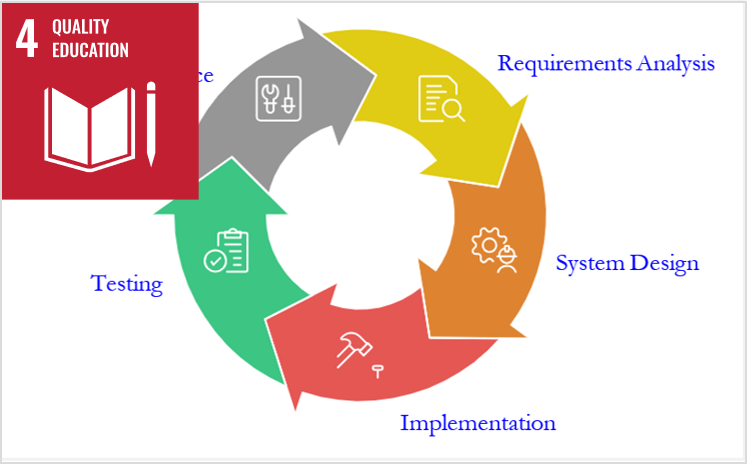
Los sistemas manuales de control de asistencia en instituciones educativas, especialmente en entornos que exigen un alto nivel de disciplina, como los centros de formación profesional con programas de cadetes, plantean retos importantes, entre los que se incluyen la falta de precisión, la carga administrativa y la susceptibilidad al fraude. Este estudio aborda estas cuestiones mediante el diseño y el desarrollo de una aplicación móvil segura de control de asistencia para la plataforma Android. El proceso de desarrollo siguió el modelo de desarrollo de software «Cascada», que proporciona un marco estructurado desde el análisis de requisitos hasta las pruebas. La solución propuesta incorpora un mecanismo de doble validación que combina códigos QR (Quick Response) para la identificación específica de cada sesión con tecnología de geolocalización para verificar la presencia física de los usuarios dentro del recinto escolar designado. La aplicación admite múltiples roles de usuario, entre ellos alumnos, profesores, administradores y padres, y ofrece un seguimiento automatizado de la asistencia para los pases de lista diarios y las actividades extraescolares. Permite a los profesores introducir manualmente la asistencia a las sesiones presenciales. La evaluación empírica confirmó que la aplicación mitiga eficazmente las vulnerabilidades inherentes al sistema manual. El enfoque de doble validación mejora sustancialmente tanto la integridad como la eficiencia del proceso de control de asistencia, ofreciendo una herramienta fiable y segura para supervisar la disciplina de los alumnos. Este estudio proporciona un modelo práctico para integrar tecnologías digitales accesibles con el fin de reforzar los procesos administrativos en el contexto de la educación secundaria.
RIS is compatible with Zotero, Mendeley, and EndNote. Immediate opening depends on the visitor's browser and reference-manager settings.
Declaraciones recogidas en el artículo publicado
Author Contributions
Hasbi Kurnia: Conceptualization, Methodology, Investigation, Software, Data curation, Writing – Original Draft, Writing – Review & Editing. Geovanne Farell: Validation, Supervision. Denny Kurniadi: Validation, Supervision. Rizkayeni Marta: Validation, Supervision. All authors have read and approved the final version of this manuscript.
Acknowledgments
The authors would like to express their deepest gratitude to all those who have contributed to the successful completion of this research.
View statement in PDF · PDF page 10Ethics Approval
This research was conducted in accordance with the ethical principles for research involving human subjects. The study involved students, teachers, and administrative staff at a vocational high school with a cadet system in Indonesia. Initial data for requirements analysis were gathered through voluntary participation in surveys (by students) and structured interviews (by teachers and staff). Before any data collection, permission was secured from the school's leadership to conduct the research within the institution. All participants were informed about the purpose of the study, the voluntary nature of their involvement, and the confidentiality of their responses. Informed consent was obtained from each participant before they completed the questionnaire or participated in an interview. The study ensured no personal information was collected or shared without permission. All initial survey responses were anonymized and analyzed to protect the participants' privacy.
View statement in PDF · PDF page 10Financiación
This research did not receive any external funding or financial support. All expenses related to developing and testing the educational media application were personally funded.
View statement in PDF · PDF page 10Conflictos de Intereses
The authors declare that they have no conflicts of interest.
View statement in PDF · PDF page 10Generative AI Disclosure
While preparing this manuscript, the author(s) used Gemini Pro and Grammarly to enhance the readability, language, and overall structure. Following these tools, the author(s) performed a comprehensive review and editing process to ensure the content's accuracy, integrity, and quality. The author(s) accept full responsibility for the content and conclusions presented in this publication.
View statement in PDF · PDF page 10Citas
17 References[1] A. R. B. Putra and D. Nora, “Faktor Penghambat dalam Mengatasi Ketidakhadiran Siswa Kelas XI IPS di SMAN 1 Lubuk Basung,” Jurnal Sikola: Jurnal Kajian Pendidikan dan Pembelajaran, vol. 1, no. 4, pp. 253–264, Jul. 2020, doi: https://doi.org/10.24036/sikola.v1i4.45.
[2] M. Alda, M. Juarsyah, A. Nugraha, L. R. Alfachry, and A. K. Kerja, “Jurnal Manajemen Informatika (JAMIKA) Aplikasi Absensi Mahasiswa Kerja Praktik Menggunakan QR Code Berbasis Android,” Jurnal Manajemen Informatika, vol. 14, 2024, doi: https://doi.org/10.34010/jamika.v14i1.11775
[3] R. Firdaus, E. Wahyuni, and A. Agussalim, “Rancang Bangun Sistem Presensi Pegawai Berbasis Geo Lokasi dan Pengenalan Wajah Menggunakan Facenet,” Jurnal Media Infotama, vol. 20, no. 2, pp. 410–416, 2024, doi: https://doi.org/10.37676/jmi.v20i2.6219
[4] Y. W. S. Putra, “Implementasi Model TAM pada Sistem Informasi Presensi Online Menggunakan Face Recognition dan GPS,” JACOST, vol. 4, no. 2, Dec. 2023, doi: https://doi.org/10.52158/jacost.v4i2.577.
[5] A. Mishra and Y. I. Alzoubi, “Structured software development versus agile software development: a comparative analysis,” Int. J. Syst. Assur. Eng. Manag., vol. 14, pp. 1504–1522, 2023, doi: https://doi.org/10.1007/s13198-023-01958-5.
[6] K. Petersen, C. Wohlin, and D. Baca, “The Waterfall Model in Large-Scale Development,” in Product-Focused Software Process Improvement, F. Bomarius, M. Oivo, P. Jaring, and P. Abrahamsson, Eds. Berlin, Heidelberg: Springer, 2009, vol. 32, Lecture Notes in Business Information Processing, pp. 311–324, doi: https://doi.org/10.1007/978-3-642-02152-7_29.
[7] M. F. A. Mohamad Noor, A. F. Ibrahim, and M. N. F. Jamaluddin, “Development of Employee Attendance Management System using Flutter,” Journal of Computing Research and Innovation, vol. 8, no. 2, pp. 178–188, 2023, doi: https://doi.org/10.24191/jcrinn.v8i2.369.
[8] A. Saravanos and M. X. Curinga, “Simulating the Software Development Lifecycle: The Waterfall Model,” Appl. Syst. Innov., vol. 6, no. 6, p. 108, 2023, doi: https://doi.org/10.3390/asi6060108.
[9] D. Ly, M. Overeem, S. Brinkkemper, and F. Dalpiaz, “The Power of Words in Agile vs. Waterfall Development: Written Communication in Hybrid Software Teams,” J. Syst. Softw., vol. 219, Jan. 2025, Art. no. 112243, doi: https://doi.org/10.1016/j.jss.2024.112243.
[10] A. Bates, R. Vavricka, S. Carleton, R. Shao, and C. Pan, “Unified modeling language code generation from diagram images using multimodal large language models,” Mach. Learn. Appl., vol. 20, Jun. 2025, Art. no. 100660, doi: https://doi.org/10.1016/j.mlwa.2025.100660.
[11] S. A. Kinari, N. Funabiki, S. T. Aung, and H. H. S. Kyaw, “A Guided Self-Study Platform of Integrating Documentation, Code, Visual Output, and Exercise for Flutter Cross-Platform Mobile Programming,” Computers, vol. 14, no. 10, p. 417, 2025, doi: https://doi.org/10.3390/computers14100417.
[12] S. A. Kinari, N. Funabiki, S. T. Aung, K. H. Wai, M. Mentari, and P. Puspitaningayu, “An Independent Learning System for Flutter Cross-Platform Mobile Programming with Code Modification Problems,” Information, vol. 15, no. 10, p. 614, 2024, doi: https://doi.org/10.3390/info15100614.
[13] Supriyono, “Software Testing with the approach of Blackbox Testing on the Academic Information System,” Int. J. Innov. Sci. Technol., vol. 3, no. 2, 2020, doi: https://doi.org/10.30645/ijistech.v3i2.54.
[14] S. Baul, J. Ahamed, M. A. Islam, M. K. A. Mazumder, T. Sultan, and D. Nandi, “A comprehensive study to assist decision-makers in determining software design between four UML diagrams,” in Proc. 3rd Int. Conf. Comput. Advancements (ICCA '24), 2024, pp. 232–238, doi: https://doi.org/10.1145/3723178.3723209.
[15] J. Skalka and M. Drlík, “Development of Automatic Source Code Evaluation Tests Using Grey-Box Methods: A Programming Education Case Study,” IEEE Access, vol. 11, pp. 106772–106792, 20 Sep. 2023, doi: https://doi.org/10.1109/ACCESS.2023.3317694.
[16] L. O’Neill, H. H. Lauridsen, L. Østengaard, and A. Qvortrup, “Validity evidence for the Experiences of Teaching and Learning Questionnaire (ETLQ) in evaluations of quality learning: A systematic critical literature review,” Stud. Educ. Eval., vol. 78, Sep. 2023, Art. no. 101283, doi: https://doi.org/10.1016/j.stueduc.2023.101283.
[17] S. J. Wafudu, Y. B. Kamin, and D. Marcel, “Validity and reliability of a questionnaire developed to explore quality assurance components for teaching and learning in vocational and technical education,” Humanit. Soc. Sci. Commun., vol. 9, p. 303, 2022, doi: https://doi.org/10.1057/s41599-022-01306-1.
Copyright and License

Esta obra está bajo una licencia internacional Creative Commons Atribución 4.0.
Derechos de autor 2025 Hasbi Kurnia, Geovanne Farell, Denny Kurniadi, Rizkayeni Marta