

1. Introduction
Education in Indonesia is a planned and systematic effort to enhance students’ potential and shape them into devoted, intelligent, creative, and responsible individuals, as mandated by the 1945 Constitution and regulated by Government Regulations Number 57 of 2021 and Number 4 of 2022 concerning National Education Standards. Alongside these mandates, the rapid evolution of ICT (Information and Communication Technology) has shifted educational practices, requiring schools to adopt innovative, interactive, and engaging learning processes to strengthen student motivation and improve learning outcomes [1]. Education plays a crucial role in improving human resources [2], and thus serves as a foundation for national advancement and competitiveness [3].
Teachers hold a significant role in advancing the quality of education by presenting learning activities creatively, responsively, and in accordance with students’ characteristics and learning needs [4]. Within this context, learning media function as instructional communication tools that deliver information through visual, audio, and computer-assisted forms to stimulate thinking and emotional engagement, ultimately supporting the achievement of learning objectives [5]. Previous studies indicate that technology-supported learning environments enhance students’ critical thinking, digital literacy, and problem-solving competencies [6].
Despite these developments, the implementation of technology-based learning in vocational education remains suboptimal [7]. Vocational High Schools (SMKs) are responsible for preparing students with industry-oriented competencies aligned with the skills required in employment sectors, as described in Presidential Regulation Number 68/2022 on the revitalisation of vocational education and training (President of the Republic of Indonesia, 2022). Therefore, technology integration is essential to modernize instruction and strengthen vocational relevance.
At SMK Negeri 1 Padang, particularly within the Electronics Engineering department, learning activities in the Basic Vocational Electronics course remain predominantly conventional. Classroom observations and assessment data show limited student engagement, especially in topics related to Occupational Health, Safety, and Environmental Awareness (K3LH). The learning evaluation results indicate that approximately 44% of students scored below the Learning Objective Completion Criteria (KKTP) threshold of 70. These findings highlight the need for more interactive, student-centred learning media to reinforce conceptual understanding and promote enthusiasm for learning.
Macromedia Flash has been widely recognised as an effective platform for developing interactive instructional media because it integrates text, images, audio, and animation to create enjoyable learning experiences [8]. Existing literature also suggests that interactive media improve conceptual mastery, learning motivation, and classroom participation. However, limited research has focused specifically on the development of Macromedia Flash–based learning media targeting K3LH topics within electronics education at the vocational high school level. Most studies using Flash-based media have examined general science or introductory computer-related subjects, leaving a gap in specialised electronics safety instruction. This research gap underscores the urgent need to design and validate instructional media that address the specific learning challenges at SMK Negeri 1 Padang.
Based on this identified need, the present study aims to develop interactive learning media based on Macromedia Flash for the Basic Electronics Vocational subject, focusing on K3LH. The objective is to produce valid and practical learning media that enhance learning effectiveness, increase student motivation and engagement, and improve understanding of electronics safety concepts. Moreover, the resulting product is expected to support teachers by offering technology-based instructional alternatives, benefit schools in improving educational quality, contribute to student learning outcomes, and serve as a scholarly reference for future research on interactive media development [9].
2. Methods
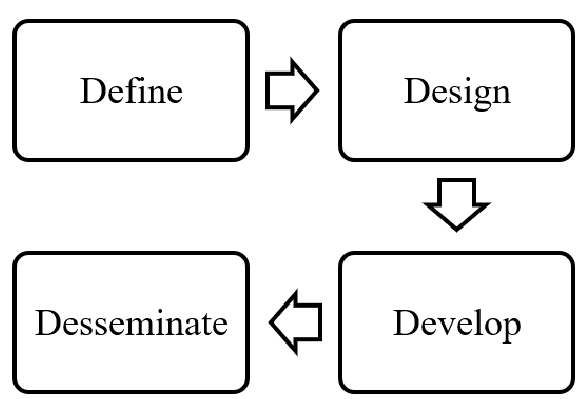
This study employed a Research and Development (R&D) approach to systematically design, validate, and evaluate instructional media. R&D was selected because it enabled the iterative creation of educational products through needs assessment, planning, development, field testing, and revision [10]. The research followed the 4-D instructional design model developed by Thiagarajan, Semmel, and Semmel (1974) [11], which consisted of four sequential stages: Define, Design, Develop, and Disseminate [12]. The complete structure of this model, including each developmental stage and its workflow, is illustrated in Figure 1. The use of this framework ensured that the development process remained structured, replicable, and aligned with instructional needs.
2.1. Define Stage
The Define stage aimed to identify instructional needs and contextual requirements prior to media development. This stage involved examining learning problems, learner characteristics, instructional content, and learning objectives through four analytical sub-phases [13].
2.1.1. Front-End Analysis
We identified instructional challenges in the Basic Vocational Electronics class (Grade X TAV A) at SMK Negeri 1 Padang. Student motivation and engagement were limited due to the predominant use of conventional, lecture-based teaching. These conditions provided a clear rationale for developing interactive Macromedia Flash-based instructional media to enhance participation and support autonomous learning.
2.1.2 Learner Analysis
Learner characteristics were analysed through classroom observations and interviews. Students exhibited passive learning behaviours and reported difficulty understanding concepts due to a lack of instructional variation. These findings informed the development of media that is simple, visually engaging, and easy to navigate.
2.1.3 Concept Analysis
We conducted concept analysis to determine the scope and structure of the instructional content based on the Basic Vocational Electronics curriculum. The selected material focused on the fifth content area ensure curricular relevance and alignment.
2.1.4 Instructional Objective Setting
Instructional objectives were formulated to increase learner engagement, strengthen conceptual understanding, and improve learning performance. These objectives served as the basis for structuring content, designing interfaces, and integrating assessment components.
2.2 Design Stage
The Design stage involved planning the structure and visual form of the interactive media. This phase resulted in the media blueprint and learning flow design.
2.2.1 Media Selection
We selected Macromedia Flash 8 as the development platform because it supports integrating text, images, animations, audio, and video within a single interface. This software enables the construction of interactive buttons, simulations, and navigation features, thereby creating a dynamic and engaging learning environment.
2.2.2 Format Selection
The media format incorporated learning outcomes, instructional objectives, conceptual explanations, visual illustrations, and interactive assessments such as quizzes and exercises. The content structure aligned with the Grade 10 Basic Vocational Electronics syllabus to maintain curricular relevance and instructional consistency.
2.2.3 Initial Design
We prepared flowcharts and interface layouts to visualise user interaction pathways. These design blueprints guided the development of menus, navigation sequences, feedback mechanisms, and multimedia integration throughout the media.
2.3 Development Stage
In this stage, we produced the media prototype based on the completed design specifications. The development procedures included content writing, animation design, programming, and layout structuring. After the prototype was completed, the product underwent expert validation before classroom implementation.
2.3.1 Product Validation Test
Two validation instruments were administered to subject-matter experts and media experts [14]. Material validation examined content accuracy, relevance, depth, clarity, and curriculum alignment, while media validation assessed interface quality, visual suitability, navigation design, and linguistic readability. All expert reviewers evaluated each component and provided recommendations for refinement.
2.3.2 Data Analysis Techniques
Quantitative data from the validation phase were analysed using percentage scores to determine product quality. Expert responses were rated using a five-point Likert scale (5 = Very Good, 4 = Good, 3 = Moderate, 2 = Poor, 1 = Very Poor). Percentage values were calculated using the following formula (1):
2.4 Disseminate Stage
The Disseminate stage ensured that the product was ready for classroom utilisation and initial evaluation. We conducted limited dissemination activities with teachers and students in Grade X TAV A. Dissemination consisted of introducing the operating procedures to teachers and demonstrating classroom use to students. These activities were designed to prepare users to operate the media and integrate it into regular instruction independently.
2.4.1 Practicality Test
Following expert validation and product revision, the learning media underwent practicality testing through a limited field trial involving Grade 10 Electronics Engineering students at SMK Negeri 1 Padang. Students used the media during instructional sessions and completed practicality questionnaires. Responses were measured using a five-point Likert-type scale (5 = Excellent, 4 = Good, 3 = Fair, 2 = Poor, 1 = Very Poor).
Practicality levels were calculated using the same percentage formula applied during the validation stage, as presented in Formula (1). The obtained score was divided by the maximum possible score and multiplied by 100 percent to determine the media practicality percentage. The interpretation of the practicality percentage was categorised according to the criteria shown in Table 1, which guided the decision-making process on whether the developed media could be considered practical for classroom implementation [15], [16], [17].
|
Percentage Range |
Interpretation Category |
|---|---|
|
81% – 100% |
Highly Valid/Highly Practical |
|
61% – 80% |
Valid/Practical |
|
41% – 60% |
Fairly Valid/Fairly Practical |
|
21% – 40% |
Less Valid/Less Practical |
|
≤ 20% |
Not Valid/Not Practical |
3. Results
This section presents the outputs of each stage of the 4-D development model and reports the expert validation and student practicality findings. The results demonstrate how the instructional needs identified during the Define stage guided the product design, interface structure, prototype development, validation work, and classroom implementation.
3.1. Media Architecture and Interface Development
The Design stage translated the pedagogical requirements into a structured media blueprint. The media was architected to support non-linear learning, allowing students to navigate through Occupational Health, Safety, and Environmental Awareness (K3LH) concepts at their own pace. The interface integrates high-contrast visual elements, thematic animations, and interactive controls to maintain student engagement [18], [19].
3.1.1. Gateway and User Orientation
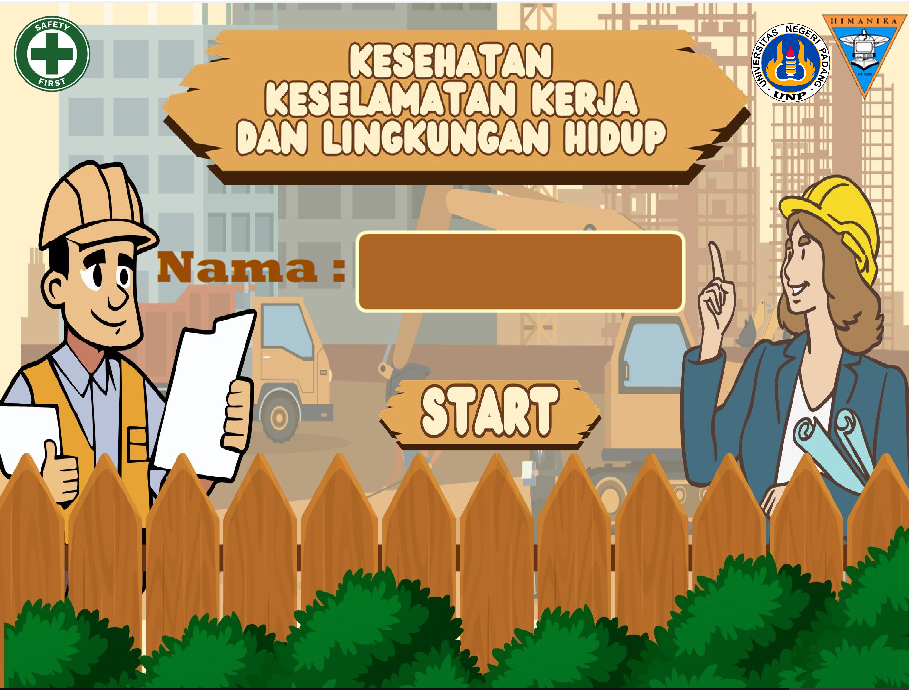
The initial interaction begins with the Start Page, which serves as the primary gateway to the application. As illustrated in Figure 2a, this interface requires students to enter their names in a designated field before proceeding, which creates a personalized learning session and records student identity.
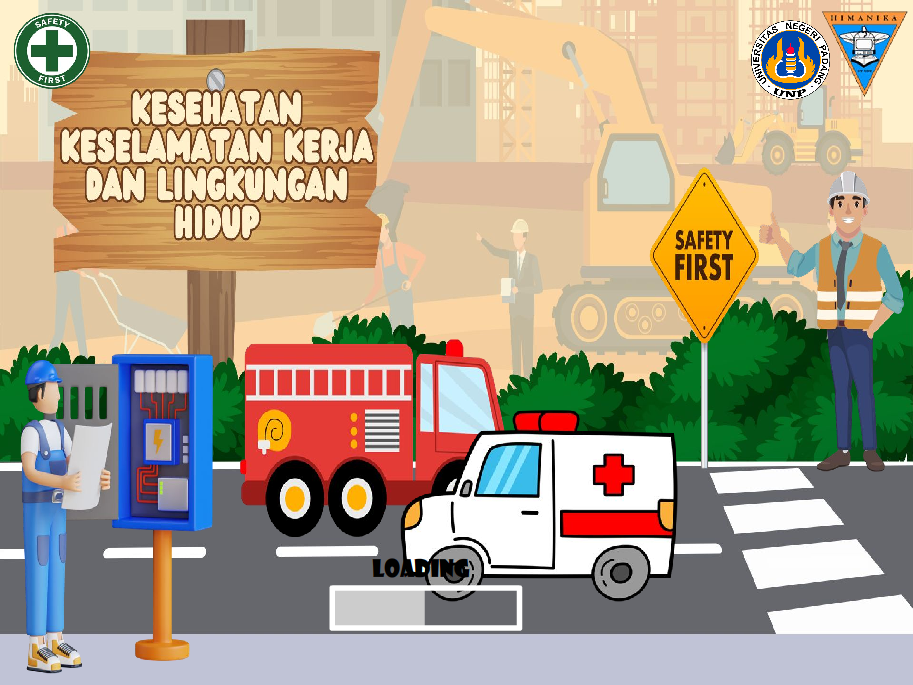
Upon clicking the start button, the system ensures a smooth technical transition by displaying an Interactive Loading Screen, as shown in Figure 2b. This screen features a progress bar and safety-themed animations, including illustrations of emergency vehicles and industrial equipment, to immediately reinforce the K3LH context of the study.
|
|
|
|---|---|
|
(a) |
(b) |
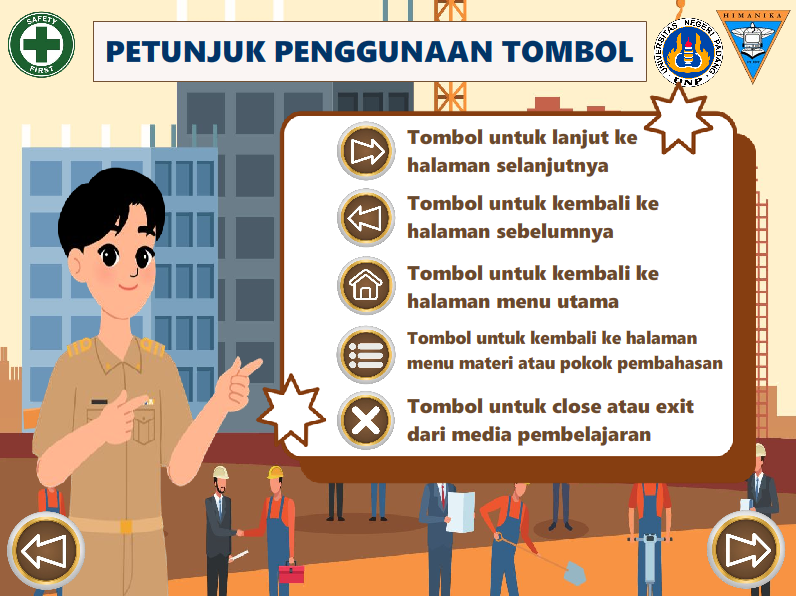
To further assist students in mastering the media’s interface, a User Navigation Guide was developed and is presented in Figure 3. This guide provides comprehensive tooltips and detailed explanations for every interactive button and icon, such as the “Next,” “Back,” “Home,” and “Exit” functions. By providing this orientation at the beginning of the session, the design effectively reduces the cognitive load required to operate the software, allowing students to focus entirely on the instructional content.
3.1.2. Navigation Hub and Pedagogical Roadmap
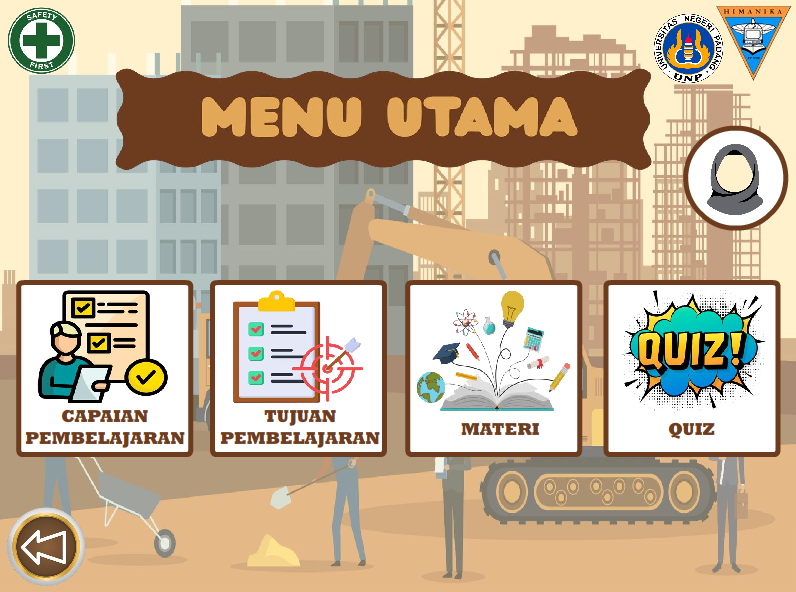
The Main Menu Dashboard acts as the central navigation hub. As shown in Figure 4, the dashboard provides organized access to four primary instructional pathways: Learning Outcomes, Objectives, Materials, and Quizzes. This structured approach ensures that students understand the instructional hierarchy before engaging with the content.
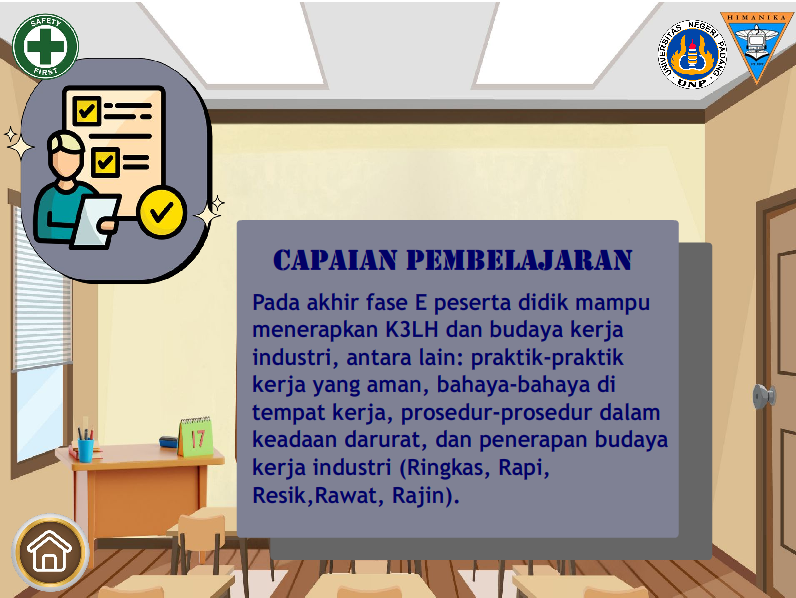
To provide a clear instructional roadmap, the Pedagogical Roadmap Interface explicitly presents the Learning Outcomes (CP) and Instructional Objectives (TP) assigned to the K3LH module, which is illustrated in Figure 5. The design shown in Figure 5 is strategically aligned with the Merdeka Curriculum standards, specifically focusing on mastering industrial work culture and emergency response procedures. By positioning these competencies at the beginning of the learning journey, the media ensures that students maintain a high level of awareness regarding the specific professional standards they are expected to achieve.
3.1.3. Instructional Content Delivery and Assessment
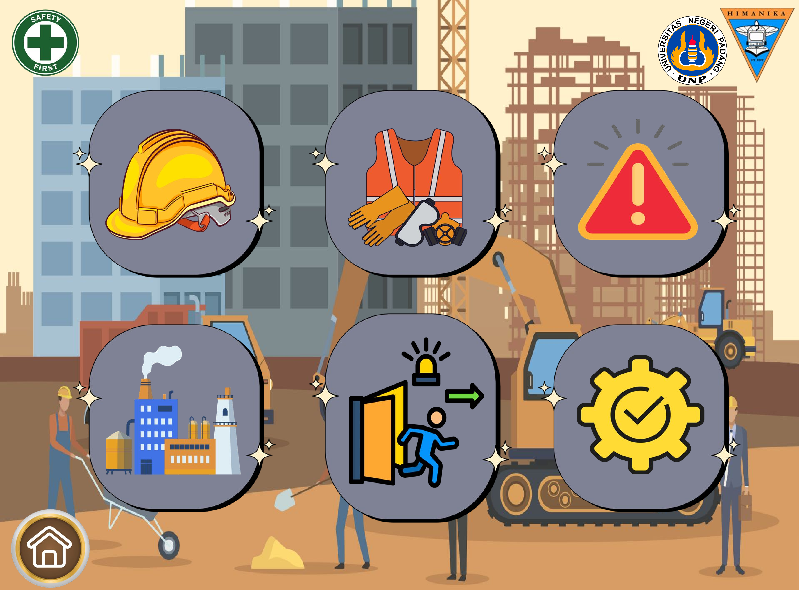
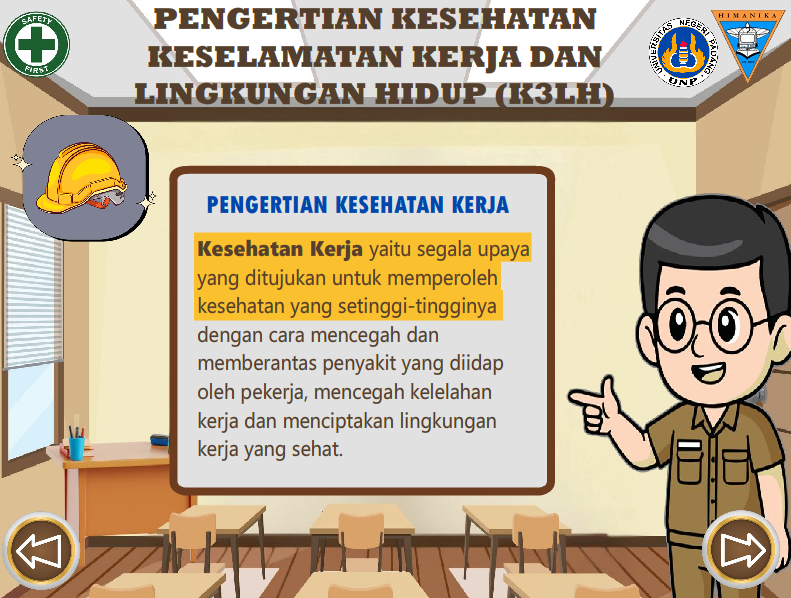
The core of the developed instructional media is the Material Interface, which organizes the K3LH curriculum into six systematic divisions to support modular learning, as demonstrated in Figure 6a. Each content module, such as the conceptual definition of Occupational Health presented in Figure 6b, utilizes an "Active-Interaction" layout. In this configuration, technical text is balanced with visual illustrations and interactive navigation buttons, including “Home,” “Back,” and “Next,” to facilitate a seamless user experience.
|
|
|
|---|---|
|
(a) |
(b) |
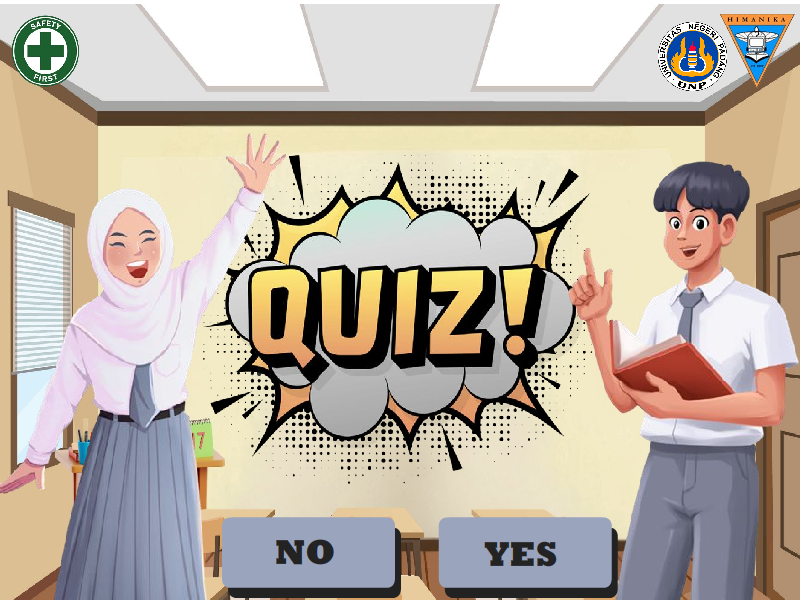
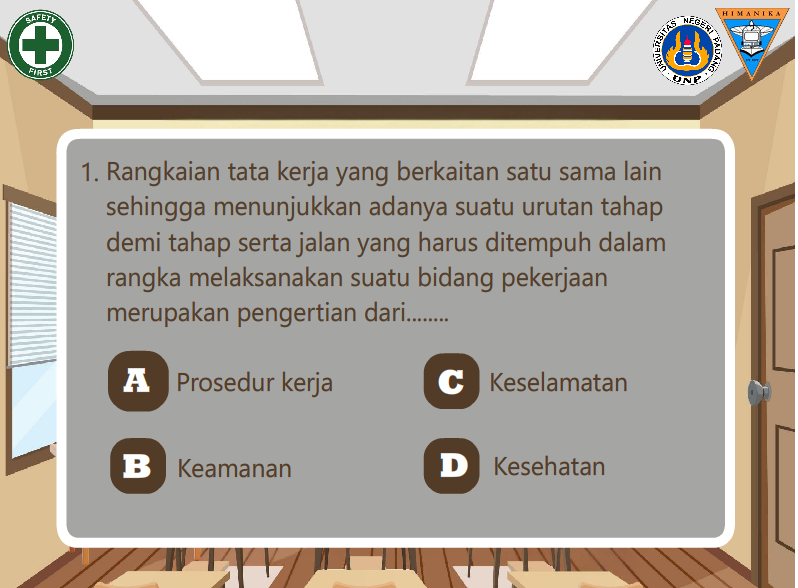
The learning process culminates in an Integrated Assessment System, which begins with the Quiz Entry Portal shown in Figure 7a. This portal serves as a psychological transition for students from the material absorption phase to the evaluation phase. The evaluation is conducted through a Multiple-Choice Interface, as illustrated in Figure 7b, designed to provide immediate conceptual testing. This interactive assessment layout ensures that students can directly apply their understanding of safety procedures and receive instant feedback on their performance.
|
|
|
|---|---|
|
(a) |
(b) |
3.2. Expert Validation Results
Expert validation involved two material experts and two media experts who assessed the interactive learning media based on accuracy, relevance, clarity, interface design, navigation, and technical functionality. Quantitative data were analysed using the percentage formula described in the methodology section, in which expert ratings were converted to percentage scores to determine the product's validity level.
3.2.1. Material Expert Validation
Material validation was conducted by two subject experts (one university lecturer and one vocational teacher). They evaluated four components: content accuracy, curriculum alignment, conceptual depth, and linguistic clarity. As presented in Table 2, the results confirmed that the media obtained a validity score of 94.7%, placing it in the “Highly Valid” category (≥ 81%).
Experts recommended enhancements to terminology consistency and reordering of several conceptual explanations to improve flow and instructional readability. All recommended revisions were applied before student implementation. These outcomes confirm that the learning content met academic quality requirements before field use.
3.2.2. Media Expert Validation
Media expert validation involved two evaluators (one university lecturer and one SMK Electronics teacher), who assessed visual quality, layout organisation, graphic integration, text readability, and multimedia suitability. As shown in Table 2, media validation achieved a 94.8% score, classified as “Highly Valid.”
Feedback was primarily focused on improving colour contrast, button responsiveness, and optimising image placement to enhance interface readability and interaction flow. All suggested improvements were incorporated into the final instructional media version.
|
Validator Group |
E1 |
E2 |
Percentage Score |
Validity Category |
|---|---|---|---|---|
|
Materials experts (n = 2) |
95.8 |
93.6 |
94.7% |
Highly Valid |
|
Media experts (n = 2) |
92.5 |
97.0 |
94.8% |
Highly Valid |
|
Overall Mean |
9 4 . 8 % |
H ighly Val id |
These results confirm that the developed learning media meet instructional, technical, and usability standards, validating its suitability for classroom implementation in the Basic Vocational Electronics course.
3.3. Student Practicality Test Results
The practicality test administered to students yielded highly favourable outcomes, as summarised in Table 3. The instructional media achieved an overall practicality score of 85.1%, placing it in the “Highly Practical” category.
|
Aspect Evaluated |
Percentage Score |
Category |
|---|---|---|
|
Operational usability |
87.0% |
Highly Practical |
|
Content relevance and clarity |
84.5% |
Highly Practical |
|
Visual–audio integration quality |
85.0% |
Highly Practical |
|
Learning efficiency and classroom support |
84.0% |
Highly Practical |
|
Overall Practicality |
85.1% |
Highly Practical |
These results are derived from four key dimensions: operational usability (87.0%), content relevance and clarity (84.5%), visual–audio integration quality (85.0%), and learning efficiency and classroom support (84.0%). The consistent performance across all evaluated aspects indicates that the media functions effectively in vocational classroom settings and directly addresses the instructional needs of Grade 10 Electronics Engineering students.
Qualitative student feedback further corroborates these quantitative findings. Students reported that the interactive animations and logical visual sequencing facilitated a clearer understanding of safety concepts. Furthermore, many highlighted that the intuitive navigation system enabled independent exploration, allowing them to control their own learning pace without constant teacher intervention. The media was also noted for increasing student motivation and engagement by providing an enjoyable learning experience through interactive simulations and immediate feedback during quizzes.
4. Discussion
The findings of this study demonstrate that the Macromedia Flash–based interactive learning media developed for K3LH material in vocational electronics education achieved strong levels of validity and practicality. The expert validation scores, 94.7% for material components and 94.8% for media components, indicate that the instructional content, visual structure, interface navigation, and linguistic clarity meet high academic and technical standards. These results align with the theoretical foundations of the 4D design model, which emphasizes a systematic linkage between curriculum needs, design planning, prototype refinement, and implementation to enhance instructional quality [11]. Furthermore, the rigorous validation process ensures that the media effectively reduces cognitive load while maximizing the delivery of complex technical concepts, a necessity in modern vocational pedagogy [20].
The high practicality score (85.1%) generated through the classroom field test reveals that students perceived the media as useful, enjoyable, and functionally supportive to their learning process. Students reported that interactive features, particularly multimedia simulations, independent navigation, and immediate quiz feedback, helped them understand safety-related content more effectively and promoted active participation compared to conventional classroom delivery. These findings support the assertion that interactive digital media improve conceptual mastery and stimulate motivation by providing multimodal learning paths. Within vocational learning environments, this is particularly important because instructional success requires alignment between theoretical knowledge and job-oriented safety competencies, ensuring students transition smoothly from the classroom to industrial workplace standards [21].
Furthermore, the findings provide important contributions to the instructional challenges noted in the Define stage. Approximately 44% of students previously scored below the KKTP threshold, signaling foundational weaknesses in understanding K3LH safety concepts. The improvement in student engagement during implementation suggests that Flash-based interactive tools may directly address these learning deficits by improving clarity, retention, and autonomy in the learning experience. Recent scholarship emphasizes that such technology-driven autonomy is a key driver in vocational skill acquisition, allowing students to simulate high-risk environments safely before physical practice [8], [22].
A significant implication concerns the continued relevance of Macromedia Flash. Although newer technology platforms exist, the results indicate that Flash remains effective for static animation development, navigation structuring, and quiz integration, especially in vocational schools with limited hardware infrastructure. As noted in the introduction, the technological gap between schools and classrooms in developing regions often slows educational innovation. Thus, maintaining compatibility with legacy systems supports equitable implementation and reduces the resource burden for schools adopting digital learning. This approach aligns with global efforts to bridge the digital divide in education by leveraging sustainable, low-resource software solutions [23].
Additionally, the product’s alignment with the Merdeka Curriculum competencies reinforces its strategic relevance to national education transformation efforts. By embedding active learning, personalized navigation, and job-contextualized safety training, the media supports both academic achievement and the development of employability skills. This connection demonstrates how vocational technology design can generate dual benefits: meeting curriculum requirements and promoting workplace readiness through industry-relevant instructional design [24].
However, some limitations should be acknowledged. First, practicality testing was conducted with only a single cohort of students in Grade X Electronics, limiting generalizability. Further research should implement cross-institutional testing to evaluate learning outcomes across different school types, ability groups, and demographic backgrounds. Second, the Flash platform restricts scalability to mobile operating systems, limiting wider access. Future iterations should migrate content to modern platforms such as HTML5 or mobile-responsive authoring tools to ensure cross-device functionality. Third, the present study assessed validity and practicality but did not assess learning effectiveness quantitatively using pre–post knowledge scores. Adding experimental-based measurements would yield stronger evidence of performance improvement and causal effects.
Despite these limitations, the findings affirm that Flash-based interactive learning media can serve as a robust instructional instrument for vocational electronics education. By integrating multimedia design principles, rigorous instructional modelling, and industry-relevant K3LH content, the developed system successfully bridged pedagogical gaps and enhanced learner engagement.
5. Conclusion
This research successfully developed a Macromedia Flash–based instructional media product grounded in the 4D development model to support K3LH instruction in Basic Vocational Electronics at SMK Negeri 1 Padang. The resulting media demonstrated strong empirical validation, obtaining a “Highly Valid” category from both material and media experts (94.7% and 94.8%), reflecting high accuracy, relevance, interface quality, and instructional coherence. These findings confirm that the systematic Define–Design–Develop–Disseminate progression was effective in producing structured and reliable instructional outputs.
The student practicality test further positioned the product in the “Highly Practical” category (85.1%), indicating that learners perceived the tool as accessible, engaging, and beneficial for autonomous learning. Students found that interactive animations, organized navigation, and embedded assessment improved conceptual clarity and motivation. These results indicate that integrating multimedia into K3LH instruction not only enhances participation but may also reduce classroom barriers to learning associated with conventional teaching approaches.
Overall, this study provides clear evidence that technology-enhanced instructional media can significantly strengthen vocational learning experiences and support the instructional goals of the Merdeka Curriculum. The integration of K3LH safety material into interactive multimedia forms represents a valuable advancement for vocational electronics education, particularly in addressing student engagement issues and aligning learning outcomes with industrial competency needs.
Future research should focus on expanding testing contexts, conducting comparative experimental studies to evaluate learning achievement gains, and developing platform upgrades for mobile and web-based implementation. With continued refinement, interactive instructional media has strong potential to transform the delivery of safety education, support teacher innovation, and improve student learning outcomes in vocational schools.
Declarations
Author Contributions
Mutia Fatila: Conceptualization, Methodology, Software, Data Curation, Validation, Investigation, Writing – Original Draft, Writing – Review & Editing. Ilmiyati Rahmy Jasril: Supervision, Resources, Validation, Formal Analysis, Project Administration, Writing – Review & Editing. Firas Tayseer Ayasrah: Validation, Writing - Review & Editing. All authors have read and approved the final version of this manuscript.
Acknowledgments
The authors express their sincere gratitude to the Faculty of Engineering, Universitas Negeri Padang (UNP), for providing access to facilities and institutional support throughout the project. Appreciation is also extended to the participating lecturers, school partners, and students for their cooperation and contribution, which significantly strengthened this research.
Ethical Approval
This research adhered to the ethical standards established by Universitas Negeri Padang. Ethical approval was granted by the Research Ethics Committee of Universitas Negeri Padang (UNP), Indonesia, before the commencement of data collection. The research procedures involved no physical or psychological risk to participants, and measures were implemented to ensure safety, transparency, and respect for participants’ rights.
Informed Consent
Written informed consent was obtained from all participants before involvement in data collection. Participation was voluntary and free from coercion. The confidentiality of all participant identities and personal information was strictly protected, and the collected information was used solely for academic and scientific purposes.
Funding
This study received no external funding or financial support from government, institutional, or private sources. All research activities were conducted independently.
Data Availability Statement
The data supporting the findings of this study were collected directly from students using structured research procedures approved under the ethical clearance obtained. The datasets were stored securely and used exclusively for academic research.
Competing Interests
The authors declare that there are no competing financial or personal interests that may have influenced the outcomes of this work.
Generative AI and AI-Assisted Technologies Statement
Generative tools (specifically Grammarly) were used during the final writing phase solely to improve language clarity, grammar, and readability. All academic content, analysis, and conclusions remain the authors’ own original intellectual contribution.
References
- E. W. R. Manalu, “Enhancing active, innovative, creative, effective, and enjoyable learning in Information and Communication Technology subjects,” J. Pendidik. Vokasi Indones., vol. 3, no. 1, pp. 23–27, 2024, doi: 10.63401/jpvi.v3i01.142.
- S. Walker, L. Tikly, K. Strong, D. Wallace, and C. Soudien, “The case for educational reparations: addressing racial injustices in sustainable development goal 4,” Int. J. Educ. Dev., vol. 103, p. 102933, 2023, doi: 10.1016/j.ijedudev.2023.102933.
- A. D. Sakti, Y. I. Putra, A. Sabir, and D. Fitria, “Pengembangan media pembelajaran interaktif berbasis Macromedia Flash 8 pada mata pelajaran TIK,” J. Inov. Pendidik. Teknol. Inf., vol. 5, no. 1, pp. 1–11, 2024, doi: 10.52060/pti.v5i1.1431.
- O. A. Ajani, “Enhancing pre-service teacher education: crafting a technology-responsive curriculum for modern classrooms and adaptive learners,” Res. Educ. Policy Manag., vol. 6, no. 2, pp. 209–229, 2024, doi: 10.46303/repam.2024.32.
- L. H. Lubis, B. Febriani, R. F. Yana, A. Azhar, and M. Darajat, “The use of learning media and its effect on improving the quality of student learning outcomes,” Int. J. Educ. Soc. Stud. Manag., vol. 3, no. 2, pp. 7–14, 2023, doi: 10.52121/ijessm.v3i2.148.
- R. S. Alsarayreh, “The effect of technological skills on developing problem solving skills: the moderating role of academic achievement,” Int. J. Instr., vol. 16, no. 2, pp. 369–388, 2023, doi: 10.29333/iji.2023.16221a.
- R. Setia and D. Nasrudin, “School management: the optimization of learning facilities to improve the quality of vocational schools,” J. Pendidik. Vokasi, vol. 10, no. 2, pp. 150–158, 2020, doi: 10.21831/jpv.v10i2.29981.
- A. C. Siregar, A. Adisaputera, and A. Yus, “The development of interactive media assisted by Macromedia Flash to improve the ability of understanding the fiction story information in elementary school students,” Budapest Int. Res. Critics Linguist. Educ. J., vol. 3, no. 2, pp. 1200–1208, 2020, doi: 10.33258/birle.v3i2.1053.
- J. Wahyudianto, I. R. Jasril, J. L. C. García, and C. C. Argyrakou, “Empowering vocational learners: development and validation of Android-based interactive media for electronics education,” J. Hypermedia Technol. Learn., vol. 3, no. 3, pp. 202–222, 2025, doi: 10.58536/j-hytel.195.
- M. Schratz, Voices in Educational Research: An Introduction. 2020. doi: 10.4324/9781003008064-1.
- P. Media, P. Rangkaian, D. Menggunakan, A. Storyline, M. Z. Ansori, and D. Faiza, “Development of digital circuits learning media using Articulate Storyline with the 4D model,” J. Hypermedia Technol. Learn., vol. 2, no. 3, pp. 338–351, 2024, doi: 10.58536/j-hytel.v2i3.145.
- A. Audina and Z. Muchtar, “Development of interactive learning media based on augmented reality Android technology application on redox reaction materials,” J. Teknol. Pendidik., vol. 9, no. 1, pp. 35–42, 2024, doi: 10.33394/jtp.v9i1.10467.
- B. Hariyanto, I. Mz, and W. Su, “4D model learning device development method of the physical geography field work guidance book,” in Proc. MATEC Conf., vol. 372, p. 05008, 2022, doi: 10.1051/matecconf.
- J. F. Cerero, J. M. F. Batanero, and J. C. Almenara, “Digital teaching competencies and disability: validation of a questionnaire design using the K coefficient to select experts,” Heliyon, vol. 9, no. 6, 2023, doi: 10.1016/j.heliyon.2023.e16467.
- T. Siregar, “Tahapan model penelitian dan pengembangan research and development (R&D),” vol. 1, no. 4, pp. 142–158, 2023, doi: 10.58355/dirosat.v1i4.48.
- R. B. Indaryanti, B. Murtiyasa, and B. Soemardjoko, “Model penelitian dan pengembangan 4D: tinjauan tren, tantangan, dan peluang,” J. Kreat. Inov., vol. 25, no. 1, pp. 91–98, 2025, doi: 10.31599/na7deq07.
- J. Usman, L. Ibrahim, and others, “Augmenting the quality of Acehnese knowledge-based EFL material through a 4D model,” Stud. English Lang. Educ., vol. 10, no. 3, pp. 1342–1357, 2023, doi: 10.24815/siele.v10i3.29782.
- A. Kurniawan and M. Anwar, “Perancangan media pembelajaran interaktif berbasis Macromedia Flash pada mata pelajaran dasar listrik dan elektronika,” Voteteknika, vol. 10, no. 1, pp. 1–10, 2022, doi: 10.24036/voteteknika.v10i1.111772.
- A. R. Mufidah, D. Rahmawati, and Y. Rahmawati, “Pengembangan media pembelajaran interaktif menggunakan Macromedia Flash 8.0 berbasis Android pada pokok bahasan transformasi,” EMTEKA: J. Pendidikan Matematika, vol. 3, no. 2, pp. 190–197, 2022, doi: 10.24127/emteka.v3i2.1399.
- P. Evans, M. Vansteenkiste, P. Parker, et al., "Cognitive Load Theory and Its Relationships with Motivation: a Self-Determination Theory Perspective," Educational Psychology Review, vol. 36, no. 7, 2024. doi: 10.1007/s10648-023-09841-2.
- F. Huwaidi, A. B. D. Nandiyanto, and N. Muhammad, “The urgency of online learning media during the Covid-19 pandemic at the vocational school in Indonesia,” Int. J. Educ. Res. Technol., vol. 1, no. 2, pp. 1–8, 2021, doi: 10.17509/ijert.v1i2.33368.
- A. Mack, K. Carter-Rogers, P. Bahaw, et al., “Entrepreneurial knowledge and skill exposure in vocational education: development of a new assessment scale,” Discov. Educ., vol. 3, p. 237, 2024, doi: 10.1007/s44217-024-00331-3.
- A. Bon, F. Saa-Dittoh, and H. Akkermans, “Bridging the digital divide,” in Introduction to Digital Humanism, H. Werthner et al., Eds. Cham: Springer, 2024, pp. 1–12, doi: 10.1007/978-3-031-45304-5_19.
- H. Zuo, M. Zhang, and W. Huang, “Lifelong learning in vocational education: A game-theoretical exploration of innovation, entrepreneurial spirit, and strategic challenges,” J. Innov. Knowl., vol. 10, no. 3, p. 100694, May–Jun. 2025, doi: 10.1016/j.jik.2025.100694.
Author Biographies

Mutia Fatila is an undergraduate student in the Electronics Engineering Education Study Program at Universitas Negeri Padang, Indonesia. Her current research focuses on the development of innovative learning media aimed at strengthening students’ proficiency, interest, and motivation in learning fundamental electronics concepts within vocational high schools. Specifically, she is designing media to support teaching and learning related to occupational health, safety, and environmental awareness (K3LH), with the goal of making instructional activities more engaging, effective, and accessible for students.



Ilmiyati Rahmy Jasril is a lecturer in the Electronics Engineering Education Study Program at Universitas Negeri Padang. She has published extensively in the fields of vocational education and electronics education. Her research interests include the development of learning methods and educational media innovations, as well as microcontroller-based projects to enhance the teaching and learning of electronics.




Firas Tayseer Ayasrah is an assistant professor at Al Ain University, UAE, specializing in artificial intelligence (AI) and educational technology. Holding a Ph.D. in educational technologies, Ayasrah’s research focuses on AI integration in educational platforms, digital learning environments, and AR/VR, with numerous publications in reputable journals. His work aims to advance AI-powered educational technologies to enhance learning experiences in higher education.



Publisher’s and Journal’s Note
Sagamedia Teknologi Nusantara, as the publisher and editor of the Journal of Hypermedia & Technology-Enhanced Learning (J-HyTEL), upholds the highest ethical standards in academic publishing. The journal remains neutral with regard to jurisdictional claims in published maps and institutional affiliations. Authors are fully responsible for the originality, accuracy, and integrity of their work. Post-publication ethical concerns will be addressed through corrections, clarifications, or retractions as necessary. The content of this publication has not been approved by the United Nations and does not reflect the views of the United Nations or its officials or Member States. https://www.un.org/sustainabledevelopment
Copyright & License

© 2026 Mutia Fatila, Ilmiyati Rahmy Jasril, Firas Tayseer Ayasrah. Authors retain copyright.
This article is licensed under a Creative Commons Attribution 4.0 International License, which permits use, sharing, adaptation, distribution, and reproduction in any medium or format, provided that appropriate credit is given to the original author(s) and the source, a link to the Creative Commons license is provided, and any modifications are indicated. Unless otherwise specified in a credit line, this article’s images or other third-party material are included under the Creative Commons license. If certain material is not covered by the article’s Creative Commons license and its intended use is not permitted by statutory regulation or exceeds the allowed usage, permission must be obtained directly from the copyright holder. http://creativecommons.org/licenses/by/4.0/.
Read the licence terms