

关键词
引用方式




出版物概览

下一期
J-HyTEL welcomes original and rigorous scholarship advancing education, media technology, and computer science applications.
Rolling submissions are accepted throughout the year.
摘要
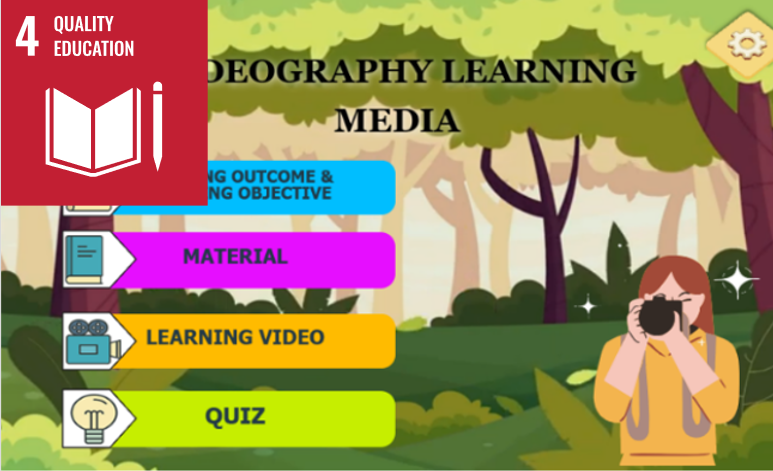
本研究旨在采用基于设计的研究(DBR)方法,为帕当潘江第2国立职业学校(SMK Negeri 2 Padang Panjang)的“职业摄像”课程开发并验证一种交互式学习媒介。该媒介采用Adobe Captivate开发,整合了视觉、音频、视频教程和交互式测验等多媒体元素,以增强学生的参与度和理解力。 开发过程遵循了迭代式的DBR阶段,包括问题分析、原型设计、专家验证、实施和反思。经六位教育技术与学科领域的专家验证,该学习媒介在内容质量和教学设计方面均获得了“有效”至“高度有效”的评价。 针对15名学生进行的实用性测试得分为85.97%,表明该教学资源具有较高的可用性和接受度。 研究结果表明,该交互式媒体显著提升了学生的学习动机,并有力支持了视频制作教育中的能力本位学习。本研究通过有效整合多媒体技术,推动了职业教育教学创新的发展,并为致力于优化数字学习环境的教育工作者提供了实践性启示。
RIS is compatible with Zotero, Mendeley, and EndNote. Immediate opening depends on the visitor's browser and reference-manager settings.
参考
28 References[1] A. Y. K. Kahbi, A. Suhaimi, H. Hasmy, and M. F. Ab Jabal, “Innovation of digital multimedia: Recognizing the advantages,” e-Academia J., vol. 12, no. 2, pp. 224–239, 2023. Available: https://doi.org/10.24191/e-aj.v12i2.23996
[2] D. Wu, J. Wang, and Z. Che, “Digital education: Connotation, pathway, and trend,” Digit. Educ., vol. 1, no. 1, pp. 59–68, 2024. Available: https://doi.org/10.1007/s44366-024-0021-z
[3] A.-K. E. Onjewu, E. S. Godwin, F. Azizsafaei, and D. Appiah, “The influence of technology use on learning skills among Generation Z: A gender and cross-country analysis,” Ind. High. Educ., vol. 39, no. 2, pp. 1–17, 2025. Available: https://doi.org/10.1177/09504222241263227
[4] M. Limniou, I. Schermbrucker, and M. Lyons, “Traditional and flipped classroom approaches delivered by two different teachers: The student perspective,” Educ. Inf. Technol., vol. 23, pp. 797–817, 2018. Available: https://doi.org/10.1007/s10639-017-9636-8
[5] C. Blewett, “From traditional pedagogy to digital pedagogy,” in Disrupting Higher Education Curriculum. Constructing Knowledge: Curriculum Studies in Action, M. A. Samuel, R. Dhunpath, and N. Amin, Eds. Rotterdam, Netherlands: SensePublishers, 2016, pp. 267–281. Available: https://doi.org/10.1007/978-94-6300-896-9_16
[6] L. Tinoca, J. Piedade, S. Santos, A. Pedro, and S. Gomes, “Design-based research in the educational field: A systematic literature review,” Educ. Sci., vol. 12, no. 6, 2022. Available: https://doi.org/10.3390/educsci12060410
[7] G. Poizat, A. Drakos, É. Ambrosetti, S. Flandin, L. Ria, and S. Leblanc, “Enactive design-based research in vocational and continuing education and training,” Vocat. Learn., pp. 537–563, 2024. Available: https://doi.org/10.1007/s12186-024-09348-z
[8] S. M. H. Amiri, “Project-based learning pedagogy: Bridging theory and practice for real-world impact,” Int. J. Res. Innov. Soc. Sci., vol. 7, no. 2454, pp. 1175–1189, 2023. Available: https://doi.org/10.47772/IJRISS
[9] M. S. H. Munna and M. R. Hossain, “Digital education revolution: Evaluating LMS-based learning and traditional approaches,” J. Innov. Technol. Converg., vol. 6, no. 2, pp. 21–40, 2024. Available: https://doi.org/10.69478/jitc2024v6n002a03
[10] T. Mutanda, P. Gumede, T. Mayisela, and D. Ng’ambi, “Using a design-based research approach for a supplementary instruction programme: A pedagogical intervention during the COVID-19 pandemic,” S. Afr. J. High. Educ., vol. 37, no. 6, pp. 271–285, 2023. Available: https://doi.org/10.20853/37-6-5243
[11] O. Omelianenko and N. Artyukhova, “Project-based learning: Theoretical overview and practical implications for local innovation-based development,” Econ. Educ., vol. 9, no. 1, pp. 35–41, 2024. Available: https://doi.org/10.30525/2500-946x./2024-1-6
[12] M. Yue, M. S. Y. Jong, and Y. Dai, “Pedagogical design of K-12 artificial intelligence education: A systematic review,” Sustainability, vol. 14, no. 23, pp. 1–29, 2022. Available: https://doi.org/10.3390/su142315620
[13] K. Brümmer, T. Alkemeyer, and R. Mitchell, Building Blocks of a Historical Overview of Tacit Knowledge. Cham, Switzerland: Springer, 2022. Available: https://doi.org/10.1007/978-3-030-93001-1_5
[14] R. Afrianti, T. R. Soraya, and M. Linawati, “Utilizing Adobe Captivate to develop French literature learning materials,” in Proc. 6th Annu. Int. Semin. Transform. Educ. Educ. Leadersh. (AISTEEL 2021), vol. 591, pp. 762–768, 2022. Available: https://doi.org/10.2991/assehr.k.211110.177
[15] F. Galatsopoulou, C. Kenterelidou, R. Kotsakis, and M. Matsiola, “Examining students’ perceptions towards video-based and video-assisted active learning scenarios in journalism and communication courses,” Educ. Sci., vol. 12, no. 2, 2022. Available: https://doi.org/10.3390/educsci12020074
[16] A. T. Capinding, “Students’ AI dependency in 3R’s: Questionnaire construction and validation,” Int. J. Inf. Educ. Technol., vol. 14, no. 11, pp. 1532–1543, 2024. Available: https://doi.org/10.18178/ijiet.2024.14.11.2184
[17] K. V. Vlasenko, S. V. Volkov, I. V. Lovianova, I. V. Sitak, O. O. Chumak, and N. H. Bohdanova, “Exploring usability principles for educational online courses: A case study on an open platform for online education,” Educ. Technol. Q., no. 2, pp. 173–187, 2023. Available: https://doi.org/10.55056/etq.602
[18] M. Zamiri and A. Esmaeili, “Methods and technologies for supporting knowledge sharing within learning communities: A systematic literature review,” Adm. Sci., vol. 14, no. 1, 2024. Available: https://doi.org/10.3390/admsci14010017
[19] P. Sandra and P. Astariani, Developing Learning Evaluation Materials Assisted by the Quizizz Application to Support Self-Directed Learning. Paris, France: Atlantis Press, 2024. Available: https://doi.org/10.2991/978-94-6463-622-2
[20] A. P. Saubari and I. G. W. Sudatha, “Interactive learning multimedia based on problem-based learning models in fifth-grade science content,” J. Educ. Technol., vol. 7, no. 1, pp. 177–185, 2023. Available: https://doi.org/10.23887/jet.v7i1.57354
[21] A. A. Bustomi, N. Khosiah, and A. Fathurrohman, “Developing Pancasila learning strategies through culture-based interactive media in elementary schools,” Al-Jahiz J., vol. 3, no. 1, pp. 43–56, 2025. Available: https://doi.org/10.61650/alj.v3i1.622
[22] H. R. Wardani, R. A. Wulandary, and S. Riskika, “Evaluating the validity and reliability of competency instruments for tuberculosis nurses in primary health centers of Bondowoso District,” J. Health Sci. Pract., vol. 8, no. 2, 2024. Available: https://doi.org/10.29080/jhsp.v8i2.1275
[23] A. Theodorio, Z. Waghid, and A. Wambua, “Technology integration in teacher education: challenges and adaptations in the post-pandemic era,” Discov Educ., vol. 3, p. 242, 2024. Available: https://doi.org/10.1007/s44217-024-00341-1
[24] F. Mustafa, H. T. M. Nguyen, and X. Gao, “The challenges and solutions of technology integration in rural schools: A systematic literature review,” Int. J. Educ. Res., vol. 126, p. 102380, 2024. Available: https://doi.org/10.1016/j.ijer.2024.102380
[25] F.-K. Chiang, X. Shang, and L. Qiao, “Augmented reality in vocational training: A systematic review of research and applications,” Comput. Hum. Behav., vol. 129, p. 107125, Apr. 2022. Available: https://doi.org/10.1016/j.chb.2021.107125
[26] T. Anderson and J. Shattuck, “Design-based research: A decade of progress in education research?,” Educ. Res., vol. 41, no. 1, pp. 16–25, Jan. 2012. Available: https://doi.org/10.3102/0013189X11428813
[27] A. Tadesse, S. Lehesvuori, H. Posti-Ahokas, and J. Moate, “The learner-centred interactive pedagogy classroom: Its implications for dialogic interaction in Eritrean secondary schools,” Think. Skills Creat., vol. 50, p. 101379, Dec. 2023. Available: https://doi.org/10.1016/j.tsc.2023.101379
[28] H. Zuo, M. Zhang, and W. Huang, “Lifelong learning in vocational education: A game-theoretical exploration of innovation, entrepreneurial spirit, and strategic challenges,” J. Innov. Knowl., vol. 10, no. 3, p. 100694, May–Jun. 2025. Available: https://doi.org/10.1016/j.jik.2025.100694
Copyright and License

This work is licensed under a Creative Commons Attribution 4.0 International License.
Copyright (c) 2025 Dita Luthfillah, Asrul Huda, Ika Parma Dewi, Yevgeniya Daineko