

关键词
引用方式




出版物概览

下一期
J-HyTEL welcomes original and rigorous scholarship advancing education, media technology, and computer science applications.
Rolling submissions are accepted throughout the year.
摘要
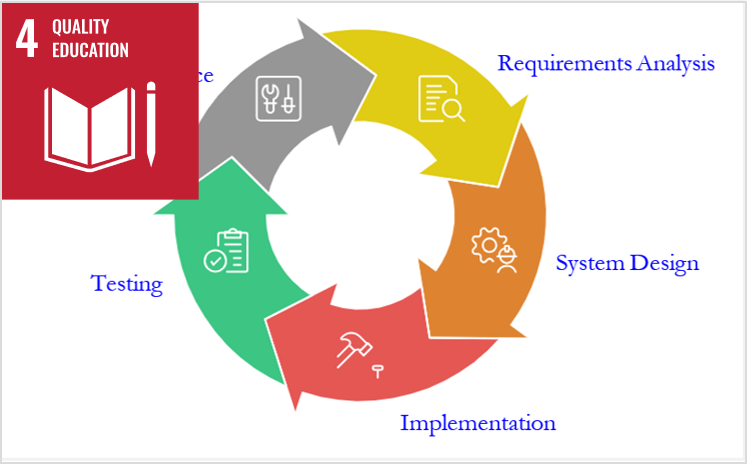
教育机构中的手动考勤系统,特别是在设有学员项目的职业学校等纪律要求极高的环境中,面临着诸多挑战,包括数据不准确、行政负担重以及易受欺诈等问题。本研究通过设计并开发一款适用于Android平台的安全移动考勤应用程序,来解决这些问题。 开发过程遵循瀑布式软件开发模型,从需求分析到测试提供了结构化的框架。所提出的解决方案采用双重验证机制,结合用于特定会话识别的二维码(QR码)与地理定位技术,以验证用户是否实际位于指定的学校区域内。 该应用程序支持多种用户角色,包括学生、教师、管理人员和家长,并为日常点名和课外活动提供自动考勤追踪功能。教师可通过该应用程序手动录入课堂课程的考勤记录。实证评估证实,该应用程序有效缓解了人工系统固有的漏洞。 这种双重验证方法显著提升了考勤流程的完整性和效率,为监督学生纪律提供了可靠且安全的工具。本研究为整合易于使用的数字技术以加强中等教育背景下的行政流程提供了切实可行的范例。
RIS is compatible with Zotero, Mendeley, and EndNote. Immediate opening depends on the visitor's browser and reference-manager settings.
已发表文章中报告的声明
Author Contributions
Hasbi Kurnia: Conceptualization, Methodology, Investigation, Software, Data curation, Writing – Original Draft, Writing – Review & Editing. Geovanne Farell: Validation, Supervision. Denny Kurniadi: Validation, Supervision. Rizkayeni Marta: Validation, Supervision. All authors have read and approved the final version of this manuscript.
Acknowledgments
The authors would like to express their deepest gratitude to all those who have contributed to the successful completion of this research.
View statement in PDF · PDF page 10Ethics Approval
This research was conducted in accordance with the ethical principles for research involving human subjects. The study involved students, teachers, and administrative staff at a vocational high school with a cadet system in Indonesia. Initial data for requirements analysis were gathered through voluntary participation in surveys (by students) and structured interviews (by teachers and staff). Before any data collection, permission was secured from the school's leadership to conduct the research within the institution. All participants were informed about the purpose of the study, the voluntary nature of their involvement, and the confidentiality of their responses. Informed consent was obtained from each participant before they completed the questionnaire or participated in an interview. The study ensured no personal information was collected or shared without permission. All initial survey responses were anonymized and analyzed to protect the participants' privacy.
View statement in PDF · PDF page 10资助
This research did not receive any external funding or financial support. All expenses related to developing and testing the educational media application were personally funded.
View statement in PDF · PDF page 10利益冲突
The authors declare that they have no conflicts of interest.
View statement in PDF · PDF page 10Generative AI Disclosure
While preparing this manuscript, the author(s) used Gemini Pro and Grammarly to enhance the readability, language, and overall structure. Following these tools, the author(s) performed a comprehensive review and editing process to ensure the content's accuracy, integrity, and quality. The author(s) accept full responsibility for the content and conclusions presented in this publication.
View statement in PDF · PDF page 10参考
17 References[1] A. R. B. Putra and D. Nora, “Faktor Penghambat dalam Mengatasi Ketidakhadiran Siswa Kelas XI IPS di SMAN 1 Lubuk Basung,” Jurnal Sikola: Jurnal Kajian Pendidikan dan Pembelajaran, vol. 1, no. 4, pp. 253–264, Jul. 2020, doi: https://doi.org/10.24036/sikola.v1i4.45.
[2] M. Alda, M. Juarsyah, A. Nugraha, L. R. Alfachry, and A. K. Kerja, “Jurnal Manajemen Informatika (JAMIKA) Aplikasi Absensi Mahasiswa Kerja Praktik Menggunakan QR Code Berbasis Android,” Jurnal Manajemen Informatika, vol. 14, 2024, doi: https://doi.org/10.34010/jamika.v14i1.11775
[3] R. Firdaus, E. Wahyuni, and A. Agussalim, “Rancang Bangun Sistem Presensi Pegawai Berbasis Geo Lokasi dan Pengenalan Wajah Menggunakan Facenet,” Jurnal Media Infotama, vol. 20, no. 2, pp. 410–416, 2024, doi: https://doi.org/10.37676/jmi.v20i2.6219
[4] Y. W. S. Putra, “Implementasi Model TAM pada Sistem Informasi Presensi Online Menggunakan Face Recognition dan GPS,” JACOST, vol. 4, no. 2, Dec. 2023, doi: https://doi.org/10.52158/jacost.v4i2.577.
[5] A. Mishra and Y. I. Alzoubi, “Structured software development versus agile software development: a comparative analysis,” Int. J. Syst. Assur. Eng. Manag., vol. 14, pp. 1504–1522, 2023, doi: https://doi.org/10.1007/s13198-023-01958-5.
[6] K. Petersen, C. Wohlin, and D. Baca, “The Waterfall Model in Large-Scale Development,” in Product-Focused Software Process Improvement, F. Bomarius, M. Oivo, P. Jaring, and P. Abrahamsson, Eds. Berlin, Heidelberg: Springer, 2009, vol. 32, Lecture Notes in Business Information Processing, pp. 311–324, doi: https://doi.org/10.1007/978-3-642-02152-7_29.
[7] M. F. A. Mohamad Noor, A. F. Ibrahim, and M. N. F. Jamaluddin, “Development of Employee Attendance Management System using Flutter,” Journal of Computing Research and Innovation, vol. 8, no. 2, pp. 178–188, 2023, doi: https://doi.org/10.24191/jcrinn.v8i2.369.
[8] A. Saravanos and M. X. Curinga, “Simulating the Software Development Lifecycle: The Waterfall Model,” Appl. Syst. Innov., vol. 6, no. 6, p. 108, 2023, doi: https://doi.org/10.3390/asi6060108.
[9] D. Ly, M. Overeem, S. Brinkkemper, and F. Dalpiaz, “The Power of Words in Agile vs. Waterfall Development: Written Communication in Hybrid Software Teams,” J. Syst. Softw., vol. 219, Jan. 2025, Art. no. 112243, doi: https://doi.org/10.1016/j.jss.2024.112243.
[10] A. Bates, R. Vavricka, S. Carleton, R. Shao, and C. Pan, “Unified modeling language code generation from diagram images using multimodal large language models,” Mach. Learn. Appl., vol. 20, Jun. 2025, Art. no. 100660, doi: https://doi.org/10.1016/j.mlwa.2025.100660.
[11] S. A. Kinari, N. Funabiki, S. T. Aung, and H. H. S. Kyaw, “A Guided Self-Study Platform of Integrating Documentation, Code, Visual Output, and Exercise for Flutter Cross-Platform Mobile Programming,” Computers, vol. 14, no. 10, p. 417, 2025, doi: https://doi.org/10.3390/computers14100417.
[12] S. A. Kinari, N. Funabiki, S. T. Aung, K. H. Wai, M. Mentari, and P. Puspitaningayu, “An Independent Learning System for Flutter Cross-Platform Mobile Programming with Code Modification Problems,” Information, vol. 15, no. 10, p. 614, 2024, doi: https://doi.org/10.3390/info15100614.
[13] Supriyono, “Software Testing with the approach of Blackbox Testing on the Academic Information System,” Int. J. Innov. Sci. Technol., vol. 3, no. 2, 2020, doi: https://doi.org/10.30645/ijistech.v3i2.54.
[14] S. Baul, J. Ahamed, M. A. Islam, M. K. A. Mazumder, T. Sultan, and D. Nandi, “A comprehensive study to assist decision-makers in determining software design between four UML diagrams,” in Proc. 3rd Int. Conf. Comput. Advancements (ICCA '24), 2024, pp. 232–238, doi: https://doi.org/10.1145/3723178.3723209.
[15] J. Skalka and M. Drlík, “Development of Automatic Source Code Evaluation Tests Using Grey-Box Methods: A Programming Education Case Study,” IEEE Access, vol. 11, pp. 106772–106792, 20 Sep. 2023, doi: https://doi.org/10.1109/ACCESS.2023.3317694.
[16] L. O’Neill, H. H. Lauridsen, L. Østengaard, and A. Qvortrup, “Validity evidence for the Experiences of Teaching and Learning Questionnaire (ETLQ) in evaluations of quality learning: A systematic critical literature review,” Stud. Educ. Eval., vol. 78, Sep. 2023, Art. no. 101283, doi: https://doi.org/10.1016/j.stueduc.2023.101283.
[17] S. J. Wafudu, Y. B. Kamin, and D. Marcel, “Validity and reliability of a questionnaire developed to explore quality assurance components for teaching and learning in vocational and technical education,” Humanit. Soc. Sci. Commun., vol. 9, p. 303, 2022, doi: https://doi.org/10.1057/s41599-022-01306-1.
Copyright and License

This work is licensed under a Creative Commons Attribution 4.0 International License.
Copyright (c) 2025 Hasbi Kurnia, Geovanne Farell, Denny Kurniadi, Rizkayeni Marta