

Sustainable Development Goals
This article contributes to the following United Nations Sustainable Development Goals.

Kata Kunci
Cara Mengutip




Ringkasan Publikasi
Edisi Mendatang
J-HyTEL welcomes original and rigorous scholarship advancing education, media technology, and computer science applications.
Rolling submissions are accepted throughout the year.
Abstrak
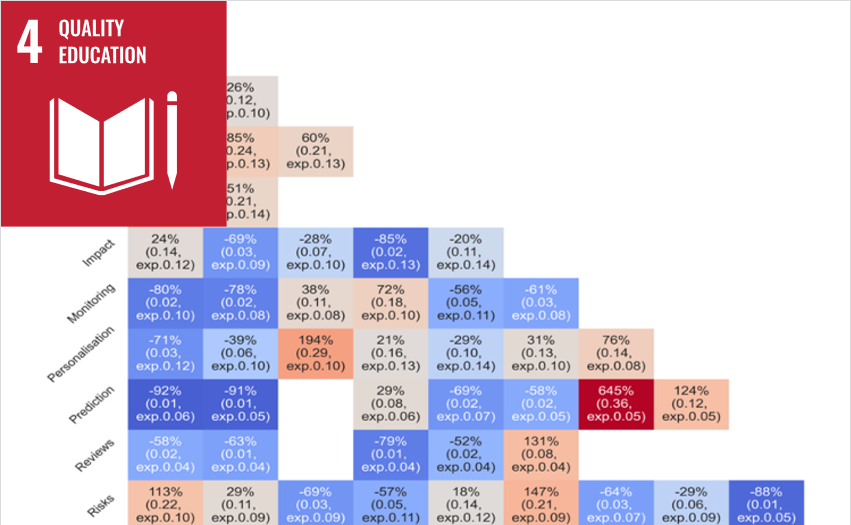
Penelitian tentang kecerdasan buatan (AI) dalam pendidikan telah berkembang dengan kecepatan yang belum pernah terjadi sebelumnya, namun perkembangannya tetap terfragmentasi, didorong oleh sensasi, dan tersebar secara tidak merata di berbagai disiplin ilmu dan wilayah. Makalah ini menyajikan salah satu pemetaan paling komprehensif hingga saat ini, dengan menganalisis 16.564 publikasi (1990–2025) yang diidentifikasi melalui Web of Science dan disaring menjadi 4.626 kontribusi inti menggunakan metode hibrida yang menggabungkan pemodelan topik komputasional, penyaringan berbantuan AI, dan validasi manusia. Untuk melengkapi pemetaan tingkat makro ini, kami melakukan tinjauan kualitatif terhadap makalah-makalah yang paling sering dikutip dalam setiap topik penelitian utama, memberikan kedalaman interpretatif mengenai bagaimana karya-karya berpengaruh tersebut telah membentuk perdebatan seputar adopsi, keterlibatan, personalisasi, chatbot, evaluasi, risiko, pemantauan, tinjauan, dan pengajaran AI. Temuan ini mengungkapkan pertumbuhan eksponensial sejak tahun 2020, dengan lonjakan besar selama pandemi COVID-19 dan setelah peluncuran ChatGPT, namun juga menunjukkan fragmentasi yang terus berlanjut, penurunan studi evaluasi, serta kejenuhan survei sikap. Bidang-bidang yang menjanjikan seperti personalisasi, pengajaran AI, dan keterlibatan telah kehilangan visibilitas meskipun memiliki pentingnya jangka panjang, sementara risiko dan isu etika tetap kurang dieksplorasi dan kurang terhubung dengan penelitian teknis. Pola kutipan juga menunjukkan ketidakseimbangan sistemik, di mana makalah pendidikan dikutip secara tidak proporsional sementara hasil penelitian teknik kurang diakui. Kami menyimpulkan dengan rekomendasi untuk memperkuat interdisipliner, menangani bidang-bidang yang terabaikan, memasukkan perspektif historis, serta mengatasi tantangan sistemik guna mendorong bidang yang lebih kumulatif, integratif, dan kritis.
RIS is compatible with Zotero, Mendeley, and EndNote. Immediate opening depends on the visitor's browser and reference-manager settings.
Pernyataan yang dilaporkan dalam artikel yang diterbitkan
Author Contributions
Constance de Saint Laurent: Conceptualization; Methodology; Investigation; Data Collection; Data Curation; Writing – Original Draft Preparation. Vlad Glaveanu: Theoretical Framework Development; Writing – Review & Editing. Ioana Literat: Theoretical Framework Development; Writing – Review & Editing. Ingunn Ness: Theoretical Framework Development; Writing – Review & Editing. All authors have read and approved the final version of the manuscript. All authors have read and approved the final version of the manuscript.
Acknowledgments
The authors would like to thank Natalie Robinson for her help formatting the final version of the paper.
View statement in PDF · PDF page 22Ethics Approval
This study was conducted in accordance with ethical standards.
View statement in PDF · PDF page 22Informed Consent
The study did not involve collecting empirical data from human participants.
View statement in PDF · PDF page 22Pendanaan
The authors declare that this research did not receive specific funding from any public, commercial, or not-for-profit agencies.
View statement in PDF · PDF page 22Ketersediaan Data
The data supporting this study’s findings are not publicly available. Summary data are included in the manuscript, and more detailed information can be requested from the corresponding author under strict confidentiality agreements.
View statement in PDF · PDF page 22Konflik Kepentingan
The authors declare that they have no competing interests related to the content of this article.
View statement in PDF · PDF page 22Generative AI Disclosure
During the preparation of this manuscript, the authors used AI (ChatGPT 4.0) to assist as part of the methodology of summarizing data, as explained in the manuscript. Whenever AI was used, the authors carefully reviewed and edited the content to ensure accuracy and integrity, and they take full responsibility for the published work.
View statement in PDF · PDF page 22Referensi
41 References[1] V. Caputi and A. Garrido, “Student-oriented planning of e-learning contents for Moodle,” Journal of Network and Computer Applications, vol. 53, pp. 115–127, 2015, doi: https://doi.org/10.1016/j.jnca.2015.04.001
[2] H. S. Nwana, “Intelligent tutoring systems: An overview,” Artificial Intelligence Review, vol. 4, no. 4, pp. 251–277, 1990, doi: https://doi.org/10.1007/BF00168958
[3] H. Yu, C. Miao, C. Leung, and T. J. White, “Towards AI-powered personalization in MOOC learning,” npj Science of Learning, vol. 2, no. 1, Art. no. 15, 2017, doi: https://doi.org/10.1038/s41539-017-0016-3
[4] B. Cope, M. Kalantzis, and D. Searsmith, “Artificial intelligence for education: Knowledge and its assessment in AI-enabled learning ecologies,” Educational Philosophy and Theory, vol. 53, no. 12, pp. 1229–1245, 2021, doi: https://doi.org/10.1080/00131857.2020.1728732
[5] T. K. Chiu, Q. Xia, X. Zhou, C. S. Chai, and M. Cheng, “Systematic literature review on opportunities, challenges, and future research recommendations of artificial intelligence in education,” Computers and Education: Artificial Intelligence, vol. 4, Art. no. 100118, 2023, doi: https://doi.org/10.1016/j.caeai.2022.100118
[6] S. J. Lee and K. Kwon, “A systematic review of AI education in K-12 classrooms from 2018 to 2023: Topics, strategies, and learning outcomes,” Computers and Education: Artificial Intelligence, vol. 6, Art. no. 100211, 2024, doi: https://doi.org/10.1016/j.caeai.2024.100211
[7] F. Martin, M. Zhuang, and D. Schaefer, “Systematic review of research on artificial intelligence in K-12 education (2017–2022),” Computers and Education: Artificial Intelligence, vol. 6, Art. no. 100195, 2024, doi: https://doi.org/10.1016/j.caeai.2023.100195
[8] A. Tlili et al., “What if the devil is my guardian angel: ChatGPT as a case study of using chatbots in education,” Smart Learning Environments, vol. 10, no. 1, Art. no. 15, 2023, doi: https://doi.org/10.1186/s40561-023-00237-x
[9] F. J. Hinojo-Lucena, I. Aznar-Díaz, M. P. Cáceres-Reche, and J. M. Romero-Rodríguez, “Artificial intelligence in higher education: A bibliometric study on its impact in the scientific literature,” Education Sciences, vol. 9, no. 1, Art. no. 51, 2019, doi: https://doi.org/10.3390/educsci9010051
[10] O. Zawacki-Richter, V. I. Marín, M. Bond, and F. Gouverneur, “Systematic review of research on artificial intelligence applications in higher education—where are the educators?” International Journal of Educational Technology in Higher Education, vol. 16, no. 1, Art. no. 39, 2019, doi: https://doi.org/10.1186/s41239-019-0171-0
[11] A. Bozkurt, A. Karadeniz, D. Baneres, A. E. Guerrero-Roldán, and M. E. Rodríguez, “Artificial intelligence and reflections from educational landscape: A review of AI studies in half a century,” Sustainability, vol. 13, no. 2, Art. no. 800, 2021, doi: https://doi.org/10.3390/su13020800
[12] S. Guo, Y. Zheng, and X. Zhai, “Artificial intelligence in education research during 2013–2023: A review based on bibliometric analysis,” Education and Information Technologies, vol. 29, no. 13, pp. 16387–16409, 2024, doi: https://doi.org/10.1007/s10639-024-12491-8
[13] A. Gillespie, V. P. Glăveanu, and C. de Saint Laurent, Pragmatism and Methodology: Doing Research That Matters with Mixed Methods. Cambridge, U.K.: Cambridge University Press, 2024, doi: https://doi.org/10.1017/9781009031066
[14] C. Perrotta and N. Selwyn, “Deep learning goes to school: Toward a relational understanding of AI in education,” Learning, Media and Technology, vol. 45, no. 3, pp. 251–269, 2020, doi: https://doi.org/10.1080/17439884.2020.1686017
[15] M. C. Wijanto, I. Widiastuti, and H. S. Yong, “Topic modeling for scientific articles: Exploring optimal hyperparameter tuning in BERT,” International Journal on Advanced Science, Engineering and Information Technology, vol. 14, no. 3, pp. 912–919, 2024, doi: https://doi.org/10.18517/ijaseit.14.3.19347
[16] G. Piao, “Scholarly text classification with sentence BERT and entity embeddings,” in Trends and Applications in Knowledge Discovery and Data Mining, Cham, Switzerland: Springer, 2021, pp. 79–87, doi: https://doi.org/10.1007/978-3-030-75015-2_8
[17] S. Selva Birunda and R. Kanniga Devi, “A review on word embedding techniques for text classification,” in Innovative Data Communication Technologies and Application, Singapore: Springer, 2021, pp. 267–281, doi: https://doi.org/10.1007/978-981-15-9651-3_23
[18] R. Chocarro, M. Cortiñas, and G. Marcos-Matás, “Teachers’ attitudes towards chatbots in education: A technology acceptance model approach considering the effect of social language, bot proactiveness, and users’ characteristics,” Educational Studies, vol. 49, no. 2, pp. 295–313, 2023, doi: https://doi.org/10.1080/03055698.2020.1850426
[19] J. E. Raffaghelli, M. E. Rodríguez, A. E. Guerrero-Roldán, and D. Bañeres, “Applying the UTAUT model to explain the students’ acceptance of an early warning system in higher education,” Computers & Education, vol. 182, Art. no. 104468, 2022, doi: https://doi.org/10.1016/j.compedu.2022.104468
[20] M. Farrokhnia, S. K. Banihashem, O. Noroozi, and A. Wals, “A SWOT analysis of ChatGPT: Implications for educational practice and research,” Innovations in Education and Teaching International, vol. 61, no. 3, pp. 460–474, 2024, doi: https://doi.org/10.1080/14703297.2023.2195846
[21] J. Garzón, E. Patiño, and C. Marulanda, “Systematic review of artificial intelligence in education: Trends, benefits, and challenges,” Multimodal Technologies and Interaction, vol. 9, no. 8, Art. no. 84, 2025, doi: https://doi.org/10.3390/mti9080084
[22] M. Lan and X. Zhou, “A qualitative systematic review on AI empowered self-regulated learning in higher education,” npj Science of Learning, vol. 10, no. 1, Art. no. 21, 2025, doi: https://doi.org/10.1038/s41539-025-00319-0
[23] M. Mohammadi, E. Tajik, R. Martinez-Maldonado, S. Sadiq, and W. Tomaszewski, “Artificial intelligence in multimodal learning analytics: A systematic literature review,” Computers and Education: Artificial Intelligence, vol. 8, Art. no. 100426, 2025, doi: https://doi.org/10.1016/j.caeai.2025.100426
[24] A. Gouseti, F. James, L. Fallin, and K. Burden, “The ethics of using AI in K-12 education: A systematic literature review,” Technology, Pedagogy and Education, vol. 34, no. 2, pp. 161–182, 2025, doi: https://doi.org/10.1080/1475939X.2024.2428601
[25] J. García-López and L. Trujillo-Liñán, “Ethical and regulatory challenges of generative AI in education: A systematic review,” Frontiers in Education, vol. 10, Art. no. 1565938, 2025, doi: https://doi.org/10.3389/feduc.2025.1565938
[26] C. Y. Chang, G. J. Hwang, and M. L. Gau, “Promoting students’ learning achievement and self-efficacy: A mobile chatbot approach for nursing training,” British Journal of Educational Technology, vol. 53, no. 1, pp. 171–188, 2022, doi: https://doi.org/10.1111/bjet.13158
[27] J. Jeon and S. Lee, “Large language models in education: A focus on the complementary relationship between human teachers and ChatGPT,” Education and Information Technologies, vol. 28, no. 12, pp. 15873–15892, 2023, doi: https://doi.org/10.1007/s10639-023-11834-1
[28] S. Fergus, M. Botha, and M. Ostovar, “Evaluating academic answers generated using ChatGPT,” Journal of Chemical Education, vol. 100, no. 4, pp. 1672–1675, 2023, doi: https://doi.org/10.1021/acs.jchemed.3c00087
[29] C. Kooli, “Chatbots in education and research: A critical examination of ethical implications and solutions,” Sustainability, vol. 15, no. 7, Art. no. 5614, 2023, doi: https://doi.org/10.3390/su15075614
[30] D. Yan, “Impact of ChatGPT on learners in a L2 writing practicum: An exploratory investigation,” Education and Information Technologies, vol. 28, no. 11, pp. 13943–13967, 2023, doi: https://doi.org/10.1007/s10639-023-11742-4
[31] J. Bernard, T. W. Chang, E. Popescu, and S. Graf, “Learning style identifier: Improving the precision of learning style identification through computational intelligence algorithms,” Expert Systems with Applications, vol. 75, pp. 94–108, 2017, doi: https://doi.org/10.1016/j.eswa.2017.01.021
[32] K. Sharma, Z. Papamitsiou, and M. Giannakos, “Building pipelines for educational data using AI and multimodal analytics: A ‘grey-box’ approach,” British Journal of Educational Technology, vol. 50, no. 6, pp. 3004–3031, 2019, doi: https://doi.org/10.1111/bjet.12854
[33] B. Berendt, A. Littlejohn, and M. Blakemore, “AI in education: Learner choice and fundamental rights,” Learning, Media and Technology, vol. 45, no. 3, pp. 312–324, 2020, doi: https://doi.org/10.1080/17439884.2020.1786399
[34] E. Dixon-Román, T. P. Nichols, and A. Nyame-Mensah, “The racializing forces of/in AI educational technologies,” Learning, Media and Technology, vol. 45, no. 3, pp. 236–250, 2020, doi: https://doi.org/10.1080/17439884.2020.1667825
[35] D. Schiff, “Out of the laboratory and into the classroom: The future of artificial intelligence in education,” AI & Society, vol. 36, no. 1, pp. 331–348, 2021, doi: https://doi.org/10.1007/s00146-020-01033-8
[36] D. Hooshyar et al., “Towards responsible AI for education: Hybrid human-AI to confront the elephant in the room,” Computers and Education: Artificial Intelligence, vol. 9, Art. no. 100524, 2025, doi: https://doi.org/10.1016/j.caeai.2025.100524
[37] C. S. Chai, X. Wang, and C. Xu, “An extended theory of planned behavior for the modelling of Chinese secondary school students’ intention to learn artificial intelligence,” Mathematics, vol. 8, no. 11, Art. no. 2089, 2020, doi: https://doi.org/10.3390/math8112089
[38] P. Song and X. Wang, “A bibliometric analysis of worldwide educational artificial intelligence research development in recent twenty years,” Asia Pacific Education Review, vol. 21, no. 3, pp. 473–486, 2020, doi: https://doi.org/10.1007/s12564-020-09640-2
[39] Q. Xia, T. K. Chiu, M. Lee, I. T. Sanusi, Y. Dai, and C. S. Chai, “A self-determination theory (SDT) design approach for inclusive and diverse artificial intelligence (AI) education,” Computers & Education, vol. 189, Art. no. 104582, 2022, doi: https://doi.org/10.1016/j.compedu.2022.104582
[40] V. Liu, E. Latif, and X. Zhai, “Advancing education through tutoring systems: A systematic literature review,” arXiv:2503.09748, 2025, doi: https://doi.org/10.48550/arXiv.2503.09748. [Online]. Available: https://arxiv.org/abs/2503.09748
[41] M. Georgieva and J. Stuart, “Ethics is the edge: The future of AI in higher education,” EDUCAUSE Review, Jun. 24, 2025. [Online]. Available: https://er.educause.edu/articles/2025/6/ethics-is-the-edge-the-future-of-ai-in-higher-education
Copyright and License

Artikel ini berlisensi Creative Commons Attribution 4.0 International License.
Hak Cipta (c) 2026 Constance de Saint Laurent, Vlad Glaveanu, Ioana Literat, Ingunn Ness