

Sustainable Development Goals
This article contributes to the following United Nations Sustainable Development Goals.

Kata Kunci
Cara Mengutip




Ringkasan Publikasi
Edisi Mendatang
J-HyTEL welcomes original and rigorous scholarship advancing education, media technology, and computer science applications.
Rolling submissions are accepted throughout the year.
Abstrak
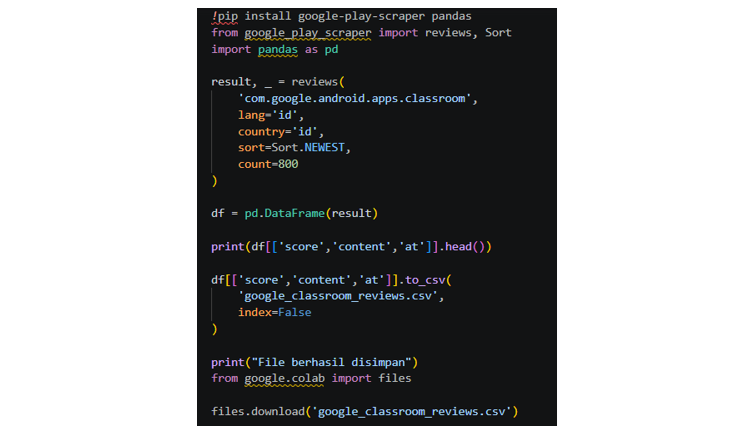
Google Classroom digunakan untuk mengatur kegiatan pembelajaran, namun penilaian terstruktur mungkin mengabaikan masalah yang dilaporkan selama penggunaan sehari-hari. Penelitian ini menganalisis 800 ulasan Google Play untuk mengidentifikasi masalah terkait kegunaan, mengklasifikasikannya menggunakan lima dimensi kegunaan Nielsen, dan mengukur proporsi umpan balik yang tidak sesuai dengan kerangka kerja tersebut. Ulasan diambil dengan paket Python google-play-scraper menggunakan pengaturan bahasa dan negara Indonesia, lalu diurutkan dari yang terbaru ke yang terlama. Analisis konten kualitatif yang dipandu kerangka kerja tersebut mengelompokkan setiap ulasan ke dalam satu kategori utama: kemudahan belajar, efisiensi, kemudahan diingat, kesalahan, kepuasan, atau Lainnya. Frekuensi kategori dirangkum secara deskriptif. Peringkat terkonsentrasi di kedua ujung skala, dengan 347 ulasan bintang satu (43,38%) dan 288 ulasan bintang lima (36,00%). Dari 800 ulasan, 427 (53,38%) diklasifikasikan ke dalam dimensi Nielsen, sedangkan 373 (46,63%) masuk ke dalam kategori Lainnya. Di antara ulasan yang dipetakan ke dalam kerangka kerja, kesalahan menyumbang 56,44% dan kepuasan 37,00%, sedangkan kemudahan belajar, efisiensi, dan kemudahan mengingat secara kolektif mewakili 6,56%. Laporan umum terkait kesalahan mencakup bug, kegagalan pengunggahan tugas, kesulitan login, aplikasi macet, dan masalah notifikasi. Kategori “Lainnya” yang besar menunjukkan bahwa hampir setengah dari ulasan tidak dapat diklasifikasikan ke dalam lima dimensi berdasarkan aturan pengkodean studi ini. Temuan ini menunjukkan bahwa ulasan di toko aplikasi melengkapi penilaian kegunaan terstruktur dengan menyoroti masalah yang dilaporkan pengguna terkait tugas-tugas pembelajaran esensial. Karena ulasan tersebut dipilih sendiri oleh pengguna dan dikumpulkan pada satu titik waktu tertentu, frekuensi kategori tersebut tidak boleh digeneralisasikan ke seluruh pengguna Google Classroom.
RIS is compatible with Zotero, Mendeley, and EndNote. Immediate opening depends on the visitor's browser and reference-manager settings.
Pernyataan yang dilaporkan dalam artikel yang diterbitkan
Author Contributions
Rafiqa Rizalita: Conceptualization; Methodology; Investigation; Data Curation; Writing – Original Draft. Putut Aji Nalendro: Formal Analysis; Validation; Visualization; Writing – Review & Editing. Novi Febrianti: Writing – Review & Editing. All authors approved the manuscript and agreed to the author order.
Acknowledgments
Not applicable.
View statement in PDF · PDF page 12Pendanaan
This research received no specific grant from any funding agency in the public, commercial, or not-forprofit sectors.
View statement in PDF · PDF page 12Konflik Kepentingan
The authors declare no competing interests.
View statement in PDF · PDF page 12Ethics Approval
Formal ethical approval was not obtained. The study analyzed publicly available Google Play reviews without participant recruitment, direct interaction, or intervention. Reviewer usernames and other directly identifying information are not reported.
View statement in PDF · PDF page 12Informed Consent
Not applicable. The study used publicly available Google Play reviews without recruiting or interacting with participants or conducting an intervention. No private or confidential personal information was intentionally collected or used.
View statement in PDF · PDF page 12Consent for Publication
Not applicable. The study reports no identifiable individual participants or private personal information. Study or Protocol Registration Not applicable. The study did not involve a clinical trial or intervention requiring prospective registration.
View statement in PDF · PDF page 12Ketersediaan Data
The analysis used publicly available Google Classroom reviews retrieved from Google Play. Individual reviews may no longer be accessible in their original form because app-store content changes over time. The processed dataset and supporting analytical materials are available from the corresponding author upon reasonable request, subject to applicable terms of service and data-use requirements.
View statement in PDF · PDF page 12Generative AI Disclosure
During manuscript preparation, ChatGPT (OpenAI, GPT-5.6, accessed in 2026) and Claude (Anthropic, accessed in 2026) were used as language and research assistants, primarily for translation and text refinement. Grammarly (accessed in 2026) was used for grammar, spelling, clarity, and English-language proofreading. All AI-assisted material was reviewed and verified by the authors, who remain responsible for the content, accuracy, interpretation, and final manuscript. No AI system or AI-assisted technology is listed as an author. Preprint and Prior Dissemination The authors report that this manuscript has not previously been disseminated. It has not been published as a preprint, conference paper or abstract, thesis or dissertation, working paper, repository version, protocol, report, or translated publication. No substantially related manuscript using the same dataset or analysis has been published or submitted elsewhere.
View statement in PDF · PDF page 13Referensi
31 References[1] S. Dhawan, “Online learning: A panacea in the time of COVID-19 crisis,” Journal of Educational Technology Systems, vol. 49, no. 1, pp. 5–22, 2020, doi: https://doi.org/10.1177/0047239520934018.
[2] UNESCO, “Education: From disruption to recovery,” UNESCO, 2020. [Online]. Available: https://en.unesco.org/covid19/educationresponse
[3] S. H. Alshammari, “The influence of technical support, perceived self-efficacy, and instructional design on students’ use of learning management systems,” Turkish Online Journal of Distance Education, vol. 21, no. 3, pp. 112–141, 2020, doi: https://doi.org/10.17718/tojde.762034.
[4] F. Martin and D. U. Bolliger, “Engagement matters: Student perceptions on the importance of engagement strategies in the online learning environment,” Online Learning, vol. 22, no. 1, pp. 205–222, 2018, doi: https://doi.org/10.24059/olj.v22i1.1092.
[5] J. A. Kumar and B. Bervell, “Google Classroom for mobile learning in higher education: Modelling the initial perceptions of students,” Education and Information Technologies, vol. 24, no. 2, pp. 1793–1817, 2019, doi: https://doi.org/10.1007/s10639-018-09858-z.
[6] K. A. Azhar and N. Iqbal, “Effectiveness of Google Classroom: Teachers’ perceptions,” Prizren Social Science Journal, vol. 2, no. 2, pp. 52–66, 2018.
[7] K. R. Heggart and J. Yoo, “Getting the most from Google Classroom: A pedagogical framework for tertiary educators,” Australian Journal of Teacher Education, vol. 43, no. 3, pp. 140–153, 2018, doi: https://doi.org/10.14221/ajte.2018v43n3.9.
[8] R. A. S. Al-Maroof and M. Al-Emran, “Students acceptance of Google Classroom: An exploratory study using PLS-SEM approach,” International Journal of Emerging Technologies in Learning (iJET), vol. 13, no. 6, pp. 112–123, 2018, doi: https://doi.org/10.3991/ijet.v13i06.8275.
[9] M. Alotumi, “Factors influencing graduate students’ behavioral intention to use Google Classroom: Case study-mixed methods research,” Education and Information Technologies, vol. 27, no. 7, pp. 10035–10063, 2022, doi: https://doi.org/10.1007/s10639-022-11051-2.
[10] A. Priyadi, E. Sediyono, and H. D. Purnomo, “Evaluasi Kebergunaan (Usability) dan Rekomendasi Penggunaan Google Classroom untuk Blended Learning di Perguruan Tinggi,” Jurnal Sistem Informasi Bisnis, vol. 11, no. 2, pp. 105–116, 2021, doi: https://doi.org/10.21456/vol11iss2pp105-116.
[11] A. Y. Pawestri and A. U. Khasanah, “The implementation of text mining to improve Google Classroom performance based on user review,” TEKNOSAINS: Jurnal Sains, Teknologi dan Informatika, vol. 13, no. 1, pp. 1–8, 2026, doi: https://doi.org/10.37373/tekno.v13i1.1479.
[12] O. Pramudia, R. Pratama, S. N. Azizah, and R. Novita, “Analisis Tematik Keluhan Pengguna terhadap UI/UX Google Meet Berdasarkan Kajian Literatur tentang Ulasan Google Play Store,” Journal Purnama Teknologi Kejuruan, vol. 1, no. 1, pp. 49–61, 2026. [Online]. Available: https://journal-purnama.com/index.php/purnatek/article/view/40
[13] K. Asafa, E. D. Sari, R. P. Adijaya, and R. P. Rahayu, “Analisis Antarmuka VClass Universitas Lampung: Evaluasi Prinsip Heuristik dan Eksplorasi Kebutuhan Sistem Pengingat Batas Waktu Tugas,” Journal Purnama Teknologi Kejuruan, vol. 1, no. 1, pp. 40–48, 2026. [Online]. Available: https://journal-purnama.com/index.php/purnatek/article/view/28
[14] International Organization for Standardization, “Ergonomics of human-system interaction—Part 11: Usability: Definitions and concepts,” ISO 9241-11:2018, 2018. [Online]. Available: https://www.iso.org/standard/63500.html
[15] J. Nielsen, Usability Engineering. San Diego, CA, USA: Academic Press, 1993.
[16] Z. Huang and M. Benyoucef, “A systematic literature review of mobile application usability: Addressing the design perspective,” Universal Access in the Information Society, vol. 22, no. 3, pp. 715–735, 2023, doi: https://doi.org/10.1007/s10209-022-00903-w.
[17] B. A. Kumar, S. S. Chand, and M. S. Goundar, “Usability testing of mobile learning applications: A systematic mapping study,” International Journal of Information and Learning Technology, vol. 41, no. 2, pp. 113–129, 2024, doi: https://doi.org/10.1108/IJILT-03-2023-0029.
[18] J. Dąbrowski, E. Letier, A. Perini, and A. Susi, “Analysing app reviews for software engineering: A systematic literature review,” Empirical Software Engineering, vol. 27, art. no. 43, 2022, doi: https://doi.org/10.1007/s10664-021-10065-7.
[19] D. Pagano and W. Maalej, “User feedback in the AppStore: An empirical study,” in Proc. 21st IEEE Int. Requirements Engineering Conf. (RE), 2013, pp. 125–134, doi: https://doi.org/10.1109/RE.2013.6636712.
[20] M. Tavakoli, L. Zhao, A. Heydari, and G. Nenadić, “Extracting useful software development information from mobile application reviews: A survey of intelligent mining techniques and tools,” Expert Systems with Applications, vol. 113, pp. 186–199, 2018, doi: https://doi.org/10.1016/j.eswa.2018.05.037.
[21] J. Dąbrowski, E. Letier, A. Perini, and A. Susi, “Mining and searching app reviews for requirements engineering: Evaluation and replication studies,” Information Systems, vol. 114, art. no. 102181, 2023, doi: https://doi.org/10.1016/j.is.2023.102181.
[22] X. Wang, T. Zhang, Y. Tan, W. Shang, and Y. Li, “How to effectively mine app reviews concerning software ecosystem? A survey of review characteristics,” Journal of Systems and Software, vol. 213, art. no. 112040, 2024, doi: https://doi.org/10.1016/j.jss.2024.112040.
[23] V. Schoenmueller, O. Netzer, and F. Stahl, “The polarity of online reviews: Prevalence, drivers and implications,” Journal of Marketing Research, vol. 57, no. 5, pp. 853–877, 2020, doi: https://doi.org/10.1177/0022243720941832.
[24] Y. Singh and P. K. Suri, “An empirical analysis of mobile learning app usage experience,” Technology in Society, vol. 68, art. no. 101929, 2022, doi: https://doi.org/10.1016/j.techsoc.2022.101929.
[25] D. Al-Fraihat, M. Joy, R. Masa’deh, and J. Sinclair, “Evaluating e-learning systems success: An empirical study,” Computers in Human Behavior, vol. 102, pp. 67–86, 2020, doi: https://doi.org/10.1016/j.chb.2019.08.004.
[26] S. Eom, N. J. Ashill, J. B. Arbaugh, and J. L. Stapleton, “The role of information technology in e-learning systems success,” Human Systems Management, vol. 31, no. 3–4, pp. 147–163, 2012, doi: https://doi.org/10.3233/HSM-2012-0767.
[27] P. Zaharias and A. Poylymenakou, “Developing a usability evaluation method for e-learning applications: Beyond functional usability,” International Journal of Human–Computer Interaction, vol. 25, no. 1, pp. 75–98, 2009, doi: https://doi.org/10.1080/10447310802546716.
[28] H. S. Jung, H. Lee, and K. C. Park, “Analysis of UX elements in educational applications for young children and implementation of ISO/IEC 25010 quality standards,” SAGE Open, vol. 15, no. 3, 2025, doi: https://doi.org/10.1177/21582440251377385.
[29] K. Krippendorff, Content Analysis: An Introduction to Its Methodology, 4th ed. Thousand Oaks, CA, USA: SAGE Publications, 2018.
[30] K. A. Neuendorf, The Content Analysis Guidebook, 2nd ed. Thousand Oaks, CA, USA: SAGE Publications, 2017.
[31] E. Liptrot, A. Montazami, H. A. Pearson, and A. K. Dubé, “Why this app: How user ratings and app store rankings impact parents’ choice of educational apps,” Computers & Education, vol. 238, art. no. 105410, 2025, doi: https://doi.org/10.1016/j.compedu.2025.105410.
Copyright and License

Artikel ini berlisensi Creative Commons Attribution 4.0 International License.
Hak Cipta (c) 2026 Rafiqa Rizalita, Putut Aji Nalendro, Novi Febrianti