

키워드
인용 방법




출판물 개요

차기호
J-HyTEL welcomes original and rigorous scholarship advancing education, media technology, and computer science applications.
Rolling submissions are accepted throughout the year.
초록
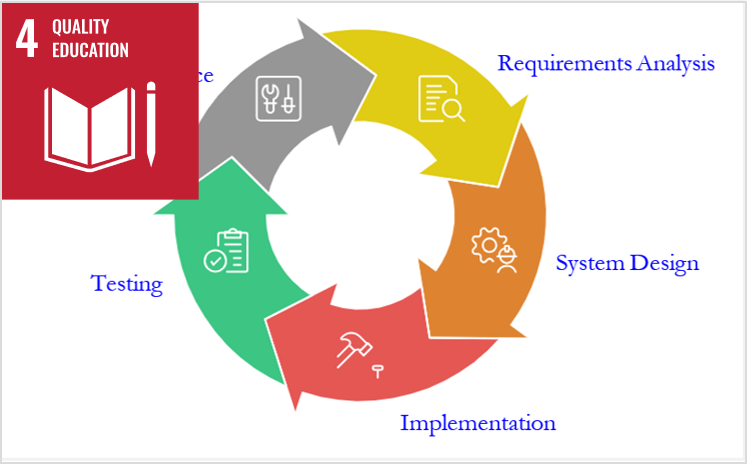
교육 기관, 특히 사관생도 프로그램이 있는 직업학교와 같이 규율이 엄격한 환경에서 수동 출석 관리 시스템은 부정확성, 행정적 부담, 사기 발생 가능성 등 상당한 문제를 야기합니다. 본 연구는 안드로이드 플랫폼용 보안 모바일 출석 애플리케이션을 설계 및 개발함으로써 이러한 문제를 해결하고자 합니다. 개발 과정은 워터폴(Waterfall) 소프트웨어 개발 모델을 따랐으며, 요구 사항 분석부터 테스트에 이르기까지 체계적인 프레임워크를 제공했다. 제안된 솔루션은 세션별 식별을 위한 QR(Quick Response) 코드와 지정된 학교 구역 내 사용자의 실제 재료를 확인하기 위한 지리적 위치(Geolocation) 기술을 결합한 이중 검증 메커니즘을 포함한다. 이 애플리케이션은 학생, 교사, 행정 담당자, 학부모 등 다양한 사용자 역할을 지원하며, 매일의 출석 확인 및 방과 후 활동에 대한 자동화된 출석 추적 기능을 제공한다. 또한 교사가 수업 시간 출석을 수동으로 입력할 수 있도록 지원한다. 실증 평가 결과, 이 애플리케이션이 수동 시스템에 내재된 취약점을 효과적으로 완화하는 것으로 확인되었다. 이 이중 검증 방식은 출석 관리 프로세스의 무결성과 효율성을 모두 크게 향상시켜, 학생의 규율 준수를 모니터링할 수 있는 신뢰할 수 있고 안전한 도구를 제공합니다. 본 연구는 중등 교육 환경에서 행정 프로세스를 강화하기 위해 접근성이 뛰어난 디지털 기술을 통합하는 실용적인 모델을 제시합니다.
RIS is compatible with Zotero, Mendeley, and EndNote. Immediate opening depends on the visitor's browser and reference-manager settings.
게재된 논문에 보고된 선언 사항
Author Contributions
Hasbi Kurnia: Conceptualization, Methodology, Investigation, Software, Data curation, Writing – Original Draft, Writing – Review & Editing. Geovanne Farell: Validation, Supervision. Denny Kurniadi: Validation, Supervision. Rizkayeni Marta: Validation, Supervision. All authors have read and approved the final version of this manuscript.
Acknowledgments
The authors would like to express their deepest gratitude to all those who have contributed to the successful completion of this research.
View statement in PDF · PDF page 10Ethics Approval
This research was conducted in accordance with the ethical principles for research involving human subjects. The study involved students, teachers, and administrative staff at a vocational high school with a cadet system in Indonesia. Initial data for requirements analysis were gathered through voluntary participation in surveys (by students) and structured interviews (by teachers and staff). Before any data collection, permission was secured from the school's leadership to conduct the research within the institution. All participants were informed about the purpose of the study, the voluntary nature of their involvement, and the confidentiality of their responses. Informed consent was obtained from each participant before they completed the questionnaire or participated in an interview. The study ensured no personal information was collected or shared without permission. All initial survey responses were anonymized and analyzed to protect the participants' privacy.
View statement in PDF · PDF page 10연구비 지원
This research did not receive any external funding or financial support. All expenses related to developing and testing the educational media application were personally funded.
View statement in PDF · PDF page 10이해 상충
The authors declare that they have no conflicts of interest.
View statement in PDF · PDF page 10Generative AI Disclosure
While preparing this manuscript, the author(s) used Gemini Pro and Grammarly to enhance the readability, language, and overall structure. Following these tools, the author(s) performed a comprehensive review and editing process to ensure the content's accuracy, integrity, and quality. The author(s) accept full responsibility for the content and conclusions presented in this publication.
View statement in PDF · PDF page 10References
17 References[1] A. R. B. Putra and D. Nora, “Faktor Penghambat dalam Mengatasi Ketidakhadiran Siswa Kelas XI IPS di SMAN 1 Lubuk Basung,” Jurnal Sikola: Jurnal Kajian Pendidikan dan Pembelajaran, vol. 1, no. 4, pp. 253–264, Jul. 2020, doi: https://doi.org/10.24036/sikola.v1i4.45.
[2] M. Alda, M. Juarsyah, A. Nugraha, L. R. Alfachry, and A. K. Kerja, “Jurnal Manajemen Informatika (JAMIKA) Aplikasi Absensi Mahasiswa Kerja Praktik Menggunakan QR Code Berbasis Android,” Jurnal Manajemen Informatika, vol. 14, 2024, doi: https://doi.org/10.34010/jamika.v14i1.11775
[3] R. Firdaus, E. Wahyuni, and A. Agussalim, “Rancang Bangun Sistem Presensi Pegawai Berbasis Geo Lokasi dan Pengenalan Wajah Menggunakan Facenet,” Jurnal Media Infotama, vol. 20, no. 2, pp. 410–416, 2024, doi: https://doi.org/10.37676/jmi.v20i2.6219
[4] Y. W. S. Putra, “Implementasi Model TAM pada Sistem Informasi Presensi Online Menggunakan Face Recognition dan GPS,” JACOST, vol. 4, no. 2, Dec. 2023, doi: https://doi.org/10.52158/jacost.v4i2.577.
[5] A. Mishra and Y. I. Alzoubi, “Structured software development versus agile software development: a comparative analysis,” Int. J. Syst. Assur. Eng. Manag., vol. 14, pp. 1504–1522, 2023, doi: https://doi.org/10.1007/s13198-023-01958-5.
[6] K. Petersen, C. Wohlin, and D. Baca, “The Waterfall Model in Large-Scale Development,” in Product-Focused Software Process Improvement, F. Bomarius, M. Oivo, P. Jaring, and P. Abrahamsson, Eds. Berlin, Heidelberg: Springer, 2009, vol. 32, Lecture Notes in Business Information Processing, pp. 311–324, doi: https://doi.org/10.1007/978-3-642-02152-7_29.
[7] M. F. A. Mohamad Noor, A. F. Ibrahim, and M. N. F. Jamaluddin, “Development of Employee Attendance Management System using Flutter,” Journal of Computing Research and Innovation, vol. 8, no. 2, pp. 178–188, 2023, doi: https://doi.org/10.24191/jcrinn.v8i2.369.
[8] A. Saravanos and M. X. Curinga, “Simulating the Software Development Lifecycle: The Waterfall Model,” Appl. Syst. Innov., vol. 6, no. 6, p. 108, 2023, doi: https://doi.org/10.3390/asi6060108.
[9] D. Ly, M. Overeem, S. Brinkkemper, and F. Dalpiaz, “The Power of Words in Agile vs. Waterfall Development: Written Communication in Hybrid Software Teams,” J. Syst. Softw., vol. 219, Jan. 2025, Art. no. 112243, doi: https://doi.org/10.1016/j.jss.2024.112243.
[10] A. Bates, R. Vavricka, S. Carleton, R. Shao, and C. Pan, “Unified modeling language code generation from diagram images using multimodal large language models,” Mach. Learn. Appl., vol. 20, Jun. 2025, Art. no. 100660, doi: https://doi.org/10.1016/j.mlwa.2025.100660.
[11] S. A. Kinari, N. Funabiki, S. T. Aung, and H. H. S. Kyaw, “A Guided Self-Study Platform of Integrating Documentation, Code, Visual Output, and Exercise for Flutter Cross-Platform Mobile Programming,” Computers, vol. 14, no. 10, p. 417, 2025, doi: https://doi.org/10.3390/computers14100417.
[12] S. A. Kinari, N. Funabiki, S. T. Aung, K. H. Wai, M. Mentari, and P. Puspitaningayu, “An Independent Learning System for Flutter Cross-Platform Mobile Programming with Code Modification Problems,” Information, vol. 15, no. 10, p. 614, 2024, doi: https://doi.org/10.3390/info15100614.
[13] Supriyono, “Software Testing with the approach of Blackbox Testing on the Academic Information System,” Int. J. Innov. Sci. Technol., vol. 3, no. 2, 2020, doi: https://doi.org/10.30645/ijistech.v3i2.54.
[14] S. Baul, J. Ahamed, M. A. Islam, M. K. A. Mazumder, T. Sultan, and D. Nandi, “A comprehensive study to assist decision-makers in determining software design between four UML diagrams,” in Proc. 3rd Int. Conf. Comput. Advancements (ICCA '24), 2024, pp. 232–238, doi: https://doi.org/10.1145/3723178.3723209.
[15] J. Skalka and M. Drlík, “Development of Automatic Source Code Evaluation Tests Using Grey-Box Methods: A Programming Education Case Study,” IEEE Access, vol. 11, pp. 106772–106792, 20 Sep. 2023, doi: https://doi.org/10.1109/ACCESS.2023.3317694.
[16] L. O’Neill, H. H. Lauridsen, L. Østengaard, and A. Qvortrup, “Validity evidence for the Experiences of Teaching and Learning Questionnaire (ETLQ) in evaluations of quality learning: A systematic critical literature review,” Stud. Educ. Eval., vol. 78, Sep. 2023, Art. no. 101283, doi: https://doi.org/10.1016/j.stueduc.2023.101283.
[17] S. J. Wafudu, Y. B. Kamin, and D. Marcel, “Validity and reliability of a questionnaire developed to explore quality assurance components for teaching and learning in vocational and technical education,” Humanit. Soc. Sci. Commun., vol. 9, p. 303, 2022, doi: https://doi.org/10.1057/s41599-022-01306-1.
Copyright and License

This work is licensed under a Creative Commons Attribution 4.0 International License.
Copyright (c) 2025 Hasbi Kurnia, Geovanne Farell, Denny Kurniadi, Rizkayeni Marta