

키워드
How to Cite




Publication Snapshot

Upcoming Issue
J-HyTEL welcomes original and rigorous scholarship advancing education, media technology, and computer science applications.
Rolling submissions are accepted throughout the year.
초록
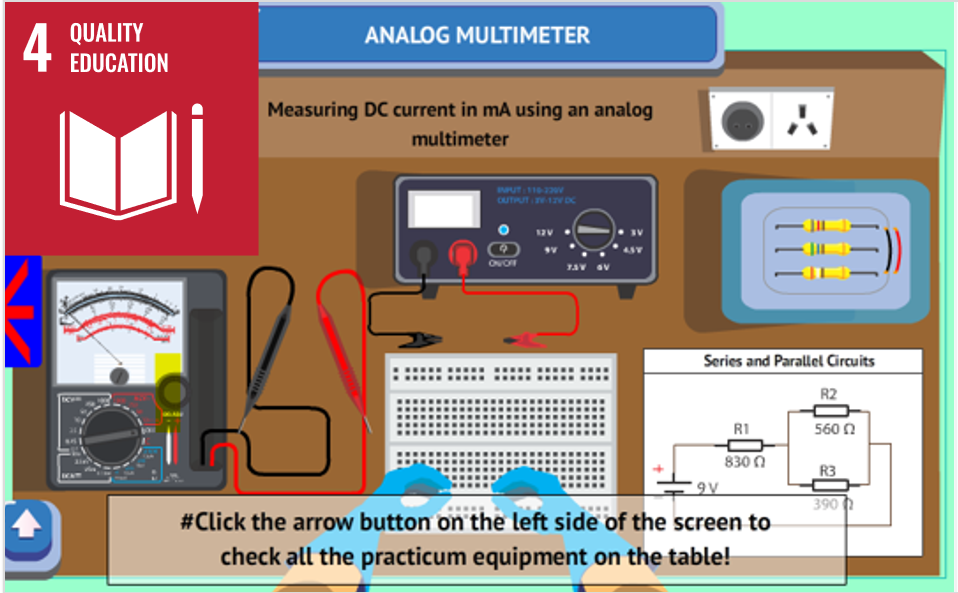
본 연구에서는 교육을 지원하기 위해 안드로이드 기반의 상호작용형 학습 매체를 개발하였다. 전자공학의 기초 직업고등학교에서. 기술 지원 학습 및 체계적인 교육 설계 원칙에 기반을 둔 개발 과정은 분석, 설계, 구현, 테스트 및 개선 단계를 포괄하는 워터폴 모델을 따랐습니다. 전문가 검증과 학생 현장 테스트를 통해 해당 미디어의 실행 가능성과 실용성을 평가했습니다. 결과에 따르면, 이 애플리케이션은 교육적 효과성, 사용 편의성 및 콘텐츠 관련성 측면에서 높은 기준을 충족하는 것으로 나타났다. 멀티미디어 요소를 통합하고 교육 과정과 연계함으로써 학습자의 참여도와 수업의 명확성이 향상되었다. 이러한 연구 결과는 기술 및 직업 교육 분야에서 과목 숙달도를 높이는 모바일 학습 기술의 잠재력을 부각시키며, 21세기 역량을 개발하기 위한 확장 가능하고 상황에 적합한 솔루션을 제공한다.
RIS is compatible with Zotero, Mendeley, and EndNote. Immediate opening depends on the visitor's browser and reference-manager settings.
References
56 References[1] S. Timotheou et al., “Impacts of digital technologies on education and factors influencing schools’ digital capacity and transformation: A literature review,” Educ. Inf. Technol., vol. 28, no. 6, pp. 6695–6726, 2023, doi: https://doi.org/10.1007/s10639-022-11431-8.
[2] D. Mhlanga, “Digital transformation of education, the limitations and prospects of introducing the fourth industrial revolution asynchronous online learning in emerging markets,” Discov. Educ., vol. 3, no. 1, pp. 1–18, Dec. 2024, doi: https://doi.org/10.1007/S44217-024-00115-9.
[3] M. D. Abdulrahaman et al., “Multimedia tools in the teaching and learning processes: A systematic review,” Heliyon, vol. 6, no. 11, p. e05312, Nov. 2020, doi: https://doi.org/10.1016/J.HELIYON.2020.E05312.
[4] A. Granić, “Educational Technology Adoption: A systematic review,” Educ. Inf. Technol., vol. 27, no. 7, pp. 9725–9744, 2022, doi: https://doi.org/10.1007/s10639-022-10951-7.
[5] C. Wardoyo, Y. D. Satrio, B. S. Narmaditya, and A. Wibowo, “Do technological knowledge and game-based learning promote students achievement: lesson from Indonesia,” Heliyon, vol. 7, no. 11, p. e08467, Nov. 2021, doi: https://doi.org/10.1016/J.HELIYON.2021.E08467.
[6] A. Haleem, M. Javaid, M. A. Qadri, and R. Suman, “Understanding the role of digital technologies in education: A review,” Sustain. Oper. Comput., vol. 3, pp. 275–285, Jan. 2022, doi: https://doi.org/10.1016/J.SUSOC.2022.05.004.
[7] N. Fitrihana and H. Nurdiyanto, “Improving Student Competence through Informatics-Based Vocational Education,” Int. J. Artif. Intell. Res., vol. 7, no. 2, pp. 226–231, 2023, doi: https://doi.org/10.29099/ijair.v7i2.1180.
[8] A. Rachman, H. Y. S. Putro, M. A. Rusandi, and D. D. B. Situmorang, “The development and validation of the 'Kuesioner Tema Proyek Penguatan Profil Pelajar Pancasila' (KT P5): A new tool for strengthening the Pancasila Student Profile in Indonesian pioneer schools,” Heliyon, vol. 10, no. 16, p. e35912, Aug. 2024, doi: https://doi.org/10.1016/J.HELIYON.2024.E35912.
[9] OECD, Digital Education Outlook 2021: Pushing the Frontiers with Artificial Intelligence, Blockchain and Robots. Paris, France: OECD Publishing, 2021. doi: https://doi.org/10.1787/589b283f-en.
[10] N. Kerimbayev, Z. Umirzakova, R. Shadiev, and V. Jotsov, “A student-centered approach using modern technologies in distance learning: a systematic review of the literature,” Smart Learn. Environ., vol. 10, no. 1, pp. 1–28, Dec. 2023, doi: https://doi.org/10.1186/S40561-023-00280-8.
[11] F. Martin, T. Sun, and C. D. Westine, “A systematic review of research on online teaching and learning from 2009 to 2018,” Comput. Educ., vol. 159, p. 104009, Dec. 2020, doi: https://doi.org/10.1016/J.COMPEDU.2020.104009.
[12] L. C. Juera, “Digitalizing skills development using simulation-based mobile (SiM) learning application,” J. Comput. Educ., vol. 11, no. 1, pp. 29–50, Mar. 2024, doi: https://doi.org/10.1007/S40692-022-00246-8.
[13] M. Mohammadi, R. A. Marzooghi, G. Salimi, and S. Mansoori, “Learners’ Experiences of Mobile Learning in Vocational and Technical Education Courses,” Interdiscip. J. Virtual Learn. Med. Sci., vol. 8, no. 4, p. 64424, Dec. 2017, doi: https://doi.org/10.5812/IJVLMS.64424.
[14] C. N. Akpen, S. Asaolu, S. Atobatele, H. Okagbue, and S. Sampson, “Impact of online learning on student’s performance and engagement: a systematic review,” Discov. Educ., vol. 3, no. 1, pp. 1–15, Dec. 2024, doi: https://doi.org/10.1007/S44217-024-00253-0.
[15] R. Y. K. Ng and R. Y. S. Lam, “Using Mobile and Flexible Technologies to Enhance Workplace Learning in Vocational Education and Training (VET),” in Innovations in Open and Flexible Education, Singapore: Springer Singapore, 2018. doi: https://doi.org/10.1007/978-981-10-7995-5_8.
[16] J. Lavrijsen, F. Preckel, P. Verachtert, M. Vansteenkiste, and K. Verschueren, “Are motivational benefits of adequately challenging schoolwork related to students’ need for cognition, cognitive ability, or both?,” Pers. Individ. Dif., vol. 171, p. 110558, Mar. 2021, doi: https://doi.org/10.1016/J.PAID.2020.110558.
[17] H. B. Essel, D. Vlachopoulos, A. B. Essuman, and J. O. Amankwa, “ChatGPT effects on cognitive skills of undergraduate students: Receiving instant responses from AI-based conversational large language models (LLMs),” Comput. Educ. Artif. Intell., vol. 6, p. 100198, Jun. 2024, doi: https://doi.org/10.1016/J.CAEAI.2023.100198.
[18] S. Poçan, B. Altay, and C. Yaşaroğlu, “The Effects of Mobile Technology on Learning Performance and Motivation in Mathematics Education,” Educ. Inf. Technol., vol. 28, no. 1, pp. 683–712, Jan. 2023, doi: https://doi.org/10.1007/S10639-022-11166-6.
[19] E. Pechenkina, D. Laurence, G. Oates, D. Eldridge, and D. Hunter, “Using a gamified mobile app to increase student engagement, retention and academic achievement,” Int. J. Educ. Technol. High. Educ., vol. 14, no. 1, pp. 1–12, Dec. 2017, doi: https://doi.org/10.1186/S41239-017-0069-7.
[20] G. Lampropoulos and Kinshuk, “Virtual reality and gamification in education: a systematic review,” Educ. Technol. Res. Dev., vol. 72, no. 3, pp. 1691–1785, Jun. 2024, doi: https://doi.org/10.1007/S11423-024-10351-3.
[21] F. D. Davis, “Perceived usefulness, perceived ease of use, and user acceptance of information technology,” MIS Q. Manag. Inf. Syst., vol. 13, no. 3, pp. 319–340, 1989, doi: https://doi.org/10.2307/249008.
[22] R. Keijzer, E. van Schooten, R. van der Rijst, and W. Admiraal, “Individual characteristics of students in vocational education moderating the relationship between school engagement and vocational identity,” Eur. J. Psychol. Educ., vol. 37, no. 4, pp. 1255–1283, Dec. 2022, doi: https://doi.org/10.1007/S10212-021-00580-Y.
[23] H. Rintala and P. Nokelainen, “Vocational Education and Learners’ Experienced Workplace Curriculum,” Vocat. Learn., vol. 13, no. 1, pp. 113–130, Apr. 2020, doi: https://doi.org/10.1007/S12186-019-09229-W.
[24] L. Laurens-Arredondo, “Mobile augmented reality adapted to the ARCS model of motivation: a case study during the COVID-19 pandemic,” Educ. Inf. Technol., vol. 27, no. 6, pp. 7927–7946, Jul. 2022, doi: https://doi.org/10.1007/S10639-022-10933-9.
[25] F. Asrin and G. V. Utami, “Implementing Website-Based School Information Systems in Public Elementary Schools Using Waterfall Model,” J. Inf. Syst. Informatics, vol. 5, no. 2, pp. 590–614, May 2023, doi: https://doi.org/10.51519/JOURNALISI.V5I2.495.
[26] S. Al-Amri, S. Hamid, N. F. M. Noor, and A. Gani, “A framework for designing interactive mobile training course content using augmented reality,” Multimed. Tools Appl., vol. 82, no. 20, pp. 30491–30541, Aug. 2023, doi: https://doi.org/10.1007/S11042-023-14561-4.
[27] A. Octaviano, A. U. Zailani, S. Noris, H. Zakaria, S. -, and C. P. Prakoso, “Designing a Mobile-Based Learning Media Educational Game Applications,” Int. J. Adv. Trends Eng. Sci. Technol., vol. 6, no. 1, pp. 1–4, 2021, doi: https://doi.org/10.22413/ijatest/2021/v6/i1/1.
[28] N. Hamzah, N. D. Abd Halim, M. H. Hassan, and A. Ariffin, “Android application for children to learn basic solat,” Int. J. Interact. Mob. Technol., vol. 13, no. 7, pp. 69–79, 2019, doi: https://doi.org/10.3991/ijim.v13i07.10758.
[29] P. Pardjono, K. Syauqi, W. A. Prasetya, and S. Baihaqi, “Multimedia interactive learning of pictorial projection mechanical engineering skills in vocational high schools,” J. Phys. Conf. Ser., vol. 1700, no. 1, pp. 1–6, 2020, doi: https://doi.org/10.1088/1742-6596/1700/1/012009.
[30] G. Hari Prakash, D. Sunil Kumar, V. Arun, D. Yadav, A. Gopi, and R. Garg, “Development and validation of android mobile application in the management of mental health,” Clin. Epidemiol. Glob. Heal., vol. 31, p. 101894, Jan. 2025, doi: https://doi.org/10.1016/J.CEGH.2024.101894.
[31] A. L. Wong, K. M. Lacob, M. G. Wilson, S. M. Zwolski, and S. Acharya, “Design and preliminary validation of a mobile application-based expert system to facilitate repair of medical equipment in resource-limited health settings,” Med. Devices (Auckl)., vol. 11, pp. 157–169, May 2018, doi: https://doi.org/10.2147/MDER.S162854.
[32] F. Johannsen et al., “What impacts learning effectiveness of a mobile learning app focused on first-year students?,” Inf. Syst. E-bus. Manag., vol. 21, no. 3, pp. 629–673, Sep. 2023, doi: https://doi.org/10.1007/S10257-023-00644-0.
[33] D. R. Apriyus, K. Rukun, A. Huda, and S. A. Marta, “Validation of media interactive learning in vocational high school,” J. Pendidik. Teknol. Kejuru., vol. 3, no. 1, pp. 64–67, Feb. 2020, doi: https://doi.org/10.24036/JPTK.V3I1.4423.
[34] T. Mariyanti, “Development of Mobile Learning Applications for Android Based on Artificial Intelligence,” Int. Trans. Artif. Intell., vol. 1, no. 2, pp. 230–235, May 2023, doi: https://doi.org/10.33050/ITALIC.V1I2.333.
[35] M. Rais, F. Aryani, and M. Riska, “The Development of Edu-games as a Learning Media,” in 227, no. Icamr 2018, pp. 286–289, 2019, doi: https://doi.org/10.2991/icamr-18.2019.71.
[36] R. Hakiki, V. I. Delianti, R. Marta, J. L. Cabanillas-García, V. D. Slavov, and S. ‘Afiat Jalil, “Smart Financial Management for Cooperatives: A Web and Payment Gateway Integration Approach,” J. Hypermedia Technol. Learn., vol. 3, no. 1, pp. 16–36, Jan. 2025, doi: https://doi.org/10.58536/J-HYTEL.161.
[37] M. D. Merrill, “First principles of instruction,” Educ. Technol. Res. Dev., vol. 50, no. 3, pp. 43–59, 2002, doi: https://doi.org/10.1007/BF02505024.
[38] R. E. Mayer, “Multimedia Learning,” Multimed. Learn. Second Ed., pp. 1–304, Jan. 2009, doi: https://doi.org/10.1017/CBO9780511811678.
[39] E. Chew, N. Jones, and D. Turner, “Critical Review of the Blended Learning Models Based on Maslow’s and Vygotsky’s Educational Theory,” Lect. Notes Comput. Sci. (including Subser. Lect. Notes Artif. Intell. Lect. Notes Bioinformatics), vol. 5169 LNCS, pp. 40–53, 2008, doi: https://doi.org/10.1007/978-3-540-85170-7_4.
[40] H. Wibawanto, R. Roemintoyo, and T. Rejekiningsih, “Simulation-based interactive multimedia to improve vocational students’ learning outcomes,” World J. Educ. Technol. Curr. Issues, vol. 14, no. 6, pp. 1927–1942, Nov. 2022, doi: https://doi.org/10.18844/WJET.V14I6.8363.
[41] B. A. Kumar and M. S. Goundar, “Usability heuristics for mobile learning applications,” Educ. Inf. Technol., vol. 24, no. 2, pp. 1819–1833, Mar. 2019, doi: https://doi.org/10.1007/S10639-019-09860-Z.
[42] R. E. Mayer, “Cognitive Theory of Multimedia Learning,” in The Cambridge Handbook of Multimedia Learning, R. Mayer, Ed. Cambridge: Cambridge University Press, 2005, pp. 31–48. doi: https://doi.org/10.1017/CBO9780511816819.004.
[43] N. Hasyim, H. A. Gani, and S. Hatta, “Android Based Multimedia Learning for Vocational High Schools,” J. Educ. Sci. Technol., vol. 6, no. 2, pp. 193–204, Aug. 2020, doi: https://doi.org/10.26858/EST.V6I2.14275.
[44] H. Gustina et al., “Application of Android-Based Interactive Multimedia to Enhance Learning Outcomes in Understanding the Working Principles of SMAW Welding,” J. Vocat. Career Educ., vol. 9, no. 1, pp. 33–41, Jul. 2024, doi: https://doi.org/10.15294/JVCE.V9I1.18597.
[45] D. Al-Fraihat, M. Joy, R. Masa’deh, and J. Sinclair, “Evaluating E-learning systems success: An empirical study,” Comput. Human Behav., vol. 102, pp. 67–86, Jan. 2020, doi: https://doi.org/10.1016/J.CHB.2019.08.004.
[46] B. J. Zimmerman, “Becoming a Self-Regulated Learner: An Overview,” Theory Pract., vol. 41, no. 2, pp. 64–70, 2002, doi: https://doi.org/10.1207/S15430421TIP4102_2.
[47] D. T. P. Yanto, Sukardi, M. Kabatiah, H. Zaswita, and O. Candra, “Analysis of Factors Affecting Vocational Students’ Intentions to Use a Virtual Laboratory Based on the Technology Acceptance Model,” Int. J. Interact. Mob. Technol., vol. 17, no. 12, pp. 94–111, 2023, doi: https://doi.org/10.3991/ijim.v17i12.38627.
[48] S. Wu, “Application of multimedia technology to innovative vocational education on learning satisfaction in China,” PLoS One, vol. 19, no. 2, pp. 1–20, Feb. 2024, doi: https://doi.org/10.1371/JOURNAL.PONE.0298861.
[49] A. Herrington and J. Herrington, Authentic learning environments in higher education. IGI Global, 2005. doi: https://doi.org/10.4018/978-1-59140-594-8.
[50] P. Di Muro and M. Terry, “A Matter of Style: Applying Kolb’s Learning Style Model to College Mathematics Teaching Practices,” J. Coll. Read. Learn., vol. 38, no. 1, pp. 53–60, Sep. 2007, doi: https://doi.org/10.1080/10790195.2007.10850204.
[51] J. E. Sharp, “Applying Kolb Learning Style Theory in the Communication Classroom,” Bus. Commun. Q., vol. 60, no. 2, pp. 129–134, Jun. 1997, doi: https://doi.org/10.1177/108056999706000214.
[52] G. Khoirunnisa, H. Saputro, and A. G. Tamrin, “Optimization of Gasification Learning in Vocational High Schools using Virtual Laboratories,” Int. J. Inf. Educ. Technol., vol. 13, no. 3, pp. 456–467, Mar. 2023, doi: https://doi.org/10.18178/IJIET.2023.13.3.1826.
[53] R. Bödding, S. A. Schriek, and G. W. Maier, “A systematic review and meta-analysis of mixed reality in vocational education and training: examining behavioral, cognitive, and affective training outcomes and possible moderators,” Virtual Real., vol. 29, no. 1, pp. 1–35, Mar. 2025, doi: https://doi.org/10.1007/S10055-025-01118-Z.
[54] L. Ghosh and R. Ravichandran, “Emerging Technologies in Vocational Education and Training,” J. Digit. Learn. Educ., vol. 4, no. 1, pp. 41–49, 2024, doi: https://doi.org/10.52562/jdle.v4i1.975.
[55] Y. Zou, F. Kuek, W. Feng, and X. Cheng, “Digital learning in the 21st century: trends, challenges, and innovations in technology integration,” Front. Educ., vol. 10, pp. 1–11, 2025, doi: https://doi.org/10.3389/FEDUC.2025.1562391.
[56] J. Ariza, “Bringing active learning, experimentation, and student-created videos in engineering: A study about teaching electronics and physical computing integrating online and mobile learning,” Comput. Appl. Eng. Educ., vol. 31, no. 6, pp. 1723–1749, 2023, doi: https://doi.org/10.1002/cae.22673.
Copyright and License

This work is licensed under a Creative Commons Attribution 4.0 International License.
Copyright (c) 2025 Jefri Wahyudianto, Ilmiyati Rahmy Jasril, Juan Luis Cabanillas García, Constantina Corazon Argyrakou